Английский Общество
06.07.2026 Читать источник
В Германии мужчины составляют 82% жертв утоплений: алкоголь и переоценка сил повышают риск
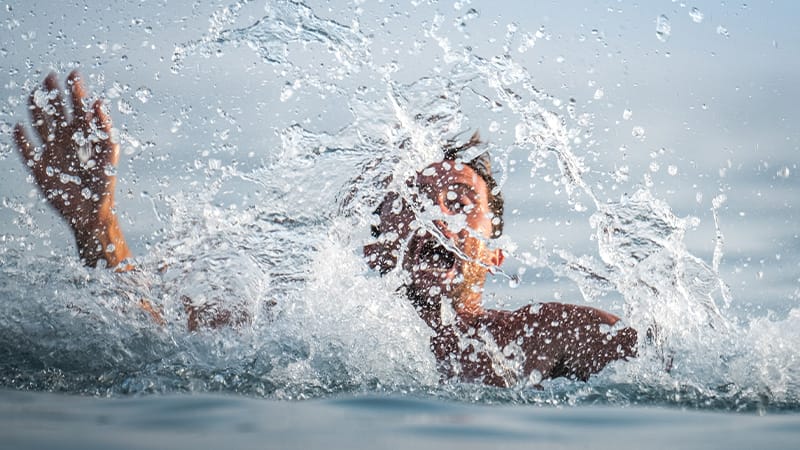
Статистика спасательной ассоциации Германии за 2025 год показывает, что большинство смертей от утопления происходят в природных водоемах, где мужчины рискуют из-за употребления алкоголя и переоценки своих навыков. Эксперты предупреждают, что главной причиной трагедий является не плохое плавание, а психологическая уверенность в собственной безопасности, которая часто приводит к фатальным ошибкам.
Перевод ИИ
Текст статьи доступен на языке оригинала.
Нажмите кнопку «Перевести статью» выше, чтобы сгенерировать перевод с помощью ИИ.
Оригинальный контент
When people in Germany lose their lives in swimming accidents, the victims are almost always men. Depending on the year, men account for 75% to > 80% of drowning victims. Why are men at greater risk, and what needs to change?
A Closer Look at Germany
The summer of 2025 showed just how dangerous Germany’s bodies of water can be. According to the latest statistics from the German Life-Saving Association (DLRG), at least 393 people drowned in 2025, 18 fewer than the 411 deaths recorded in 2024.
Most fatal swimming accidents do not occur in swimming pools but in natural bodies of water. According to the DLRG, the majority of deaths occur in lakes and rivers. There are several reasons for this, including underestimated currents, fluctuating water temperatures, and poor visibility. In addition, lifeguards or other supervisors are often absent. Rivers, in particular, pose a heightened risk. Even experienced swimmers often underestimate the force of currents, the suction created by structures, or sudden changes in temperature.
In 2025, 82% of drowning victims were male, according to the DLRG. Particularly alarming: In the 11- to 30-year-old age group, 73 people died, including just one woman. The DLRG noted a striking increase in fatal swimming accidents among male adolescents and young adults.
International Figures Confirm the Trend
This observation is by no means limited to Germany. The World Health Organization (WHO) reports that the global drowning rate among men is more than twice that among women. Men are also significantly more likely to require hospitalization after nonfatal swimming accidents. The WHO cites riskier behavior, swimming alone, and alcohol consumption before entering the water as the main causes.
The CDC have also reached similar conclusions. Nearly 80% of drowning deaths in the US are among men. Key risk factors cited include increased risk-taking behavior, more frequent exposure to open bodies of water, and alcohol consumption.
The Dangerous Illusion of Invulnerability
One of the most frequently cited scientific studies on this topic analyzed the differences between men and women in water-based activities years ago. The authors found that men take risks significantly more often than women, overestimate their swimming ability, and are more likely to consume alcohol before entering the water.
For the DLRG, the explanation is fairly clear. DLRG President Ute Vogt pointed out that recklessness and overconfidence are major causes of male dominance in drowning statistics. Young men, in particular, tend to overestimate their physical abilities, ignore danger, and fail to take warnings seriously.Alcohol consumption is also frequently a contributing factor.
Psychologists describe this behavior as part of a gender-specific risk profile. In many areas of life, men show a greater willingness to take risks. This applies not only to road traffic and extreme sports but also to behavior near water. The need to demonstrate strength, courage, or capability plays an important role in this.
This dynamic is particularly problematic in groups. On hot summer days, spontaneous tests of courage often occur, such as jumping into unfamiliar water or swimming long distances. The actual risks are often underestimated.
In addition to recklessness, a lack of swimming skills often plays a role. The DLRG points out that people with an immigrant background are about twice as likely to be nonswimmers as the general population.
Alcohol as a Risk Factor
Added to this is the issue of alcohol. A study on fatal drowning cases among men showed that alcohol was detectable in at least 31% of all cases. Even moderate amounts significantly increased the risk. Higher blood alcohol concentrations were associated with a drastic increase in the risk for drowning. The WHO also cited alcohol consumption before swimming as one of the most significant risk factors for drowning among men.
The physiologic mechanisms are well-known. Alcohol impairs coordination, reaction time, and judgment. At the same time, it leads to an overestimation of one’s own abilities. In the water, alcohol-induced disturbances in balance and orientation can have fatal consequences.
When the Heart Fails
While young men often engage in risky behavior, a different pattern emerges in older men. On average, they develop cardiovascular disease more often and at an earlier age than women. Some fatal swimming accidents are not caused by a lack of swimming skill but by medical emergencies.
Cold water triggers abrupt activation of the sympathetic nervous system. Heart rate and blood pressure rise within seconds. In patients with coronary heart disease or cardiac arrhythmias, this can trigger acute cardiac events.
Added to this is the so-called cold shock reaction. Sudden contact with cold water triggers involuntary hyperventilation. At the same time, oxygen demand and cardiac workload increase markedly. This can lead to a life-threatening situation, especially for patients with preexisting conditions.
Silent Drowning Underwater
But why do people often drown unnoticed by other swimmers? Unlike in movies, this usually happens silently. The WHO also noted this.
Those affected are often no longer able to draw attention to themselves or ask for help. The body initially reflexively tries to prevent water from entering the airways. This leads to shortness of breath, panic, and ultimately loss of consciousness from hypoxia.
Prevention Starts in the Mind
Overall, studies show that drowning is often not purely accidental. Rather, it is frequently the result of predictable behavioral patterns. Men do not drown more often because they are worse swimmers. They simply find themselves more often in situations where even good swimmers reach their limits.
The greatest risk near water is often not the current, depth, or temperature of the water. It is the belief that nothing will happen to you. It is precisely this misjudgment that seems to be particularly widespread among men, and it costs hundreds of people their lives every year.
This story was translated from Medscape’s Germany edition.
Аналитика ИИ и парсинга
Технические детали обнаружения, сопоставления и связывания статьи
Поисковый запрос
«статистика утоплений в Германии 2025 мужчины алкоголь холодная вода»
Запрос, сгенерированный ИИ для поиска статьи в веб-источниках
Связанные результаты поиска
Результаты поиска отсутствуют в БД
Парсер не сохранил результаты веб-поиска для этой статьи.