Английский Медицина
06.07.2026 Читать источник
Ученые из США собрали в Антарктике вещество для борьбы с меланомой
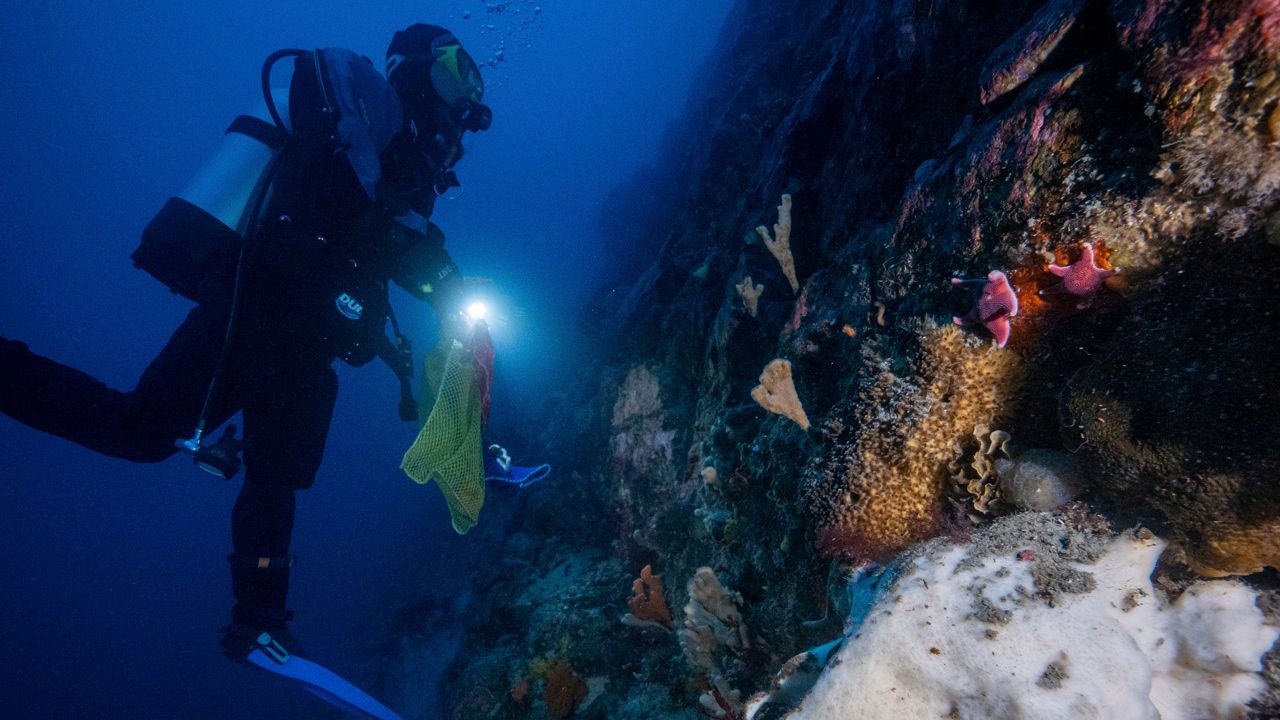
Команда исследователей из Университета Южной Флориды совершила экспедицию в Антарктику, чтобы собрать образцы морских организмов, содержащих молекулу палмеролид. Это соединение способно уничтожать клетки меланомы, не повреждая здоровые ткани, и может стать основой для нового лекарства.
Перевод ИИ
Текст статьи доступен на языке оригинала.
Нажмите кнопку «Перевести статью» выше, чтобы сгенерировать перевод с помощью ИИ.
Оригинальный контент
TAMPA, Fla. — A team of researchers from the University of South Florida went to great distances - and depths - to learn more about a molecule that could become a tool in the fight against skin cancer.
“The molecule that we’re interested in that cures cancer targets a particular enzyme in melanoma and kills the melanoma without killing the patient. That’s a good thing," said Dr. Bill Baker, a professor in the USF Department of Chemistry.
Baker said it's called palmerolide, and it's a metabolite of an ascidian, or sea squirt, that only lives in the waters of Antarctica. In February, postdoctoral scholar Sam Afoullouss and USF research diving safety officer Ben Meister made the journey to one of the most remote places on Earth to collect samples.
"All you see (are) various shades of white, blue, and black," Afoullouss said of the landscape. "Then you go under the water, and it's a whole range of colors that you've never seen before."
Afoullouss captured video of him and Meister diving beneath the surface to harvest the squirts.
"When we were collecting this, it's very much like treasure at the bottom of the sea, right? Because there's this beautiful, golden color," he said, holding a bag of the squirts now preserved in a freezer at a USF lab.
Baker began studying this particular sea squirt 20 years ago. He said its cancer-fighting abilities were discovered at USF. Because the metabolite kills melanoma but doesn't harm healthy cells, he said it has the potential to one day be used in a drug to fight the cancer, but more research is needed first.
“That’s one of the main things we were interested in in this expedition is trying to figure out how the ascidian and the microorganism use this chemistry. They must make it for a reason — not to cure melanoma," Baker said.
Meister said the team's more than 160 dives went well, but the harsh environment came with challenges.
"We had ice, we had depth, we had cold, we had leopard seals, we had the dry suit," Meister said. "It can be very painful. One of the first things that you feel is this really intense, cold, like, external ice-cream headache."
USF assistant professor and skin cancer surgeon Dr. Rick Jacobson said research like this is important for the patients he sees everyday at Tampa General Hospital.
"While rates of screening with the dermatologist are going up, and that's a great thing, because we catch these melanomas early and it makes them much easier to treat, we're still seeing high volumes of new patients every week," said Jacobson.
According to a 2018 AIM at Melanoma Foundation blog, Florida ranks second in the U.S. for new melanoma diagnoses. The good news: the Skin Cancer Foundation says survival rates are 99% when caught in the early stages.
Baker said the next step toward ascidians possibly being a tool in that fight will happen in a specialty lab on USF's campus, using high tech equipment to learn more about its ecology. He said the Joint Genome Institute in California is synthesizing the genes of the cancer-fighting substance. The goal is to be able to grow more of it to study — no trip to Antarctica required.
He also noted that teams with the Desert Research Institute and Scripps Institute of Oceanography were key to the success of this latest project. Alison Murray, lead of the microbial ecology and genomics research team with DRI, was the chief scientist of the expedition. She said humans and ascidians are related biologically, which is why it's important to understand palmerolide and its relationship to the sea squirt.
"Through understanding how the metabolite affects, or how the ascidian resists the metabolite, are really important parts to the story of how this may be used in biomedicine in the future," Murray said.
She said researchers on this trip were also able to greatly expand the area they studied, surveying 200 miles of the Antarctic peninsula.
Аналитика ИИ и парсинга
Технические детали обнаружения, сопоставления и связывания статьи
Поисковый запрос
«ученые Южного университета Флориды собрали образцы морских сцифоидных в Антарктике для разработки лекарства от меланомы»
Запрос, сгенерированный ИИ для поиска статьи в веб-источниках
Связанные результаты поиска
Результаты поиска отсутствуют в БД
Парсер не сохранил результаты веб-поиска для этой статьи.