Английский Война
06.07.2026 Читать источник
Инфраструктурная модернизация меняет тактику военных действий в Гималаях
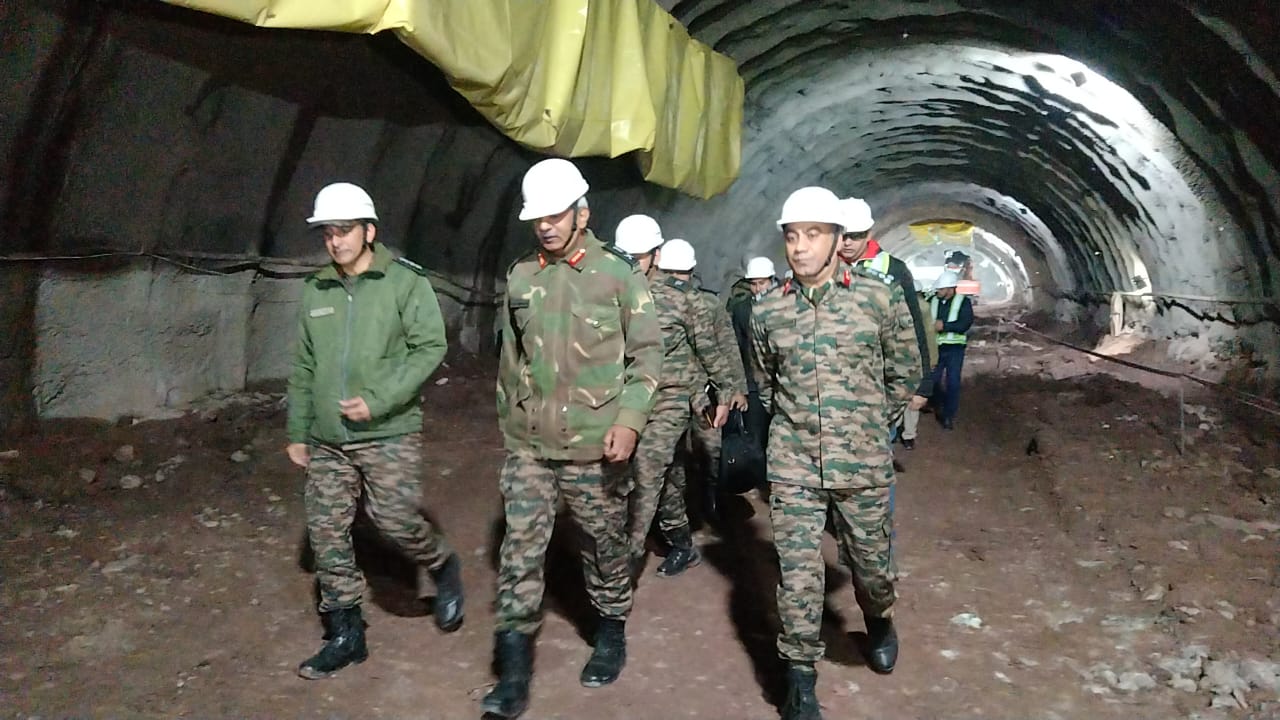
Строительство туннелей и дорог вдоль линии фактического контроля превращает горный регион в гибридное поле боя, где контроль над искусственными объектами становится ключевым фактором успеха. Индийская армия адаптирует свои операции, переходя от сезонных маневров к круглогодичным действиям в условиях развитой логистической сети и постоянных гарнизонов.
Перевод ИИ
Текст статьи доступен на языке оригинала.
Нажмите кнопку «Перевести статью» выше, чтобы сгенерировать перевод с помощью ИИ.
Оригинальный контент
The concept of “Mountain Urbanism” is emerging as one of the most significant shifts in military thinking along the Line of Actual Control (LAC). Traditionally, the Himalayas were viewed as a natural defensive barrier characterized by rugged terrain, sparse infrastructure, and seasonal accessibility. However, the rapid construction of tunnels, highways, bridges, permanent habitats, and logistics hubs is transforming this landscape into a hybrid battlespace where infrastructure has become as strategically important as geography itself.
For the Indian Army, this evolution means that future operations will increasingly depend not only on mastering mountain warfare but also on controlling and exploiting the growing network of man-made infrastructure that now defines mobility across the Himalayas.
Historically, the harsh Himalayan winter acted as a natural operational pause. Heavy snowfall closed mountain passes, limited troop movement, and significantly constrained logistics, forcing armies to focus on sustaining forward positions rather than undertaking major maneuvers.
The development of all-weather infrastructure, including projects such as the Zojila Tunnel and the Nimu-Padam-Darcha axis, is fundamentally altering this reality. These corridors provide year-round connectivity, enabling troops, equipment, and supplies to move even during severe winter conditions.
Modern highways and tunnels are no longer simply transportation projects—they are strategic military assets.
The Indian Army is increasingly adapting to an infrastructure-integrated operational doctrine, where these networks serve multiple purposes:
- Rapid deployment of troops
- Concealed movement of military formations
- Protected transportation of ammunition and equipment
- Sheltering high-value assets from surveillance
- Enabling swift counter-offensive operations
Infrastructure therefore becomes an active component of battlefield planning rather than merely supporting logistics.
Mountain warfare has traditionally relied heavily on human porters, pack animals, and limited helicopter support for sustaining forward posts.
Improved infrastructure is now allowing greater mechanization of logistics. Alongside expanded road networks, innovations such as indigenous high-altitude monorail systems and modern transport solutions have the potential to significantly increase supply efficiency.
This modernization enables a higher “teeth-to-tail” ratio, allowing a greater proportion of deployed personnel to perform combat roles while reducing the logistical burden associated with sustaining operations at extreme altitudes.
Another major development is the construction of permanent, climate-controlled habitats capable of sustaining troops in temperatures reaching -45°C.
These facilities are transforming isolated border posts into sophisticated military garrisons equipped for long-duration deployment. Instead of temporary seasonal camps, many forward locations are evolving into continuously occupied operational bases.
Consequently, soldiers must increasingly combine traditional mountaineering skills with expertise in operating within hardened infrastructure, tunnel systems, and technologically advanced defensive installations.
Mountain Urbanism Creates New Tactical Requirements
As infrastructure expands, the battlefield itself changes.
Future operations may involve securing or denying access to:
- Major tunnels
- Strategic bridges
- Highway junctions
- Logistics hubs
- High-altitude transit corridors
Control of these nodes can significantly influence operational mobility and sustainment, making them critical objectives during any future conflict.
This environment resembles certain aspects of urban warfare, albeit in a mountainous setting, where movement is shaped by engineered corridors rather than dense city streets.
By improving connectivity along the border, India is reducing the geographical friction that historically limited rapid military reinforcement. Enhanced infrastructure allows forces to mobilize more quickly and sustain larger deployments over longer periods.
This contributes to a strategy of infrastructure-centric deterrence, where the ability to rapidly reinforce vulnerable sectors itself becomes a deterrent against potential adversaries.
The evolving Himalayan battlespace can be viewed through two contrasting models:
The transformation underway along the LAC signifies that the Himalayas are no longer simply an inaccessible mountain frontier. Instead, they are becoming an interconnected military corridor where tunnels, highways, bridges, and permanent infrastructure increasingly determine operational success.
Аналитика ИИ и парсинга
Технические детали обнаружения, сопоставления и связывания статьи
Поисковый запрос
«Горный урбанизм военная стратегия Индия Китай линия реального контроля инфраструктура туннели»
Запрос, сгенерированный ИИ для поиска статьи в веб-источниках
Связанные результаты поиска
Результаты поиска отсутствуют в БД
Парсер не сохранил результаты веб-поиска для этой статьи.