Английский Культура
16.07.2026 Читать источник
Здание True Reformer отмечает 123-ю годовщину как символ черного предпринимательства и культуры в Вашингтоне
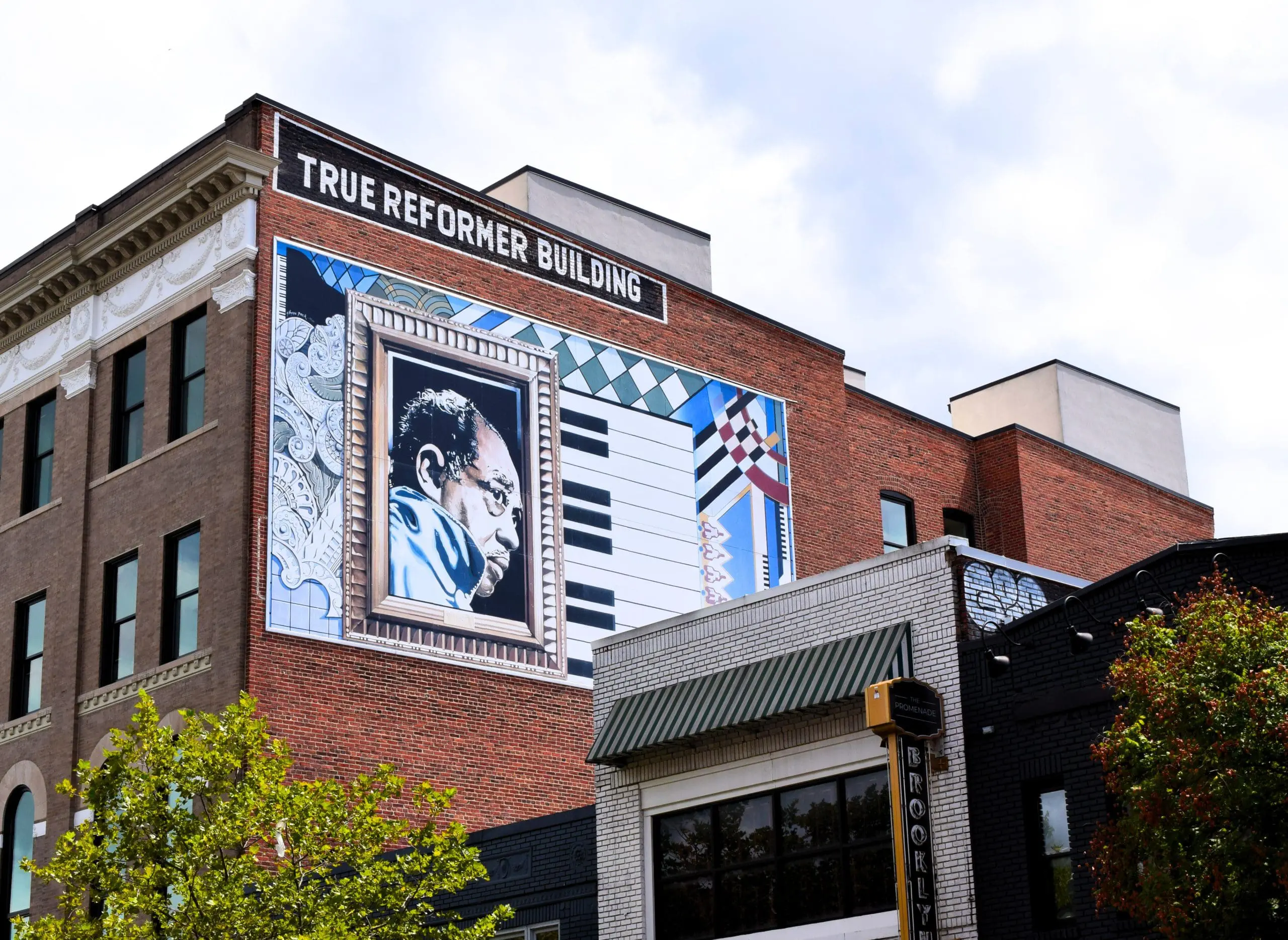
Отмечая свой 123-й юбилей, историческое здание True Reformer продолжает служить центром культурной жизни и поддержки сообщества на улице U. Это уникальное сооружение, построенное исключительно афроамериканцами в 1903 году, остается живым свидетельством их достижений и частью знаменитого маршрута наследия U Street.
Перевод ИИ
Текст статьи доступен на языке оригинала.
Нажмите кнопку «Перевести статью» выше, чтобы сгенерировать перевод с помощью ИИ.
Оригинальный контент
The grand, five-story True Reformer Building is one of the most significant structures on the U Street Heritage Trail. It stands out among nearby historic landmarks like Lee’s Flower Shop, Ben’s Chili Bowl and the Lincoln Theatre. Celebrating its 123rd anniversary this week, the building represents more than a century of history, resilience and community leadership
“All of these historic, Black-owned businesses in the district are collocated here because it’s part and parcel of the story,” said Candice C. Jones, president and CEO of the Public Welfare Foundation, which has owned the True Reformer Building since 1999.
To understand True Reformer today, it’s important to look back at its roots and the role it has had on the Black community.
Since opening on July 15, 1903, at the southwest corner of 12th and U Streets, the True Reformer Building has served as a gathering place for generations of Washingtonians. These were Black people working to provide resources and support for their community.
“The story goes that this building was financed, designed, constructed and every subcontractor was Black,” Jones explained as she led a tour of True Reformer.
Commissioned by the Grand Fountain of the United Order of True Reformers, the building was the first developed and built by African Americans after Reconstruction. It was designed by John Anderson Lankford, the first Black architect licensed in Washington, and is listed on the National Register of Historic Places.
“When you think of the fact that this building opened in 1903, what a remarkable statement of resilience and resistance for them during that time,” Jones said.
As a pillar of the community, True Reformer’s influence spans more than a century of Black cultural, social and economic history in Washington.
The First Separate Battalion, an African American reserve unit that served with distinction in World War I, drilled on the grounds and used True Reformer’s large basement. The placement of a military unit there was significant, especially for the Boys Club of the Metropolitan Police (Club No. 2).
Beginning in 1934, the club provided structured, recreational and educational programs to help prevent juvenile delinquency. Club No. 2 also served thousands of children from disadvantaged neighborhoods. It nurtured children who grew up to become legends like boxing champion Sugar Ray Leonard and college basketball coach John Thompson. As the Rev. William Lee noted in 1903, the True Reformer Building represented a symbol of community and “the credit of the Negro race.”
Murals of Washington composer and pianist Duke Ellington grace the exterior of the building and a wall outside the offices of the Public Welfare Foundation, which shares the mission of the True Reformers in dedicating itself to the well-being of people and communities in need.
Established in 1947, the Public Welfare Foundation is a nonprofit that advocates for criminal justice and youth justice reform. The foundation provides free space to nonprofits for events or offices. For example, grantees in its incubator for justice reform occupy offices on the third and fourth floor.
The foundation awards grantees that have similar values and missions with funds to work on more equitable legal systems. Beyond social and legal change, the True Reformer Building has remained a place where culture, music and art shape its legacy.
Within the walls of True Reformer, the Fountain Pharmacy, the Grand Fountain bank and the local newspaper bureaus serviced thousands of African Americans. The building also housed Chapman’s Tailoring and Designing School, the Washington Conservancy and the D.C. chapter of the National Negro Business League.
An array of cultural events happened throughout the years at the building, including theater productions, fraternity and sorority events, debutante balls, church programs and other community celebrations. A notable example is the series of music performances hosted by the Silver Slipper Club.
“If these walls could talk,” Jones said, “they would talk about Duke Ellington performances, Lena Horne, Pearl Bailey — the stories they could tell.” These events helped establish the building as part of the historical network that later became known as “Black Broadway” — one of the nation’s premier centers of Black commerce, entertainment and culture.
The proximity of Howard University helped transform the U Street Corridor into Black Broadway. True Reformer also became an extension of the intellectual and professional world surrounding the university.
A present-day collaboration is with Clarence James, a local artist who graduated with a BBA from Howard in 2014. James combines painting and drawing to create an allegorical narrative. One of his pieces is in True Reformer.
The building provides “these threads that pull us all together into the tapestry of Black American history,” said Leanna Commins, a Howard graduate who works in the communications department of the Public Welfare Foundation.
“My work in a very deep way honors the pledge I made to my alma mater that all roads of my career lead back to truth and service.”
The True Reformer Building stands as a testament to the enduring strength, creativity and resilience of Washington’s African American community, which considers it as more than an architectural landmark. It is a living record of Black achievement, perseverance and collective progress. It remains a symbol of how spaces created through vision and determination can transcend generations.
Nailah Williams is a reporter for HUNewsService.com.
Аналитика ИИ и парсинга
Технические детали обнаружения, сопоставления и связывания статьи
Поисковый запрос
«здание True Reformer 123-я годовщина черный предпринимательство Вашингтон»
Запрос, сгенерированный ИИ для поиска статьи в веб-источниках
Связанные результаты поиска
🇷🇺 123-я годовщина открытия регулярного движения по Транссибирской магистрали 🚂 14 июля 1903 года открылось регулярное движение по Транссибир
Активировать режим Low Quality (экспериментальная функция), чтобы сэкономить память, пожертвовав качеством графики.
Вашингтон. США расширили санкционное давление на Кубу, включив в черный список еще 10 организаций. Об этом сообщает министерство финансов США.