Английский Культура
01.09.2026 Читать источник
Фильм Марион Ле Корроле «Sanguine» закроет фестиваль Tubi FrightFest в Лондоне
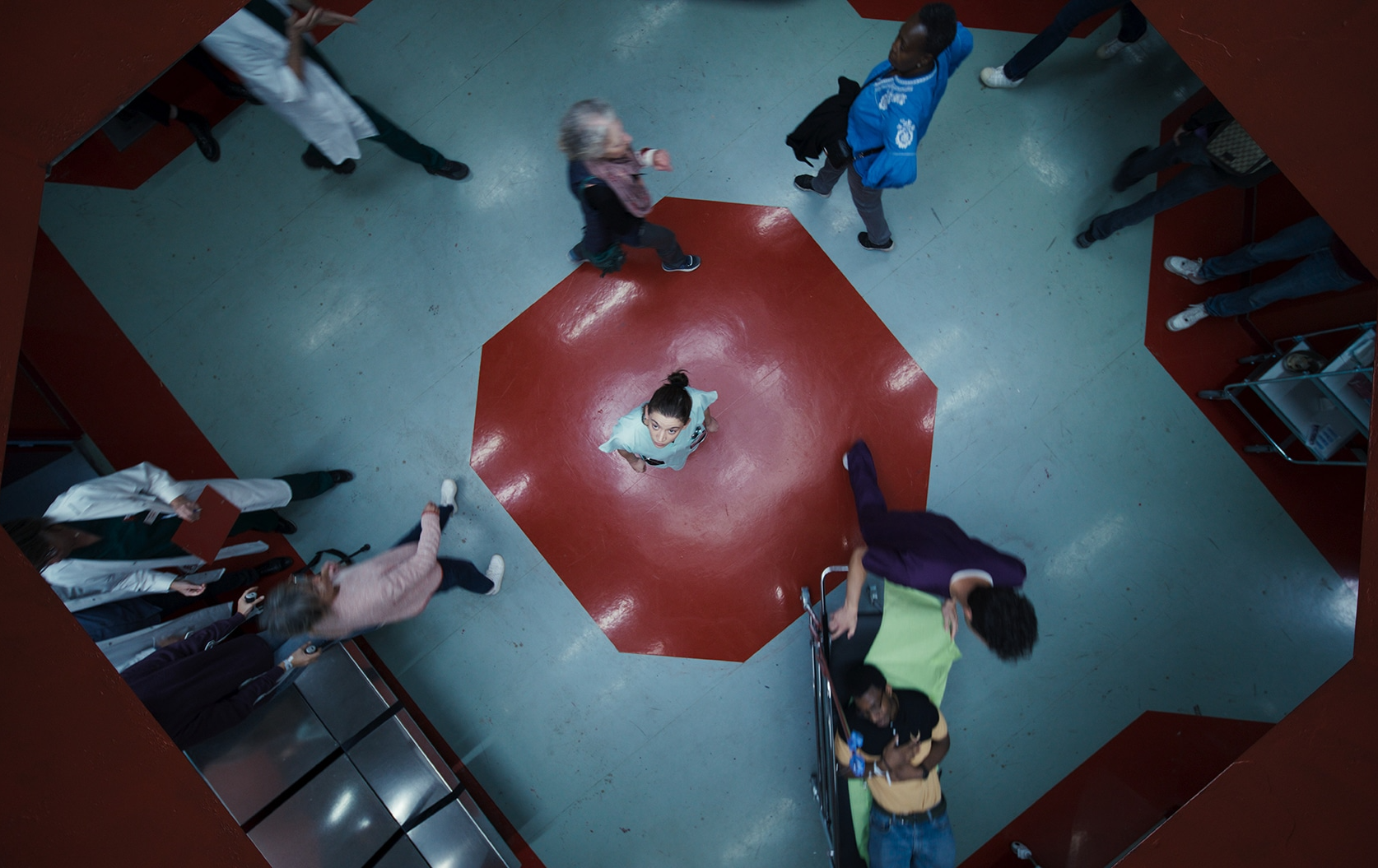
Дебютная лента французской режиссеры, основанная на реальных научных гипотезах об эпигенетике, станет финалом 82-й программы крупнейшего жанрового фестиваля Великобритании. Премьера картины состоится сегодня вечером в лондонском кинотеатре Odeon Luxe Leicester Square.
Перевод ИИ
Текст статьи доступен на языке оригинала.
Нажмите кнопку «Перевести статью» выше, чтобы сгенерировать перевод с помощью ИИ.
Оригинальный контент
For the second time in three years, Tubi FrightFest has chosen a female-directed French body horror film to close the UK's largest genre festival — and this time, the biological premise behind the mutating bodies onscreen is grounded in a peer-reviewed scientific hypothesis, a rare documented medical condition, and 40 years of epigenetic inheritance research. Marion Le Corroller's debut feature, Species (known in France by its superior title, Sanguine), is scheduled to receive its UK premiere tonight, August 31, at the Odeon Luxe Leicester Square — closing a record 82-film 2026 edition with 24 world premieres from 16 countries. When The Substance closed its 2024 edition in the same slot, Pierre-Olivier Persin's prosthetics turned Demi Moore and Margaret Qualley into spectacle. Tonight, Persin's studio does it again — this time for a film where the mutation is not a cosmetic terror but a generational one.
What the Previous Wave Left Undone
To understand what Le Corroller has made, it helps to understand where she enters a lineage that already has significant critical weight. In 2004, film critic James Quandt published an essay in Artforum coining the term "New French Extremity" to describe a wave of films characterized by graphic body violence and social critique — High Tension, Martyrs, Inside, Frontier(s). Film scholar Tim Palmer later proposed the alternate term cinéma du corps — cinema of the body — for the movement's dominant mode: the body not merely injured but philosophically obliterated through extreme suffering.
The first wave was, with few exceptions, made by men. The second wave is made entirely by women. Julia Ducournau opened it with Raw in 2016, then claimed Cannes' 2021 Palme d'Or with Titane. Coralie Fargeat followed with The Substance in 2024 — a film that opened at the 77th Cannes Film Festival, won Best Screenplay, earned five Academy Award nominations (Best Picture, Best Director, Best Actress, Best Original Screenplay, and Best Makeup and Hairstyling — which it won), and grossed $77–82 million against an $18 million budget, becoming Mubi's highest-grossing release. Marion Le Corroller, who premiered at Cannes Midnight Screenings in May 2026, is the third director in this succession.
What critics at Screen Anarchy, JoBlo, and regionfree.net independently observed when watching Species at Cannes is that Le Corroller is doing something her predecessors did not: she has collectivized the mutation. In Raw, cannibalism is Justine's private drive. In The Substance, the drug is Elisabeth's secret bargain. In Species, the transformation is spreading through an entire generation simultaneously — not as individual pathology but as something closer to an epidemic. Critics' descriptions — "intergenerational class war," "evolutionary biological weapon," "a new kind of infection" — are not quite accurate as science, but they are not quite wrong either.
Who Margot Is — and Why She Starts Bleeding
Species opens not in the hospital but in a fast-food restaurant, where a young counter worker — overworked, underpaid, and monitored in his ear by a supervisor counting down the seconds he has to serve each customer — is pushed past collapse when a demanding social-media influencer makes one extra request. The opening is deliberately blunt: Le Corroller wants it stated before a single hospital corridor is shown that the conditions creating her protagonist's crisis are not medical. They are economic.
Margot (Mara Taquin), a Gen Z medical intern, has worked exceptionally hard to secure a residency at what the film frames as France's most competitive emergency department. The hospital is a pressure cooker governed by a demanding senior physician (Karin Viard) who doubles as a withholding maternal figure, setting a relentless production-line pace that offers Margot no grace period for being new. Young patients begin arriving with identical, apparently inexplicable symptoms — spontaneous bleeding from the skin, lesions, scabs, and in some cases sudden violent outbursts. When Margot's own body begins to exhibit the same signs, she first reads them as psychosomatic: her body staging a protest against conditions she cannot consciously refuse. Her attending physician diagnoses her with hematidrosis and sends her back to work.
The film's central reversal, which Le Corroller introduces without much reluctance — the satire is the point, not a twist to be withheld — is that the "disease" is not a disease. The mutations are adaptive. As Margot deteriorates visually, she simultaneously becomes superhuman at her work: faster, more intuitive, capable of surgical feats her colleagues cannot explain. The film's punchline, described by The Film Verdict as "audacious" if not wholly convincing, is that the condition may be an engineered evolutionary response — the body of a generation literally forced to become a new species to survive labor conditions designed to consume it.
The emotional register is tragedy operating in a darkly comic key — not the sleek corporate horror of The Substance or the gothic coming-of-age terror of Raw, but something closer to Cronenberg's Dead Ringers: a medical procedural that turns into a body horror film from the inside, using the protagonist's professional knowledge to give her the unusual privilege of intellectualizing her own symptoms in real time. Margot knows what hematidrosis is. She knows what it means. She goes back to work anyway.
Is Hematidrosis Real?
Hematidrosis — also called hematohidrosis, haematidrosis, or hemidrosis — is a documented medical condition in which a human sweats blood. The mechanism is understood: capillary blood vessels surrounding the sweat glands rupture under conditions of extreme physical or psychological stress. The sympathetic nervous system activates the fight-or-flight response at high intensity, producing a cortisol and adrenaline surge that causes rapid vasoconstriction followed by vasodilation that brings capillaries past the point of rupture. Blood enters the sweat glands and emerges through the skin.
The condition is so rare that the medical literature on it consists largely of single case reports. A 2013 hematidrosis case study published in the journal Blood documented an 18-year-old patient who experienced 30 distinct bleeding episodes over six months of hospitalization, with all laboratory values remaining entirely normal. The stress, and the stress alone, was the vector.
Historical records of hematidrosis include battlefield medicine, prisoner-of-war documentation, and accounts of intense phobia. Leonardo da Vinci recorded a soldier's case after combat. The condition's documented origins in extreme fear and exhaustion are precisely why Le Corroller chose it as her film's diagnostic gateway rather than an invented pathology: it is real, it is stress-induced, and it is visible on the skin in the most alarming way possible. It is also — and this is the film's satirical gift — something a hospital's senior physician might plausibly dismiss as a known condition, diagnose on a chart, and then continue demanding the patient show up for her shift.
Does Stress Biologically Rewrite the Body?
Le Corroller's speculative leap — from hematidrosis as an endpoint to hematidrosis as a threshold for something deeper — has a legitimate scientific framework to extrapolate from, even if the extrapolation is fictional.
In 2013, biologists Aleksandar Vojta and Vlatka Zoldoš at the University of Zagreb proposed what they called the ADERS hypothesis in an open-access paper in BioMed Research International: the Adaptive Deregulation of the Epigenome in Response to Stress. Epigenetics is the study of heritable changes in gene expression that do not alter the underlying DNA sequence — the body's mechanism for responding to environmental conditions across short- and medium-term timescales. The ADERS hypothesis proposes that as chronic stress accumulates, cells that avoid cell death respond with progressive epigenetic changes that activate stress-response gene clusters while simultaneously deregulating other cellular processes. The balance between the adaptive response and pathological deregulation sits on a continuum: at low levels, stress produces beneficial adaptation; at high levels, the same mechanism tips toward malignant transformation.
This is the biological territory Species occupies. What the film extrapolates — fictionally but not incoherently — is that when a stressor exceeds any historical threshold, the ADERS continuum tips past the boundary between adaptation and transformation: not into cancer, not into burnout-as-damage, but into a directed physiological upgrade that the organism's genome was not expected to reach. The cost is the body's surface integrity. The benefit is a functional capability the pre-transformation body could not sustain.
The science of the film's "contagion" logic is different, and more interesting. Individual epigenetic change is not transmitted person-to-person through proximity. But population-level epigenetic research — specifically the Överkalix transgenerational inheritance studies, conducted by Lars Olov Bygren using 19th-century historical records from a remote Swedish municipality and published in the European Journal of Human Genetics in 2002 — demonstrated that environmental stressors experienced by one generation produce measurable epigenetic marks in grandchildren, transmitted through the germline. The food supply available to a paternal grandfather during his prepubertal slow-growth period influenced cardiovascular and diabetes mortality in his grandsons. The idea that a generation experiencing a specific, shared, historically unprecedented form of socioeconomic stress might express a specific, shared biological response is not science fiction as much as it is science at the edge of its current resolution.
What Le Corroller adds is the disease-spread model as a narrative device for making visible something that is already happening slowly and silently: a generation whose epigenome is being shaped by conditions of labor, precarity, and performance demand that have no prior historical equivalent. The virus in Species is not a pathogen. The film makes the metaphor literal in order to make it legible.
What the French Title Carries That the English Loses
The English title, Species, is taxonomic: a clinical word for evolutionary category. It frames the mutation as an arrival, an outcome, a classification result.
Sanguine, the French title Le Corroller prefers, operates on three registers simultaneously. From Latin sanguis — blood — it refers literally to the film's central visual medium. In English usage, "sanguine" denotes optimistic confidence, a meaning precisely inverted by the film's bleak labor critique. And in the Galenic temperament tradition inherited from ancient humoral medicine, the sanguine type was the hot-blooded, vital, impulsive personality ruled by blood — associated with passion and impulsiveness. The French title frames the mutation as something that was always latent inside these workers, waiting for conditions extreme enough to surface it. The English title frames it as a destination. The distance between those framings is the distance between a film about human beings and a film about organisms.
Species is the title the world will receive in most English-language territories. Sanguine is the film Le Corroller made.
Pierre-Olivier Persin and the Argument for Making It Real
Persin won Best Makeup and Hairstyling at the 97th Academy Awards in 2025 — alongside Stéphanie Guillon and Marilyne Scarselli — for The Substance. His studio, POP FX, operates from Paris, France, and is known for a commitment to practical prosthetics over digital visual effects in an industry era when CGI makes the alternative cheaper and technically easier.
For The Substance, Persin's process was documented by Phantasmag in detail: 11 months of work, a schedule of 3 AM start times and 22-hour days, driving between his workshop and a rented secondary facility. The pointillist skin painting method on the film's silicone prosthetics mixed reds, yellows, greens, blues, and ochres in layers — because no single paint color replicates the optical complexity of living human skin. Every prosthetic was destroyed at the end of each shooting day: silicone cannot be reused at the level of detail required, so a 40-day shoot required 40 complete sets of prosthetics per character — multiple characters at multiple sizes, built from scratch each time.
This same studio and methodology came to Species. For Le Corroller's film, the mutations are different in kind: where The Substance depicted decay and grotesque overcorrection, Species depicts enhancement purchased in blood. The mutations in Species are not punishments. They are, in the film's logic, promotions. Persin's prosthetics have to carry both the horror and the ambiguity — the bleeding skin that is also, somehow, the body getting better.
The philosophical argument for making this in-camera rather than in post-production is the same argument Coralie Fargeat made and that Le Corroller has extended: when the body horror is literally present in the room — when the actor is covered in something real that was built by a craftsperson over months — the performance responds to it, the director can see it, and the camera can record it without digital mediation. The mutation happened. It is there. The film documented it.
Does Species Fully Work?
The critical consensus from Cannes 2026 is more complicated than the FrightFest billing suggests. Reviewers at Eye for Film, RogerEbert.com, and RMITV noted that while the premise and the opening sequences are exceptionally strong, the film's middle section struggles to sustain coherent momentum across its multiple genre registers — body horror, medical procedural, workplace satire, and coming-of-age story. The Film Verdict called Species' class-war punchline "audacious but not wholly convincing." Screen Anarchy and JoBlo were more positive, with the latter calling it "a great addition to the [horror] canon" and noting that Mara Taquin's performance grounds the film's most outlandish premises.
The consensus that emerges from multiple independent reviews: Species/Sanguine is a formally uneven but intellectually serious debut from a director with a distinctive vision. The opening ten minutes are among the sharpest workplace-horror sequences in recent French genre cinema. The final act, featuring what RMITV described as "stomach-churning set pieces" of guerrilla surgery, is viscerally effective. The film between those two poles is where Le Corroller's ambition occasionally exceeds her control. This is a common failure mode for debut features with large ideas and limited running time. It is a considerably more interesting failure mode than the alternatives.
What is not in question is where Le Corroller lands in the directorial lineage she is entering. The SciFiNow FrightFest 2026 guide placed it plainly: Species does for Gen Z's work stresses what The Substance did for the beauty myth. That is both a compliment and a framework. Coralie Fargeat's film was also somewhat incoherent in its middle sections — and it made $77–82 million and won an Academy Award. The lesson of the New Femme Extremity so far is that ambition and commercial viability can coexist in genre cinema when the underlying social critique is specific, the practical effects are extraordinary, and the directorial voice is unmistakable. Species/Sanguine has all three.
Frequently Asked Questions
What is Species (also known as Sanguine), and where can I see it?
Species is a French-Belgian sci-fi body horror film written and directed by Marion Le Corroller, with a screenplay co-written by Thomas Pujol. It follows Margot, a Gen Z medical intern at France's most competitive emergency department, who discovers that the inexplicable bleeding symptoms spreading through her Gen Z patients are neither a viral infection nor a psychiatric condition — but something her body is also beginning to experience. It had its world premiere in the Midnight Screenings section of the 2026 Cannes Film Festival and is receiving its UK premiere tonight, August 31, at Tubi FrightFest at the Odeon Luxe Leicester Square. International distribution rights are held by WTFilms. No wide theatrical or streaming release date has been confirmed as of this writing.
What is the "New Femme Extremity," and why does it matter for understanding Species?
New Femme Extremity is an emerging critical term for a successor wave within the New French Extremity movement — the tradition of transgressive French-language body horror and social critique cinema coined by critic James Quandt in a 2004 Artforum essay. Where the first wave was largely male-directed (Gaspar Noé, Bruno Dumont), the current wave is defined by female authorship: Julia Ducournau (Raw, Titane — Palme d'Or 2021), Coralie Fargeat (The Substance — Oscar for Best Makeup and Hairstyling, approximately $77–82 million global box office), and now Marion Le Corroller. The female-directed wave has also shifted the body horror's political grammar: from individual pathology (the mutating body as one person's private crisis) to collectivized condition (the mutating body as a generation's shared biological response to shared social injury). Le Corroller's Species is the most explicit articulation of that shift to date.
Is hematidrosis a real medical condition, and is it actually caused by stress?
Yes, on both counts. Hematidrosis is documented but extremely rare — a condition in which capillary blood vessels surrounding the sweat glands rupture under extreme physical or psychological stress, causing blood to emerge through the skin. The mechanism involves the sympathetic nervous system's fight-or-flight response driving vasoconstriction and then vasodilation past the capillaries' rupture threshold. The medical literature on it consists largely of single case reports — a 2013 hematidrosis study documented an 18-year-old with 30 bleeding episodes over six months and entirely normal laboratory values, with stress as the only identifiable cause. Le Corroller's choice of this condition as her film's diagnostic gateway is one of Species' most intellectually interesting decisions: it is real, stress-induced, visually alarming, and clinically dismissible — all of which the film uses.
What does the science of epigenetics actually say about stress and the body?
Epigenetics is the study of heritable changes in gene expression that do not alter the underlying DNA sequence — the mechanism by which environmental conditions produce biological responses across short and medium timescales. The ADERS hypothesis, proposed by biologists Vojta and Zoldoš at the University of Zagreb in a 2013 BioMed Research International paper, argues that accumulated chronic stress produces progressive epigenetic changes that activate stress-response gene clusters while deregulating other cellular processes — and that the balance between adaptation and malignant transformation sits on a continuum. The film's extrapolation is that when stressors exceed any historical threshold, this continuum tips past the boundary from adaptation to something that looks like transformation. That extrapolation is fictional — but the hypothesis it extrapolates from is peer-reviewed science. The Överkalix inheritance study findings further demonstrated that environmental stressors experienced by one generation produce measurable epigenetic marks in grandchildren, which is the real-world foundation for the film's population-level mutation logic.
ⓒ 2026 TECHTIMES.com All rights reserved. Do not reproduce without permission.
Аналитика ИИ и парсинга
Технические детали обнаружения, сопоставления и связывания статьи
Поисковый запрос
«фильм Марион Ле Корроле Sanguine фестиваль Tubi FrightFest Лондон»
Запрос, сгенерированный ИИ для поиска статьи в веб-источниках
Связанные результаты поиска
04/09/2026 НОВИНКА ОТ КОРБЕЙНА И ДЕБЮТ КОРТНИ КОКС: ТОП-5 ФИЛЬМОВ TORONTO INTERNATIONAL FILM FESTIVAL 2026 С 10 по 20 сентября 2026 года в Торонто пройдет 51-й международный кинофестиваль.