Английский Культура
07.09.2026 Читать источник
Спор о поездке брахмана в Японию разделил общину в Альморе на враждующие кланы
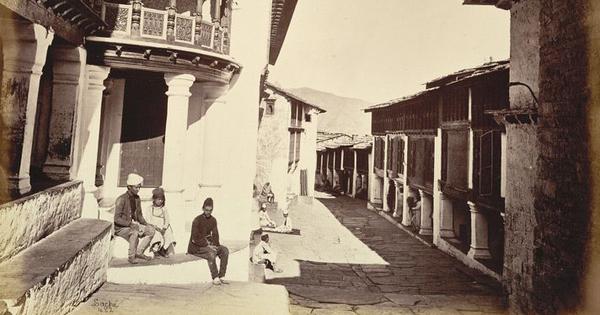
Возвращение в 1910 году брахмана Бходадутта Панде из-за рубежа вызвало ожесточенный спор о ритуальной чистоте, который привел к глубокому расколу в семье и общине. Конфликт, возникший из-за его выбора, закончился трагической смертью путешественника, ставшего жертвой давления коллектива.
Перевод ИИ
Текст статьи доступен на языке оригинала.
Нажмите кнопку «Перевести статью» выше, чтобы сгенерировать перевод с помощью ИИ.
Оригинальный контент
Remembering ‘Got Japan’: This book dissects upper-caste life in Himalayan towns in colonised India
In 1906, a young Brahmin named Bholadutt Pande decided to travel to Japan and the United States to seek better educational opportunities than were available to him in British India. He was the first from his community of elite Almora Brahmins to make a journey crossing the seas, at least in recent memory. His return to Almora in 1910 sparked a huge controversy. Overseas travel was regarded as taboo for caste-Hindus. It was impossible, some Hindus argued, to sustain the required levels of ritual purity – an essential component of caste – through a long sea voyage and an extended sojourn abroad. So Bholadutt’s return polarised the community.
Several families in Almora bore the brunt of the controversy created by Pande’s travel overseas. With such virulence did the debate on his return escalate that it created a huge schism among clans. The divisions were pretty serious – inter-family and even intra-family. Daughters could not meet mothers on account of their opposing views of the affair, fathers refused to eat with their sons, uncles ostracised nephews, brothers refused to talk to brothers – all on account of a difference of opinion on what Bholadutt Pande’s status should be. I rely primarily on a set of letters from 1911 that reveal how the controversy impacted one clan, other residents of Almora, and relatives who had moved away from the town. The letters I use show the effect of the crisis on one particular family within a clan of Pande Brahmins based in a mohalla of Almora called Champanaula.
Kumaonis concocted their own name for the controversy; it was referred to in Kumaoni as the time when people “got Japan” (जापान लाग गो Japaan Lag Go), much as one would describe a serious illness – for instance, when saying someone “got the flu or Covid”.
Why did this relatively short-lived controversy, supposedly over the issue of an obscure ritual observance, come to have such a far-reaching impact among Kumaonis? And why should anyone other than a few elite Kumaonis be interested in this controversy?
The answer to both questions, I suggest, is that the controversy brought to the surface certain historically significant changes that threatened the very basis of a sense of community. Understanding “getting Japan” in early-20th-century Kumaon helps us better understand the longings and fears, the conflicts and cohesions, and the affection and antagonism that are constitutive of belonging within communities.
Why should readers outside the small and little-known region of Kumaon be interested in the story told here? One response might be rhetorical: that it is no more or less important than the history of any other region, whether of Bengal, Birmingham, or Boston, or Bombay. Beyond this response, the story I have recounted helps fill a gap in the existing scholarship about communities in South Asia – inasmuch as it looks at community intensively, for its own sake, and from the perspective of everyday life. To reiterate, the point I am making here is that not only do the textures of everyday life help us understand more fully what it means to belong to a community, but that to ignore the specificity of these textures is to never really understand the fundamentals that give coherence to a community or to the ways in which people actually experience belonging in a lived sense.
I have tried to point out here the sources of cohesiveness as well as the distinctions that lay at the heart of belonging to this community in the early part of the 20th century. In the process, I have highlighted the place of social capital and affective relations, and the ways in which both served to bring together as well as divide the community. I have also tried to show that communities are neither held together nor divided only by factors related to professional ambition. It was everyday social interactions, shared rituals, and shared locations of sociability in the courtyards and living rooms of Almora, as well as beyond the town, that also shaped and cemented belonging. The letters around the “getting Japan” crisis reveal how it was the loss of this sociability that most galled conservatives and reformers alike.
The fortunes of the Kumaoni Brahmins were closely connected to the powers of the state, whether the entity controlled by Chand rulers or by the British. Access to the patronage of those who held state power, and the social capital clans derived from that access, were critical to shaping their sense of community, with all its attendant hierarchies. The controversy over Bholadutt and his travel overseas, I have argued, was closely connected to shifts in sources of social capital as a new generation of Kumaonis looked for such capital outside the clans that had traditionally constituted the community. Far from being the Other of modern politics, community was inextricably enmeshed with the larger political and economic world around it.
The quotidian and the everyday, in brief, are shown as vital to the constitution of community as well as to the tensions that are invariably a part of community life. Micro studies of lived belonging, such as the one here, take us well beyond theories of community, as well as beyond simplified or generalised notions and ideas of belonging.
Belonging meant not just being part of or supported by the community but also being subject to its demands and rules – akin to being owned by the entity we call community. Visiting friends, sharing a hukka or a cup of tea, and being invited to and inviting relatives to landmark life-cycle occasions were all critical to strengthening the bonds of community. They helped reinforce the feelings of belonging, just as the social network of connections within and between clans helped forge a support network that sustained the material needs of the community. “Getting Japan” therefore also draws our attention to the other, darker, side of belonging. The Champanaula letters reveal the discipline that communities seek to impose on the individuals who comprise it, how the community asserts its primacy over the individual.
Perhaps the exemplar here is Bholadutt himself, whose voice has been absent throughout. In a letter to his cousin written shortly before his untimely death, Pande, tired of what he termed the hypocrisy of both reformers and conservatives, wrote: “I have no desire to be in your community – the community of the Kumaon people.” Less than a month later he was dead. His tragedy, I would argue, was the product of the simultaneous operation of the two meanings of belonging. The community he had longed to be part of rejected him because he would not agree to be a belonging, a possession, of the community. Yet his rejection was so hurtful, and so meaningless did he feel his life had become without a sense of belonging to the community, that he probably chose to put an end to his own individual existence.
Excerpted with permission from Brahmins of the Himalaya: Upper-Caste Ways of Belonging, 1850–1950, Sanjay Joshi, Permanent Black and Ashoka University, and SUNY Press, New York.
We welcome your comments at
[email protected].
Аналитика ИИ и парсинга
Технические детали обнаружения, сопоставления и связывания статьи
Поисковый запрос
«брахман Панде Япония ритуальная чистота Альмор»
Запрос, сгенерированный ИИ для поиска статьи в веб-источниках
Связанные результаты поиска
В общественных пространствах чистота держится на высокой культуре посетителей, приученных беречь окружающую среду с ранних лет.