Английский Экология
02.09.2026 Читать источник
Совет по общественным работам Рэпид-Сити одобрил соглашение с Dakota Biochar для переработки древесных отходов в биоуголь
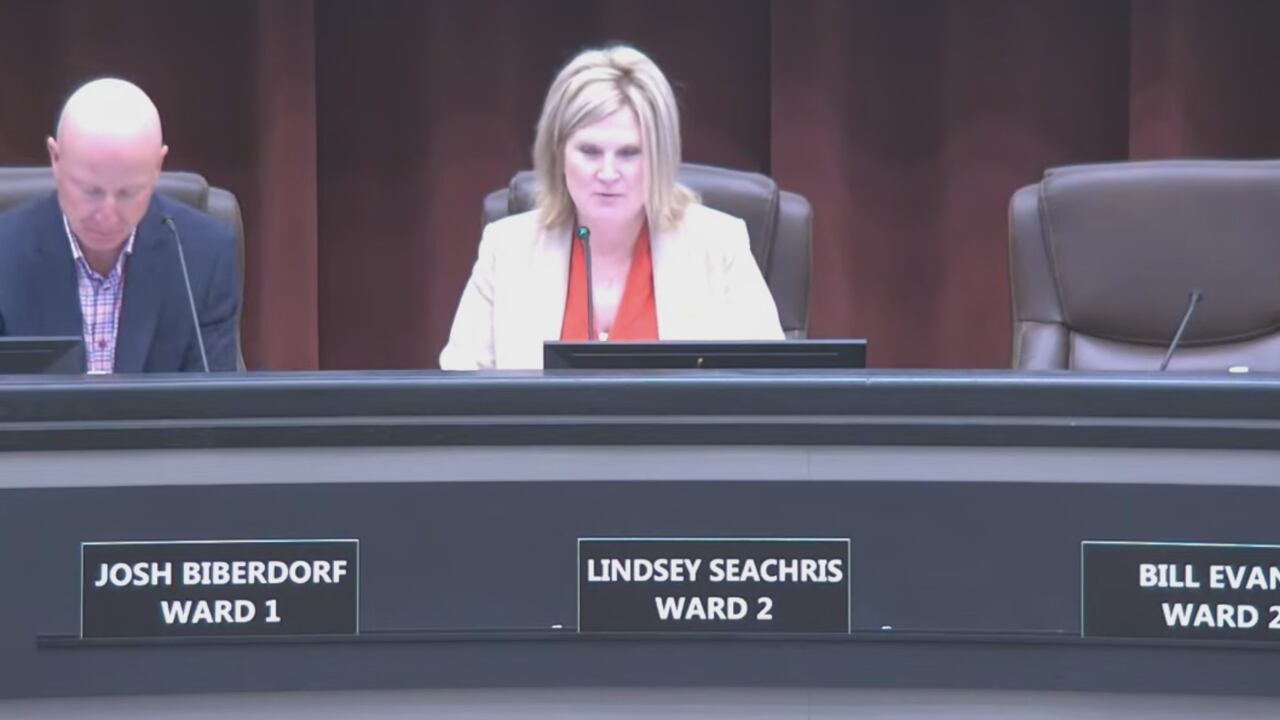
Комитет по общественным работам Рэпид-Сити (Южная Дакота) направил на рассмотрение городскому совету меморандум о взаимопонимании с местной компанией Dakota Biochar, которая будет превращать древесные отходы в биоуголь. Данная инициатива призвана продлить срок службы полигона твердых отходов и снизить долгосрочные расходы для жителей, а также решить проблему загрязнения компоста.
Перевод ИИ
Текст статьи доступен на языке оригинала.
Нажмите кнопку «Перевести статью» выше, чтобы сгенерировать перевод с помощью ИИ.
Оригинальный контент
Rapid City moves toward turning landfill wood waste into biochar, citing historic windstorm
Public Works Committee sends Dakota Biochar partnership to full City Council after storm left ‘excess of wood waste debris’ at landfill
RAPID CITY, S.D. (KOTA) - Rapid City’s Public Works Committee voted Tuesday to approve a memorandum of understanding with Dakota Biochar, a local company that turns waste wood into a soil product, in a move city leaders say could extend the life of the city’s landfill and help keep resident rates down long-term.
The agreement now heads to the full City Council for a vote next Tuesday. If approved, it would go to the mayor’s desk for signature, then to Dakota Biochar for signature as well.
Councilwoman Lindsey Seachris pulled the item from the committee’s consent agenda for additional discussion before the vote.
“The opportunity for us to look at diverting waste from the landfill and working with a local company here in South Dakota, Dakota Biochar... I just wanted to emphasize this and just let you know how much I appreciate you thinking outside the box and coming up with alternative solutions for landfill diversion,” Seachris said.
The committee approved the item on a motion from council member Meijer, seconded by council member Biberdorf.
A problem that piled up fast
City leaders say the push to formalize a relationship with Dakota Biochar gained urgency after a historic windstorm battered the region overnight on Dec. 17-18, 2025. The National Weather Service recorded all-time high wind gusts of 91 mph in east Rapid City and 94 mph at Rapid City Regional Airport during the storm — with gusts reaching as high as 101 mph across the broader region spanning northeastern Wyoming and western South Dakota. Some Black Hills residents lost power for up to a week.
The storm downed trees and scattered debris across the city, adding to an already-growing supply of wood waste at the landfill.
“Especially after the big windstorm that we had, we’ve just got an excess of wood waste debris out at the landfill currently,” said Mike Theis, Rapid City’s Public Works Director. “As we were talking with Dakota Biochar, we had already been in discussions with them about possibilities. This just highlighted the likelihood of those possibilities becoming fruition.”
Theis said the city and Dakota Biochar had been in informal talks for close to six months before Tuesday’s vote.
“They approached us on looking for sites to be able to house a facility that would turn this wood waste into biochar,” Theis said. “So we’ve been having some internal discussions with them on what the possibilities look like, what they do specifically, and whether that would work with our operations or not.”
From waste wood to usable product
Dakota Biochar operates in the Rockerville area, where it heats waste wood in a low-oxygen process called pyrolysis, turning it into a porous form of carbon known as biochar. The company already collects wood waste from Black Hills forests — often from slash piles that would otherwise take decades to break down — and mixes the resulting biochar with compost for use on farms across South Dakota, including ongoing trials in Aberdeen and Custer.
Under the proposed partnership, Theis said the city sees several potential applications for biochar made from municipal wood waste.
“What we’re working with Dakota Biochar on is turning our wood waste into biochar, which can be used for anything from additional supplement to animal feed to putting into yard compost and things like that to deactivate some of the herbicides and things like that that are in the compost,” Theis said.
That last point addresses a specific, long-standing issue for the city’s own composting operation. Rapid City processes and sells compost at the landfill, but Theis said the product has had a persistent contamination problem.
“This also opens up some avenues for us with our compost that we process and we sell at the landfill today,” Theis said. “Well known that we have issues with herbicides in that compost. This is an active charcoal product that would help take those chemicals out of the compost and make that more marketable in the future and help us to get rid of that as well.”
Biochar’s absorptive properties function similarly to activated charcoal filters used in water purification, pulling contaminants out of the material it’s mixed with.
Theis also said the city is looking at potential energy-production applications as part of a broader partnership, though those details remain unformed.
Why partner with a private company?
Theis said the city doesn’t have the in-house expertise to convert wood waste into biochar itself, making a partnership with an established local company the more practical path.
“This is something we don’t have the expertise of this type of technology. Dakota Biochar is specializing in this,” Theis said. “They approached us on looking for sites to be able to house a facility that would turn this wood waste into biochar.”
Per the agenda item summary provided by the city, the memorandum of understanding “does not commit either party to spend money or provide staff or equipment.” Any specific projects that require funding or additional resources would need to be separately negotiated and approved before moving forward. Theis said the MOU is intended to open the door to those deeper financial and operational conversations.
“The MOU will turn this into a deeper discussion on getting into the financial aspects of it and just looking at how feasible this is for both companies,” he said.
What it means for residents
Theis said the core benefit for Rapid City residents comes down to landfill capacity — and, by extension, the fees residents pay.
“Hopefully we’re keeping the wood waste that could ordinarily go into our landfill and fill that landfill up,” Theis said. “By finding ways to divert everything from recycling to wood waste, it keeps those items out of the landfill, extends the life of the landfill, which in turn for a resident helps us keep those rates lower in the future versus expanding very expensive cells to develop.”
Expanding landfill capacity by developing new cells is a significant and costly undertaking for municipalities; diverting material that would otherwise take up space is one strategy cities use to delay that expense.
Asked what a successful partnership might look like several years from now, Theis said he hopes it grows well beyond Tuesday’s initial agreement.
“Hopefully this turns into a long-term agreement,” he said. “The MOU just gives us the opportunity to continue the discussions and see how viable this option is for both us and Dakota Biochar... Hopefully five years down the road, we continue this relationship and look at how that may be expanded for both of us.”
What’s next
The City Council is scheduled to vote on the memorandum of understanding next Tuesday. If approved, the agreement would be signed by the mayor and then by Dakota Biochar, opening the door to more detailed talks about specific projects, costs, and timelines.
KOTA Territory News will continue following the story as it moves through City Council and as any specific projects under the agreement take shape.
This story builds on KOTA Territory News’ Aug. 21 report on Dakota Biochar’s forest wood waste and wildfire mitigation work across the Black Hills. [Editor’s note: link to Aug. 21 article here.]
See a spelling or grammatical error in our story? Please click here to report it.
Do you have a photo or video of a breaking news story? Send it to us here with a brief description.
Copyright 2026 KOTA. All rights reserved.
Аналитика ИИ и парсинга
Технические детали обнаружения, сопоставления и связывания статьи
Поисковый запрос
«Рэпид-Сити Dakota Biochar биоуголь древесные отходы»
Запрос, сгенерированный ИИ для поиска статьи в веб-источниках
Связанные результаты поиска
Биоуголь, как одна из немногих масштабируемых технологий удаления углерода, продемонстрировал взрывной рост продаж через торговлю углеродными кредитами (BCR). В 2025 году Microsoft подписала соглашение о закупке 1.24 миллиона тонн биоугля для удаления углерода.