Английский Финансы
09.09.2026 Читать источник
От банкротства к капитализации в 12,5 трлн рупий: как Радж Агравал превратил Gravita India в лидера переработки
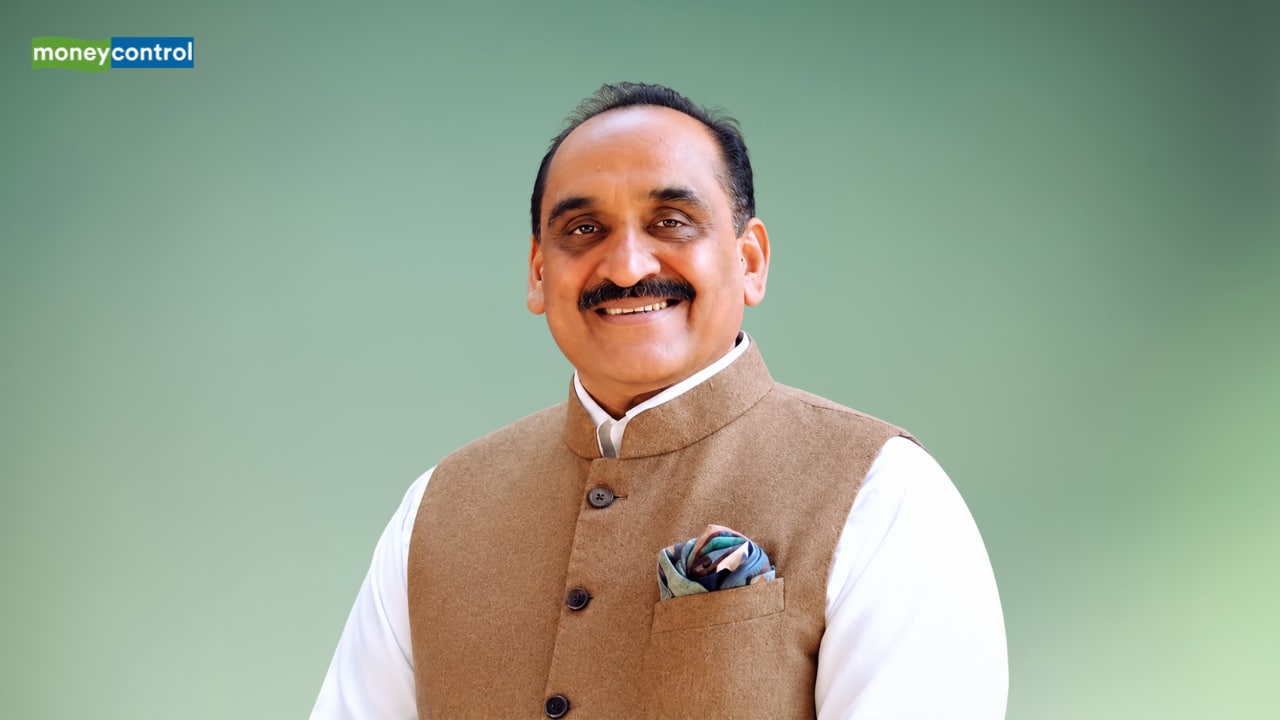
Основатель Gravita India Радж Агравал, преодолев личный крах и продажу семейного дома, создал компанию с выручкой почти 400 млрд рупий. Бизнес, начавшийся с переработки свинца, теперь успешно работает в сфере алюминия и пластика по всей Индии и за рубежом.
Перевод ИИ
Текст статьи доступен на языке оригинала.
Нажмите кнопку «Перевести статью» выше, чтобы сгенерировать перевод с помощью ИИ.
Оригинальный контент
From bankruptcy to Rs 12,000 crore success: How Rajat Agrawal made Gravita India a recycling powerhouse- Moneycontrol.com
From bankruptcy to Rs 12,000 crore success: How Rajat Agrawal made Gravita India a recycling powerhouse
There was a time when Rajat Agrawal did not know how he would get back into business. His lead-recycling ventures had failed, his bank had forced the sale of his family home to recover dues and the factory he had built had no buyers.
September 10, 2026 / 17:09 IST
Gravita India founder Rajat Agrawal
There was a time when Rajat Agrawal did not know how he would get back into business. His lead-recycling ventures had failed, his bank had forced the sale of his family home to recover dues and the factory he had built had no buyers.
Three decades later, the founder of Gravita India is running a business that generated consolidated revenue of nearly Rs 4,000 crore in FY25 and has expanded from lead recycling into aluminium, plastics and other recycling and manufacturing businesses across India and overseas.
The distance between those two points is what makes Agrawal's story less about a conventional startup success and more about how a business can be rebuilt after its original model stops working.
Read Also: From bank rejection to Rs 11,000 crore net worth: Meet Veegaland founder Kochouseph Chittilappilly who donated his kidney to a stranger at 60
Rajat Agrawal, a mechanical engineering graduate from Malaviya National Institute of Technology (MNIT), had decided early that a conventional engineering career was not for him.
While still in college, he convinced his parents to give him Rs 1 lakh to buy agricultural land. He purchased 20 acres on the Diggi-Malpura Road and started cultivating vegetables, learning scientific farming methods along the way. The farm generated sales of Rs 1.35 lakh in its first year and Rs 1.85 lakh in the second.
He subsequently added a dairy business with 10 Holstein cows.
But the farm was less important for what it earned than for what it taught Agrawal about running a business. He eventually joined engineering major Larsen & Toubro (L&T) as a stockist, despite not having the MBA qualification mentioned in the job advertisement.
The experience strengthened his conviction that he wanted to build a manufacturing business of his own.
That search eventually led him to recycling. He tested the market before betting the business
Rather than immediately committing capital to a recycling plant, he first imported consignments of used lubricating oil, tyres, automotive batteries and industrial paint and sold them to recyclers.
The experiment pointed him towards lead.
At the time, India was importing more than 60 percent of its lead requirements, while the growing use of lead-acid batteries created a sizeable recycling opportunity. Agrawal sold his farm and dairy business and entered lead recycling, laying the foundation for Gravita India.
The business initially performed well, but then regulation changed the economics.
Following tighter restrictions around hazardous waste and its movement after the Basel Convention, India's rules affected the import of material that Agrawal's business depended upon. He was forced to shut the operation and let go of more than 100 employees.
He tried to restart with a liquid-lead recycling business. But another policy change followed: the government cut the import duty on lead chemicals from 35 percent to 5 percent, making imports significantly cheaper.
The second venture also had to be closed.
This time, the damage went beyond the factory. Agrawal was declared bankrupt and his family home was sold by the bank to recover its money.
With the Indian business effectively stalled, Agrawal moved to Singapore and joined a company dealing in scrap.
Outside office hours, he continued looking for business opportunities and potential partners. He eventually identified an opportunity to establish a battery-recycling unit in Sri Lanka.
His technical and operating experience gave him confidence in the business, but the venture ran into a familiar problem: working capital.
Agrawal approached strategic investors in India. After inspecting the facility, they agreed to come on board and provide the capital needed to grow the operation.
The Sri Lankan business became profitable, giving Agrawal a template he could replicate.
In 2005, Gravita expanded into Ethiopia, followed by operations in Madagascar, Namibia and Ghana.
The overseas businesses gave the company a broader operating base and helped Agrawal rebuild his track record before returning to India.
Agrawal eventually sought to re-enter the Indian market. His bank waived penal interest, recognising that policy changes had contributed to the failure of his earlier businesses.
He returned by establishing a unit in Jaipur and then expanding through acquisitions, including recycling facilities in Jammu and Kashmir, Gujarat and Andhra Pradesh.
The strategy was no longer built around a single recycling plant or a single material.
Over time, Gravita expanded into lead, aluminium and plastic recycling and manufacturing, while also developing capabilities in turnkey lead-smelting projects and environmental services related to Extended Producer Responsibility and battery-waste regulations.
The group also built an international subsidiary network, giving it exposure to multiple markets and an export-oriented business.
Gravita's listing in 2010 marked another major shift. The company raised Rs 45 crore through its IPO, which was subscribed around 43 times, and listed on the NSE and BSE in November that year.
The financial numbers show what happened after the business moved beyond survival.
According to the data available on Tracxn, consolidated revenue of the company rose from Rs 1,348.79 crore in FY20 to Rs 3,980.61 crore in FY25, a five-year CAGR of roughly 24 percent. Net profit increased from Rs 36.58 crore to Rs 312.90 crore over the same period, translating into a CAGR of about 54 percent.
FY25 EBITDA stood at Rs 435.92 crore, while operating cash flow was around Rs 282 crore.
The company has also attracted significantly larger pools of capital as it has scaled. In December 2024, Gravita raised around $117.5 million in a post-IPO transaction involving institutional investors including Mirae Asset, Aditya Birla Sun Life Insurance, Goldman Sachs, Kotak Investment Banking and Oxbow Master Fund.
The entrepreneur who once had to sell his home because his recycling business had collapsed now leads a listed company valued at Rs 12,577 crore as of September 9, 2026.
Saurav Pandey Business journalist at Moneycontrol, covering markets, IPOs and corporate India. He tells stories about founders, companies and wealth creation in a way that makes business relatable beyond its usual audience. He can be reached out at [email protected].
first published: Sep 9, 2026 05:10 pm
Discover the latest Business News, Sensex, and Nifty updates. Obtain Personal Finance insights, tax queries, and expert opinions on Moneycontrol or download the Moneycontrol App to stay updated!
Watch
Аналитика ИИ и парсинга
Технические детали обнаружения, сопоставления и связывания статьи
Поисковый запрос
«Радж Агравал Gravita India переработка алюминия»
Запрос, сгенерированный ИИ для поиска статьи в веб-источниках
Связанные результаты поиска
Результаты поиска отсутствуют в БД
Парсер не сохранил результаты веб-поиска для этой статьи.