Английский Культура
06.07.2026 Читать источник
Книги, ставшие финалистами Пулитцеровской премии, но не получившие награду
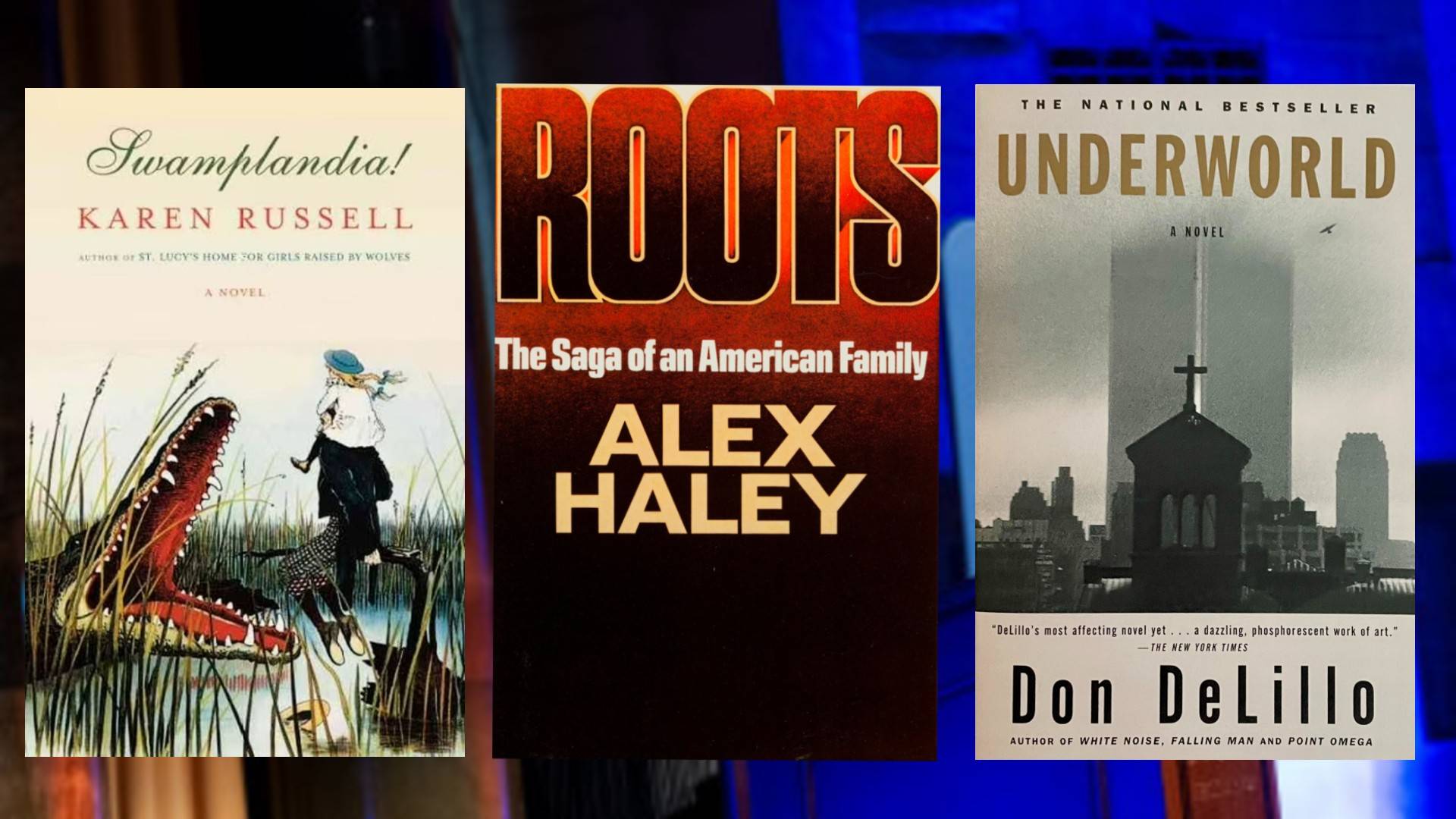
Аналитики выделяют несколько литературных шедевров, которые стали финалистами Пулитцеровской премии, но не были удостоены главной награды из-за разногласий жюри или изменения литературных вкусов. Среди таких произведений — романы Томаса Пинчона, Дона Делилло и Тима О'Брайена, которые сегодня считаются вершинами американской прозы.
Перевод ИИ
Текст статьи доступен на языке оригинала.
Нажмите кнопку «Перевести статью» выше, чтобы сгенерировать перевод с помощью ИИ.
Оригинальный контент
The Pulitzer Prize is the most prestigious award in fiction, and each of the books below deserved the award. Each came close, but for one reason or another, didn't take home the title of Pulitzer Prize winner.
That includes a couple of years when no one won. Including the year Train Dreams was a finalist, and 35 years before that, the controversial year when Alex Haley's Roots didn't get the award.
Each of these novels is an unequivocal must-read literary masterpiece, and if there was such a thing as Pulitzer do-overs, there's a good chance they'd be recognized as the winner from their respective years.
That's not to take anything away from the books that did win, in the cases where there was a winner. By and large, we're not arguing against any book, but rather spotlighting the strengths of the finalists that could have claimed the top spot.
6 Karen Russell's "Swamplandia!"
2012, No Award Given
The last time the Pulitzer Prize for Fiction went unawarded was in 2012. It was a curious, and somewhat contentious outcome, the result of a deadlocked jury. The truth is, though, the argument really can readily be made for all three finalists that year: Karen Russell's first novel, Swamplandia!, Denis Johnson's late-career novella Train Dreams, and David Foster Wallace's The Pale King, for which the author was nominated posthumously.
We'll make the case for Swamplandia! Karen Russell debuted as a short story writer, and likewise, her first novel began as "Ava Wrestles the Alligator." That's Ava Bigtree, the primary protagonist of the novel, the scion of a family of gator wrestlers; the book's title comes from the name of the Bigtree family's gator park off the Florida coast.
Swamplandia! is a glorious mess, full of ideas, rich with emotion, playful with language, and brimming with the urgency of a writer on the rise. (While The Pale King can also be called messy, it's because Wallace's novel is unfinished. There's nothing messy about Train Dreams; Johnson's prose is sparse and tight.) Every page is an outburst of spectacular literary talent, and Karen Russell deserved to rank among the debut novelists who captured the Pulitzer.
5 E.L. Doctorow’s "The March"
2006, Award To Geraldine Brooks’ March
2006 was a funny quirk of Pulitzer history. Of the three finalists that year, two featured nearly identical titles: E.L. Doctorow's The March, and Geraldine Brooks' March. Notably, the similarities go beyond that. Both are historical fiction set during the Civil War. Brooks' novel revisits Louisa May Alcott's Little Women from the father's POV, while Doctorow retells General Sherman's 1864 "March to the Sea" from a variety of perspectives, both real historical figures and fictional.
Doctorow became a literary star with 1975's Ragtime, and he'd received a previous Pulitzer nomination for 1989's Billy Bathgate. The March was one of his final novels, but also one of his best. In The March, Doctorow reminds readers that he's a master of perspective. The book jumps effortlessly between characters as it follows Sherman's March.
20 years later, The March remains must-read historical fiction. It reads like an epilogue to the greater tragedy of the Civil War, chronicling the last days of the conflict as all pretense of brotherhood or unity between the people of the North and South has lapsed entirely. It's a complex portrait of both invasion and liberation. And among E.L. Doctorow's great accomplishments in The March is to make the story funny, and engaging, while still treating his subject with gravity and remaining true to history.
4 Don DeLillo's "Underworld"
1998, Awarded To Phillip Roth's American Pastoral
Don DeLillo readers will have different takes on what his best work is. Some will say White Noise. Others will vote for Mao II, which was a finalist for the 1992 Pulitzer. And plenty of DeLillo fans will point to 1996's Underworld as his magnum opus. What just about everyone can agree on is that DeLillo is one of the greatest 20th-century American authors never awarded the Pulitzer.
And Underworld is arguably the bigger of the two losses DeLillo took in the 1990s. The novel's prologue alone would have been worthy of the prize; actually, it could have been nominated, since it was originally published as the standalone "Pafko at the Wall" in 1992. It's fair to call it the pinnacle of DeLillo's career, a literary snapshot of a moment in American history, enveloping sports, art, pop culture, and Cold War politics.
Underworld is routinely ranked high among the greatest literary works of the past 40 years. The past 100 years. Of American fiction period. The 1998 Pulitzer came down to recognizing the achievements of two GOAT authors, DeLillo and Phillip Roth; the jury went with Roth, but it could have just as easily gone the other way.
3 Tim O'Brien's "The Things They Carried"
1991, Awarded To John Updike's Rabbit At Rest
Prolific American writer John Updike won the 1991 Pulitzer for his novel Rabbit at Rest; it was the fourth entry in his "Rabbit" series, and the second to win the Pulitzer Prize for Fiction. The runners-up that year were Linda Hogan's Mean Spirit and Tim O'Brien's The Things They Carried. Of the three, O'Brien's short story collection has turned out to have the biggest cultural impact.
Of course, the Pulitzer Board and that year's fiction jury couldn't have known that at the time, but if they could have glimpsed the future in '91, they would have found The Things They Carried on countless high school and college curriculums, continuing to be celebrated for its fusion of memoir and fiction as one of the most essential books about American soldiers' experience in Vietnam.
The Things They Carried has the influence of a Pulitzer winner. Rabbit at Rest is often lost in the scope of Updike's literary ouvre, and Mean Spirit has become a forgotten gem. Tim O'Brien's stories have forged the greatest place in the cultural memory of the three.
2 Alex Haley's "Roots: The Saga of an American Family"
1977, No Award Given
The 1970s were the most turbulent year in Pulitzer history; the Prize was left unawarded three different years, in '77, '74, and '71. 1977 in particular is a year worth looking at what happened. That's because Alex Haley's Roots should have won that year, and it sort of did. But also sort of didn't. Haley's massively successful and critically acclaimed novel was given a "Special Citation" by the Pulitzer committee, but not technically the award itself.
So, what happened? The story goes that the Pulitzer jury nominated another 1976 classic, Norman Maclean's A River Runs Through It, instead of Roots. The Pulitzer Board intervened; it didn't go so far as to give Roots the award, but i didn't give it to Maclean either. Instead, it created a special category for Alex Haley's novel.
It's a fascinating story that we don't really know all the behind-the-scenes details of. What is known is that Roots was a cultural phenomenon on a scale matched by only a handful of other 20th century novels, and it was also a gigantic literary achievement, worthy of winning the Pulitzer for the year of its release.
1 Thomas Pynchon's "Gravity's Rainbow"
1974, No Award Given
Another infamous unawarded Pulitzer was 1974. That was the year Thomas Pynchon's Gravity's Rainbow was reported to have been unanimously selected by that year's jury for the award. And the Pulitzer Board said, "nope." The board hated Pynchon's novel, literally calling it "unreadable."
Like Don DeLillo, Pynchon is regularly cited as one of America's greatest literary masters, but he's never been recognized with the Pulitzer. Except he really should have been. Pynchon can be counted as a winner, albeit unofficially; today's Pulitzer Board might even consider legitimizing Gravity's Rainbow's 1974 win, 52 years after the fact. Because the '74 board's decision ran afoul of the consensus: that Gravity's Rainbow is a masterpiece.
It's one of the totemic works of postmodern literature. At the time of its release, the book's blend of oddball humor, historical melodrama, and philosophical zaniness might have been offensive to the Pulitzer Board, but sensibilities have changed radically in the decades since. If Pynchon's book came out today, it would at least have to be in the Pulitzer conversation.
What do you think, readers? What other books should have won the Pulitzer, but weren't recognized?
Аналитика ИИ и парсинга
Технические детали обнаружения, сопоставления и связывания статьи
Поисковый запрос
«книги, которые не получили премию Пулитцера за лучшую художественную литературу»
Запрос, сгенерированный ИИ для поиска статьи в веб-источниках
Связанные результаты поиска
Результаты поиска отсутствуют в БД
Парсер не сохранил результаты веб-поиска для этой статьи.