Английский Технологии
06.07.2026 Читать источник
Радар Nebo-UM усиливает систему ПВО С-400 за счет обнаружения низкоobservable целей
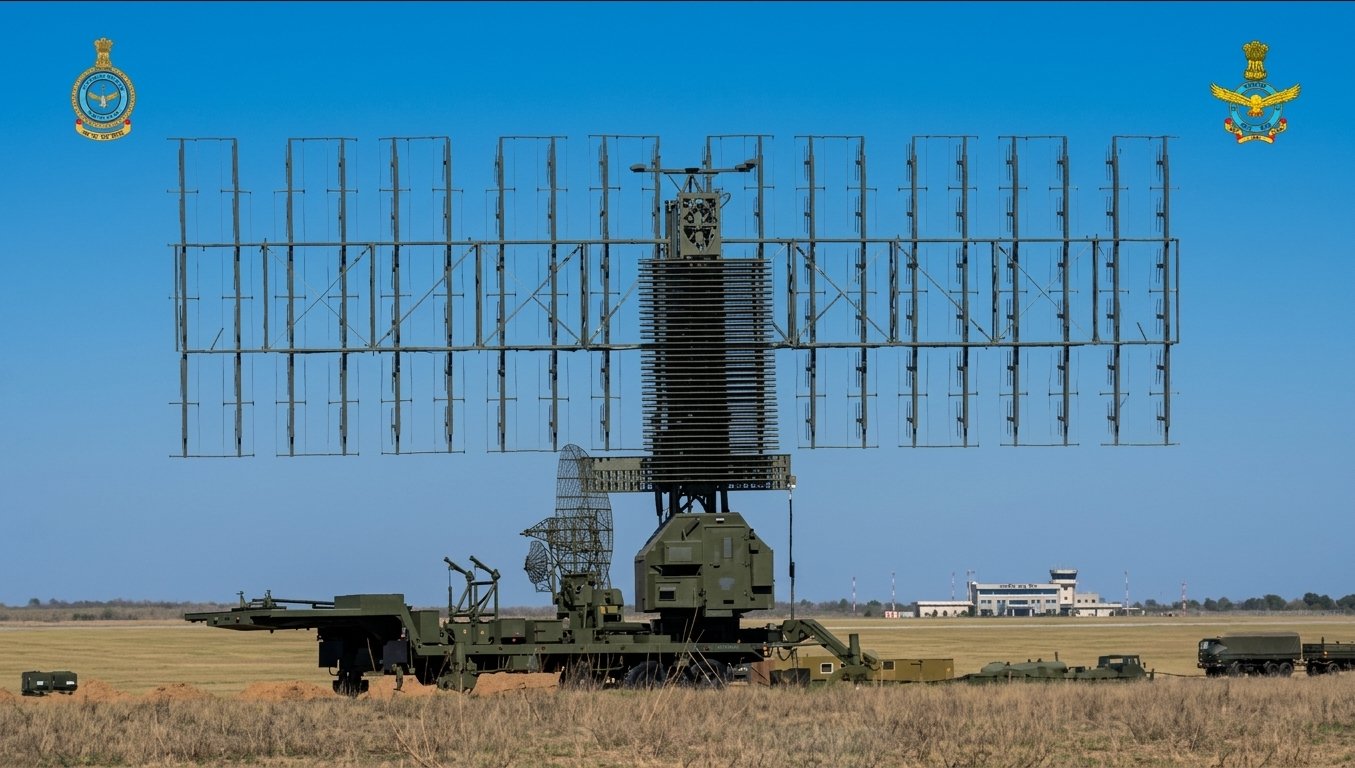
Мобильный радар Nebo-UM на частоте VHF обеспечивает раннее предупреждение и сопровождение целей, снижающих свою заметность для высокочастотных систем. Полученные данные позволяют радарам комплекса С-400 быстрее переходить к точному наведению ракет, создавая многослойную архитектуру обороны.
Перевод ИИ
Текст статьи доступен на языке оригинала.
Нажмите кнопку «Перевести статью» выше, чтобы сгенерировать перевод с помощью ИИ.
Оригинальный контент
The Nebo-UM Very High Frequency (VHF) surveillance radar is emerging as one of the most important force multipliers for modern integrated air defence systems, particularly when operating alongside long-range surface-to-air missile systems such as the S-400 Triumf. Although the Nebo-UM is not a fire-control radar and cannot directly guide missiles to their targets, its ability to detect and track low-observable aircraft at long ranges significantly enhances the effectiveness of the overall air defence network.
Designed as a mobile three-dimensional (3D) VHF early warning radar, the Nebo-UM provides long-range surveillance by operating in frequency bands that differ substantially from conventional target engagement radars. This enables it to detect aerial threats that may present a reduced radar signature to higher-frequency radar systems.
Unlike X-band or C-band fire-control radars, which are primarily designed to achieve precise target tracking for missile guidance, the Nebo-UM operates in the VHF spectrum, using much longer radio wavelengths. These longer wavelengths interact differently with aircraft structures, including wings, vertical stabilisers and fuselage surfaces. As a result, aircraft designed to minimise their radar cross-section at higher frequencies may still generate detectable returns when illuminated by VHF radar.
This makes the Nebo-UM particularly valuable as an early warning sensor against low-observable aircraft. While the exact detection range depends on factors such as target characteristics, altitude and operating conditions, VHF surveillance radars are intended to provide long-range detection and cueing of aerial targets before they enter the engagement envelope of fire-control radars.
Within an integrated air defence network, the Nebo-UM serves as a strategic sensor node rather than an independent weapon system. Once it detects and tracks an aerial target, the radar determines the target’s range, azimuth and altitude, generating a three-dimensional air picture. This information is then transmitted in real time to higher command-and-control systems and integrated air defence networks.
When operating alongside the S-400, this tracking information allows the system’s engagement radars to focus their search on a much smaller volume of airspace instead of conducting wide-area scans. By receiving accurate cueing data from the Nebo-UM, the S-400’s fire-control radar can begin precision tracking more rapidly, reducing target acquisition time and improving overall engagement efficiency.
This layered approach is particularly important when confronting aircraft with reduced radar observability. Rather than relying on a single radar operating in one frequency band, modern integrated air defence systems combine multiple sensors covering different portions of the electromagnetic spectrum. The Nebo-UM contributes the long-range surveillance layer, while the S-400’s own radar suite—including surveillance, acquisition and engagement radars—provides progressively more accurate tracking as the target approaches.
The result is a multi-layered sensor architecture in which different radar types complement one another rather than performing identical functions. Such sensor diversity improves overall situational awareness and reduces the likelihood that any single radar technology can be effectively defeated by stealth shaping or electronic countermeasures.
Mobility is another defining characteristic of the Nebo-UM. The radar is mounted on high-mobility military vehicles, allowing rapid deployment and relocation between operating sites. This mobility improves survivability by reducing the time the radar remains at any one location, complicating attempts by adversaries to target it with long-range precision weapons or anti-radiation missiles.
The system also incorporates modern digital signal processing, enabling it to distinguish genuine aerial targets from ground clutter while improving resistance to electronic jamming and interference. These capabilities enhance radar performance in complex electromagnetic environments where adversaries employ electronic warfare to degrade surveillance systems.
The Nebo-UM therefore functions as a critical element within a broader layered air defence architecture rather than as a standalone anti-stealth solution. By providing long-range early warning and cueing data to systems such as the S-400, it strengthens the overall effectiveness of the integrated network against a wide spectrum of aerial threats, including conventional aircraft, cruise missiles and certain low-observable platforms.
Аналитика ИИ и парсинга
Технические детали обнаружения, сопоставления и связывания статьи
Поисковый запрос
«радар Небо-УМ С-400 система ПВО обнаружение низкоobservable целей»
Запрос, сгенерированный ИИ для поиска статьи в веб-источниках
Связанные результаты поиска
Результаты поиска отсутствуют в БД
Парсер не сохранил результаты веб-поиска для этой статьи.