Английский Наука и Образование
26.08.2026 Читать источник
Мэриленд создал сеть из 69 мастерских, инвестируя в экосистему, а не отдельные помещения
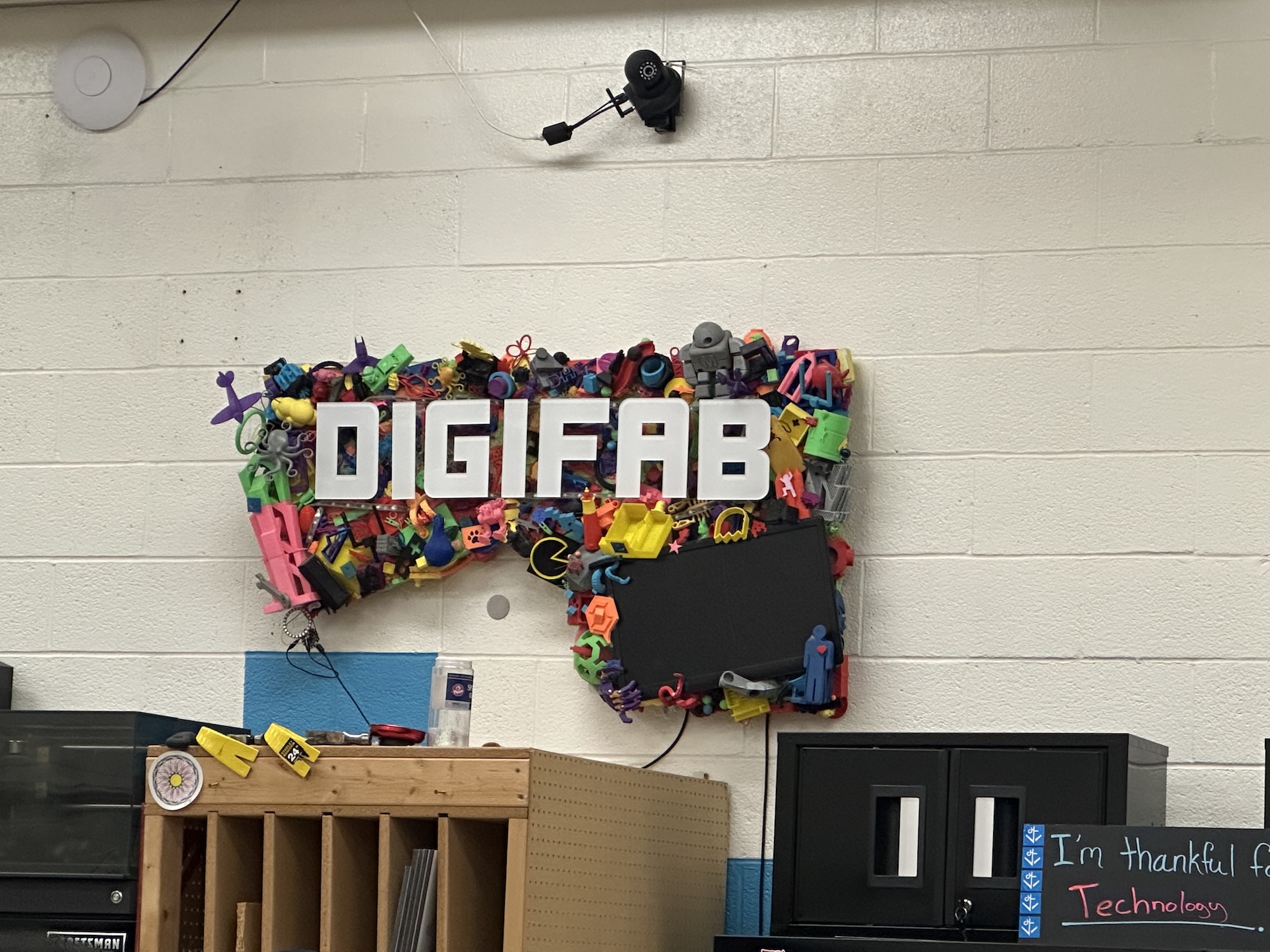
Государственный орган TEDCO в Мэриленде распределил более 3,15 млн долларов на создание разветвленной сети makerspace, доказав, что интеграция с местными сообществами и учреждениями приносит больше пользы, чем просто наличие оборудования. За четыре года программа трансформировалась из набора отдельных комнат в устойчивую инфраструктуру, связывающую школы, библиотеки и предприятия в единый инновационный кластер.
Перевод ИИ
Текст статьи доступен на языке оригинала.
Нажмите кнопку «Перевести статью» выше, чтобы сгенерировать перевод с помощью ИИ.
Оригинальный контент
This is a guest post from TEDCO, a Technical.ly partner and one of the financial supporters that helps ensure our site remains a free news resource.
In 2001, MIT physicist Neil Gershenfeld began teaching a course called How to Make (Almost) Anything. Two years later, he and community organizer Mel King opened the first fab lab in Boston — a workshop with tools like 3D printers and laser cutters, where people can try out product ideas and build prototypes. The model spread to more than 2,500 labs across 150 countries.
For two decades, though, the unit stayed the same: one room, one community, one set of tools.
Maryland brought the concept to scale.
In 2022, the General Assembly passed the first state legislation in the country to fund a public network of makerspaces rather than a single facility, establishing the Maryland Makerspace Initiative Program and charging TEDCO, the state’s economic engine for technology companies, with administering it. TEDCO has now completed four award cycles, FY24 through FY27, deploying more than $3.15 million across 69 makerspace projects in nearly every region of the state.
Funding a network instead of a facility was written into the statute. What the network became is the part no legislation could have specified.
Where the network attached
Across four years of applications, it became apparent that the thing that separates a genuine community hub from an organization that simply owns equipment is not the equipment. It is whether they understand who they serve. Every location has a local demographic with different interests, and the strongest applicants can tell you exactly who that is and exactly how they intend to reach them.
That is why the definition in TEDCO’s request for applications for the program stayed broad. Access to tools and knowledge, resulting in physical goods, supporting technical education. Broad on purpose, because it has to hold fashion and robotics and clothing and biotech all at once. Diversity of community produces diversity of capability.
What emerged was the community stitching itself together. Makerspaces emerged and expanded across the state: The Lexington Park Library in St. Mary’s County. The Howard County Office of Agriculture. The Brunswick Arts Council. Allegany College of Maryland. Melwood Horticultural Training Center, which serves people with disabilities. Digital Harbor Foundation’s tech lab in Baltimore. Baltimore Underground Science Space, a community bio lab three miles away. Multiple biomakerspaces, like CELLS/BioMakerSpace in Frederick County, servicing where the biotech corridor already is.
Some of these spaces we helped create. Others we helped expand. What holds across all of them is where they anchor, to institutions that already carry the community’s trust.
Makerspaces have more impact when they are embedded in the connective tissue of the ecosystem. The ones that strategically position themselves as the glue or the web between other institutions create far more value than the ones that do not. In St. Mary’s County, we are currently funding a library makerspace still in its buildout at the Lexington Park Library, developed in close connection with the ecosystem around it: the local schools, and the military community associated with Patuxent River. That makes it a community and network-building asset, not a standalone tool shed.
What compounds
Several organizations have come back for a second or third award, and the sequence tells you how these spaces mature. The first award builds infrastructure. Then comes the quieter phase, learning the ecosystem, finding out the school nearby has been waiting for exactly this capability and needs specific equipment to deliver it.
The second award buys that equipment. It also buys people.
When we started, there was a lot of volunteer activity. Now those volunteers are becoming stable and solidified, and the hires create stability. A space that is only open on certain days, or is understaffed and confusing to navigate, has a hard time being a real community pillar. Consistency is what makes it one.
Underneath the equipment and the staffing, we built something less visible: a shared ecosystem. Shared responsibility, shared understanding, shared standards. We pushed data infrastructure hard from the beginning, because you have to collect data to understand and communicate quantitatively who you are serving.
The ecosystem it draws from
The network did not build itself in a vacuum. It sits inside a state that already ranks near the top of nearly every national measure of innovation capacity. WalletHub’s 2026 index places Maryland 6th among all states, and second in the nation for projected future STEM job demand. Maryland’s colleges and universities lead the country in academic research and development spending per capita, and Johns Hopkins alone draws more National Institutes of Health funding than any university in America. The state is home to 156 federal research facilities, more than any other state in the country, and its tech workers earn the highest median wages in the nation.
None of that exists because of a laser cutter in St. Mary’s County. But it is the ecosystem the network draws from, and the ecosystem it feeds back into. A state this dense with federal labs, research funding, and high-paying technical jobs gives a kid who learns to solder at a library makerspace somewhere real to go: an internship, a hire, a customer down the road. The lab in Boston’s South End proved the model could work in one room. Maryland had the surrounding ecosystem to let it work in sixty-nine.
What a county without one loses
A makerspace calibrates to whatever is around it. In a biotech corridor it becomes a bio lab. In a rural county it becomes the only place for miles with advanced fabrication equipment and someone who knows how to run it. In a crisis, it becomes a production line.
It is not just for hobbyists who can go make things. It is a community builder. Without one, you are missing a Swiss army knife in your innovation ecosystem.
Four years in, the lesson for other states is the one already in our statute. You have to invest in the network, not just individual makerspaces.
And the purpose underneath all of it stays simple. The simple answer was always to make things.
Аналитика ИИ и парсинга
Технические детали обнаружения, сопоставления и связывания статьи
Поисковый запрос
«Мэриленд TEDCO сеть мастерских 3,15 млн долларов»
Запрос, сгенерированный ИИ для поиска статьи в веб-источниках
Связанные результаты поиска
Шведская Verisure, выпускающая системы безопасности, намерена привлечь более 3 млрд евро (3,6 млрд долларов), торги ее акциями начнутся 8 октября.