Английский Спорт
09.09.2026 Читать источник
Порше создал рекордно легкий гоночный болид весом всего 847 фунтов для борьбы с гравитацией
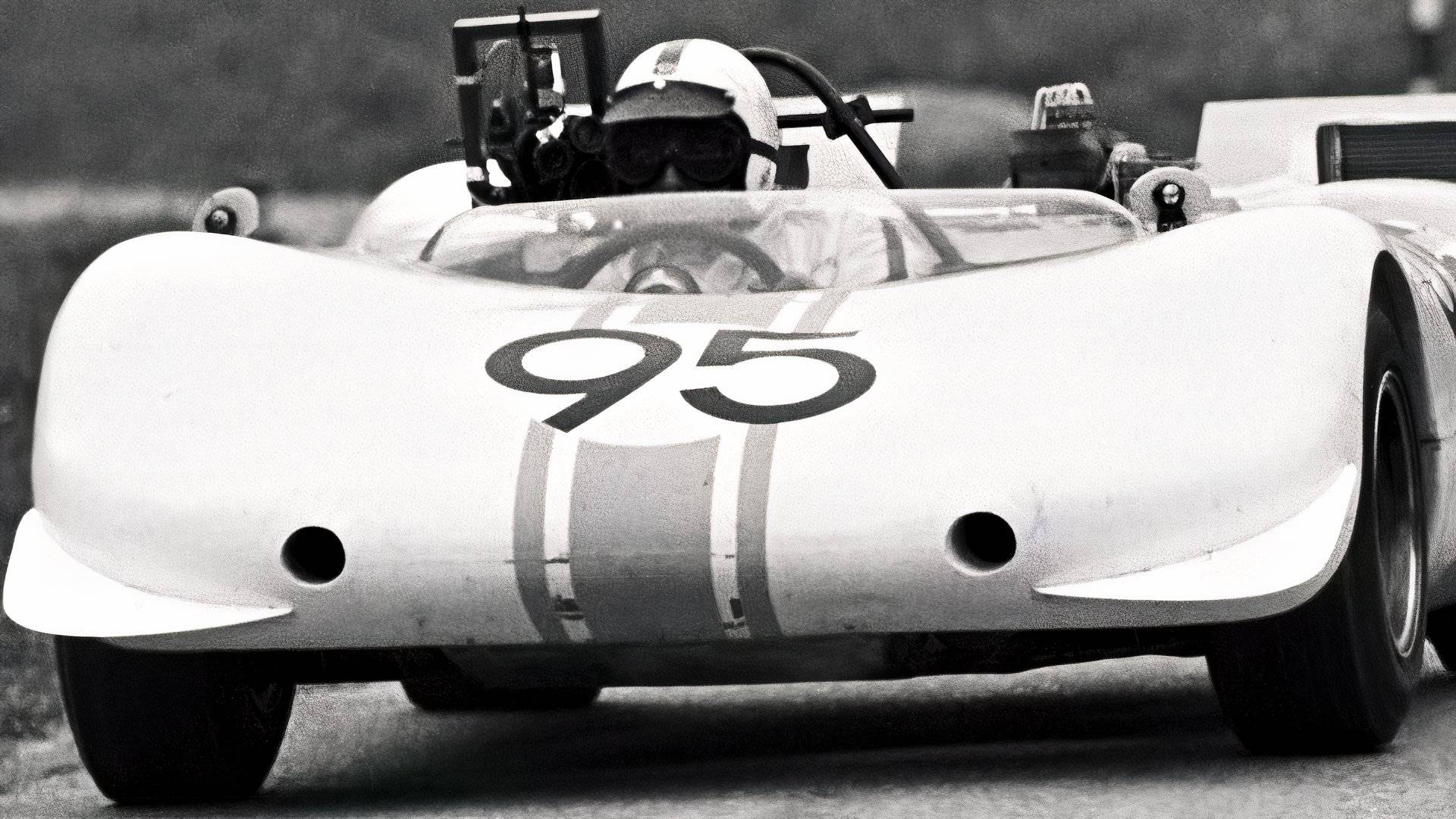
В 1968 году компания Porsche представила болид 909 Bergspyder, весивший лишь треть от современного Mazda MX-5, благодаря использованию титановых компонентов и сферического топливного бака. Несмотря на экспериментальный характер и короткий срок эксплуатации, эта машина заложила основу для будущих побед Порше в гонках на выносливость.
Перевод ИИ
Текст статьи доступен на языке оригинала.
Нажмите кнопку «Перевести статью» выше, чтобы сгенерировать перевод с помощью ИИ.
Оригинальный контент
The Lightest Porsche Ever Weighed A Third Of A Miata And Had A Spherical Gas Tank
To maximize performance, manufacturers fight a constant war on weight—a battle made tougher by heavy modern safety regulations. But back in 1968, unbound by such restrictions, Porsche took weight-saving to a radical extreme. The result was a race car weighing just 847 lbs – a third the weight of the famously lightweight Miata road car – featuring one of the strangest fuel systems ever conceived.
Porsche Built An 847 lb Race Car To Fight Gravity
Porsche's 909 Bergspyder was the lightest Porsche ever built for competition. And it certainly makes today's famously lightweight Mazda MX-5 Miata look heavy, weighing just 36% of the manually equipped Miata's 2,366 lbs. Porsche didn't simply arrive at that light weight by removing doors and carpeting. Instead, this 909 featured an aluminum space frame, a 22 lb fiberglass body, titanium suspension components, beryllium brake discs, and a strange fuel system that centered around a pressurized spherical titanium tank.
Back in the 60s, Porsche was dominating European hill climbing in the type of environment where nimble and lightweight cars really came into their own. After all, these vehicles had to accelerate rapidly uphill while repeatedly braking and aggressively changing direction. And they only needed to carry a small amount of fuel to survive each relatively short run.
Up until the 909 Bergspyder arrived, Porsche had been using the 910/8 Bergspyder, which was also extraordinarily light. It weighed around 970 lbs, had a 2.0-liter flat-eight that generated 271 horsepower, and won the European Hill Climb Championship in both 1967 and 1968.
However, Porsche still wasn't happy and under its famous development chief, Ferdinand Piëch, it decided to take a different approach. Instead, it would treat hill climbing as a laboratory for ideas that could eventually carry over into its endurance racing activities as well.
Following plenty of work at its Weissach facility, Porsche came up with the new 909. It measured only 137 in long, 71 in wide, and 29.5 in tall, and it had a race-ready weight figure of 847 lbs, including oil and fuel. Of course, it may be unfair to compare the 909 Bergspyder to today's Mazda MX-5 Miata road car, as the difference in weight is partly a reflection of almost six decades of safety and regulatory development. But even in the world of purpose-built race cars, the 909 was incredibly light.
The 2.0-Liter Flat-Eight Had 271 hp And Very Little To Move
Porsche employed a particularly unusual packaging strategy for the 909 Bergspyder, with a mid-engine placement for the Type 771 2.0-liter flat-eight and a limited-slip differential at the rear. With that engine in place, the Porsche 909 was able to record a 0–62 mph time of 2.5 seconds on its way to a potential top speed of about 155 mph, depending on gearing. And from a power-to-weight perspective, that was impressive. At approximately 3.13 lbs per horsepower, that's a far more extreme power-to-weight ratio than something like a 992-generation 911 GT3 RS, which carries about 6.3 lbs per horsepower.
But the engine was only one part of a much larger campaign against weight, and an aluminum tubular space frame made up the basic structure. Porsche also used titanium and magnesium in the engine's construction, and some of the suspension components and brake calipers featured titanium as well. The company even experimented with extremely light beryllium brake discs, but nothing appeared to be off the table when it came to details and possible weight savings, and that certainly included the fuel system. Eliminating even the fuel pump seemed impossible – until Porsche's engineers looked at how compressed gas behaves under pressure.
The Spherical Gas Tank Was Really A Pressurized Titanium Vessel
The most bizarre component of the 909 was probably its fuel tank, which was mounted beside the engine and held in position with three straps. The tank was spherical, with an outer titanium wall just 0.8 mm thick; within sat a flexible rubber bladder that held the actual gasoline.
Interestingly, before any run, Porsche technicians would pump nitrogen into the space between the bladder and the titanium shell at around 15 bar, or approximately 218 psi. The resulting pressure squeezed the bladder, forcing the fuel through the line towards the car's mechanical fuel injection system. This meant that Porsche could dispense with the services of a separate fuel lift pump. And while the mechanical injection pump was still in place, Porsche didn't need an additional pump to pull the fuel out of the tank toward the injection system. According to Porsche, this resulted in a weight saving of up to 15 lbs.
While 15 lbs might not be particularly transformational on any conventional road car, it was enormous in this context and represented close to 2% of the entire race-ready weight. And Porsche also had another reason for choosing the tank's spherical shape.
A sphere is one of the most efficient shapes for containing pressure because forces acting on the wall are distributed evenly. The shape also enclosed the greatest volume for the least surface area, so the sphere made a great deal of engineering sense. But for all its engineering elegance, the pressurized tank created an unexpected problem when the car actually raced – and even Porsche's own lead driver wasn't convinced the 909 was ready.
Even Porsche's Star Driver Chose The Older Car Instead
Porsche may have been perfectly happy with its engineering and design decisions. After all, the lightweight 909 was clearly a lot more radical than the 910 that it was due to replace. Porsche had moved the limited-slip differential to the very rear of the machine so the transmission, engine, and driver could sit further forward than usual. The driver's feet even extended ahead of the front axle, although there was very little around them for protection beyond the lightweight space frame and thin bodywork.
However, extreme lightness and trick engineering didn't automatically make this car a better all-round racing machine. And as it turns out, Porsche's lead driver Gerhard Mitter wasn't particularly impressed with the 909 when he drove it at the Gaisberg Hill Climb in first practice. When he returned to the pits, he decided to use the older 910/8 for the race itself, eventually winning the event in that car.
Another driver, Rolf Stommelen, did race the actual 909 in the same event and finished third, but his run was compromised as the flat eight ran excessively rich, leading to a misfire. It nevertheless seems quite telling that Porsche's lead driver preferred the older machine, even though Porsche had put a great deal of effort into making a supposedly better and far lighter car.
The Pump-Free Fuel System Lasted Just One Race
In September 1968, the 909 appeared again at Mont Ventoux, but by that time Porsche had already modified one of its most radical ideas. It still retained the spherical pressure tank, but it had now added a conventional gas pump into the system.
Stommelen drove the car again, finishing second, but as it turned out, there wasn't much of a future for the 909 at all. Porsche soon withdrew from the European Hill Climb Championship altogether to redirect its focus toward the World Sports Car Championship.
The 909 Helped Shape One Of Porsche's Great Endurance Racers
The 909 may have been a short-lived engineering experiment, but its influence did prevail. When Porsche developed the 908/03 for the Targa Florio and Nürburgring, its project manager used the 909 as an important starting point. Porsche used the same philosophy of moving major components forward, positioning the differential behind the transmission. This allowed the gearbox, engine, and driver to move forward toward the front of the car, generating a 45:55 front-to-rear weight distribution.
The big difference here was that the 908/03 had a very different kind of task to perform. It wasn't sprinting up a mountain but rather covering hundreds of miles of racetrack. This meant that it needed far more structure, more fuel, and more durability, even if it still weighed only around 1,202 lbs in race-ready form.
But unlike the 909, the 908/03 became a major winner, with Porsche celebrating victories at both the Targa Florio and Nürburgring. This meant that the German company was able to transfer some of the lessons learned from its ultra-lightweight hill climb experiment to the far more complicated world of endurance racing. And that's probably what makes the 909 far more important than its short competition record might otherwise suggest.
Sources: Porsche, IXO Collections.
Аналитика ИИ и парсинга
Технические детали обнаружения, сопоставления и связывания статьи
Поисковый запрос
«Порше 909 Bergspyder рекордный вес титан»
Запрос, сгенерированный ИИ для поиска статьи в веб-источниках
Связанные результаты поиска
Результаты поиска отсутствуют в БД
Парсер не сохранил результаты веб-поиска для этой статьи.