Английский Правосудие
09.09.2026 Читать источник
Семья убитого в Южной Каролине подала иск к полиции за сокрытие тела и фальсификацию доказательств
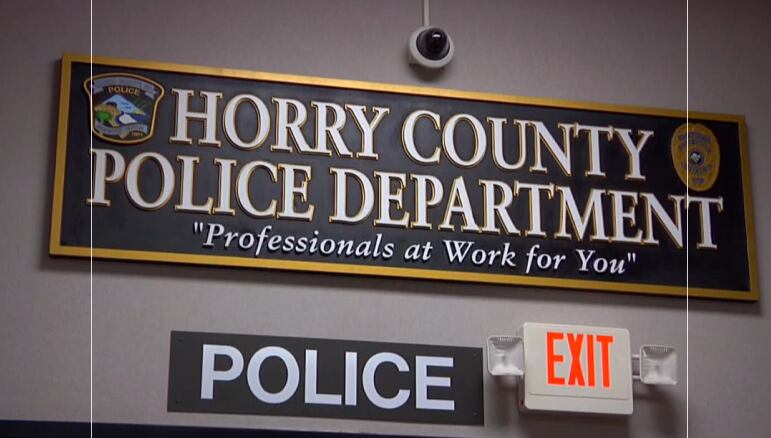
Родственники Скотта Спиви подали федеральный иск против округа Хорри и полиции, обвинив их в сокрытии тела погибшего и фальсификации улик для защиты подозреваемых. В жалобе утверждается, что сотрудники полиции намеренно оставили тело в грузовике под воздействием жары, чтобы повысить уровень алкоголя в крови, и сфабриковали доказательства.
Перевод ИИ
Текст статьи доступен на языке оригинала.
Нажмите кнопку «Перевести статью» выше, чтобы сгенерировать перевод с помощью ИИ.
Оригинальный контент
‘Just glad it was a white guy’: New lawsuit over Spivey case takes aim at HCPD investigation
HORRY COUNTY, SC (WMBF) - Body desecration, planted evidence and a cover-up are among the allegations in the Scott Spivey family’s newest lawsuit, this time against Horry County and its officers.
Jennifer Spivey Foley, the personal representative of Spivey’s estate, filed the federal lawsuit Tuesday against Horry County and 13 Horry County Police Department officers and supervisors.
Scott Spivey’s parents, Deborah and Byron Spivey, are also suing individually over the alleged treatment of their son’s remains.
Authorities said Weldon Boyd shot and killed Scott Spivey along Camp Swamp Road in the Longs area following a road-rage incident in September 2023.
Boyd and his passenger, Kenneth “Bradley” Williams, have never been charged in the case and are not named in Tuesday’s lawsuit.
Many of the allegations in this latest lawsuit were raised, directly or indirectly, during a four-day stand-your-ground immunity hearing in February, part of the ongoing civil lawsuit Spivey’s family filed against Boyd and Williams in 2024.
According to the lawsuit, a coordinated effort from HCPD began almost immediately after the shooting to cover up the case to protect Boyd and Williams from criminal or civil prosecution.
The lawsuit alleges former Deputy Chief Brandon Strickland largely organized the effort because of his close friendship with Boyd, the owner of Buoys on the Boulevard in North Myrtle Beach, a restaurant where Boyd was known to treat HCPD officers.
The lawsuit also names Daniel Spencer, a close friend of both Boyd and Strickland, alleging he obtained inside information about the investigation and relayed it to Boyd.
The investigation
In phone calls that were played during the February 2026 hearing, Boyd asked Strickland to come to the scene, but Strickland said he didn’t go because he didn’t want it to look like he was showing favoritism toward Boyd.
Boyd said that all the officers seemed to think it was 100 percent self-defense.
Strickland said he sent out the case’s lead investigator, Alan Jones, a “good ole boy,” and that he called the captain over for the investigation and explained who Boyd was.
Strickland said he called Solicitor Jimmy Richardson and Strickland then told Boyd, “He was taken care of.”
The lawsuit further alleges Strickland and then-Chief Joseph Hill misrepresented facts and evidence to Richardson specifically to influence his decision not to prosecute Boyd and Williams.
The lawsuit also adds that during this call, Strickland allegedly told Boyd, “I’m just glad it was a white guy [that you shot],” possibly implying the perception would have been worse if Scott Spivey were Black.
Strickland also told Boyd that the coroner was not planning to do an autopsy on Scott Spivey, but Strickland had pushed for it to protect Boyd if a lawsuit ever came down, according to the federal filing.
Along with this, the lawsuit alleges that the scene was not properly handled, with officers not seizing cell phones and a tablet with alleged video of the shooting, and Boyd and Williams’ guns being returned to them without ever being processed by the South Carolina Law Enforcement Division, according to the lawsuit.
The tablet specifically, which was inside Boyd’s truck, was not covered by the search warrant, and lead investigator Alan Jones said it “was not needed,” despite the lawsuit claiming it may have contained video of the shooting.
Boyd has said the tablet was used only for entertainment. He said one video was deleted from the iPad in March 2023, but it was not connected to the shooting.
The lawsuit raises similar concerns about video evidence at Boardwalk Billy’s, a restaurant where Spivey had been earlier that day.
The lawsuit names Det. John Sotile, alleging he deliberately retrieved only a portion of the restaurant’s surveillance footage to make Spivey appear intoxicated.
During the February hearing, testimony showed HCPD had in fact obtained only partial footage, despite Spivey’s full tab showing three of his eight Fireball shots were bought for another patron and that he sipped a beer slowly over several hours.
One of the lawsuit’s most serious claims about the investigation’s direction centers on a meeting two days after the shooting.
It alleges HCPD supervisors and investigators held a command-level meeting where they decided how the case would proceed, and that lower-ranking officers were told to “be nice” to Boyd and Williams as a result.
Strickland resigned in March 2025, shortly after an internal investigation was opened.
The scene
The lawsuit also takes issue with how officers handled the scene itself.
A portion of body camera video, which Tinsley previously released to the media, shows HCPD officers at the scene discussing the traffic impacts of the shooting.
The officers seem to be getting frustrated with people driving by, with one officer saying, “If you live down here, you know how to go the other way.”
The officers then turned their attention back to the scene, and one said he didn’t want the witnesses talking to the people involved, apparently referring to Boyd and Williams.
One officer then headed back under the yellow tape, saying, “Y’all stay away from each other for the time being.”
The officer who said the witnesses needed to be separated then added, “They can’t be sitting there talking, showing each other stuff on their phones and stuff like that.”
Separating witnesses is a typical practice at crime scenes. But Tinsley said this did not occur for an hour.
The officer whose body camera was on then said, “This guy [unintelligible] really something,” before the other officer told him he could “go off,” signaling the end of the footage.
It is worth noting that it’s not uncommon for body camera footage to be turned off when discussing sensitive case details.
Tinsley showed an officer a video during the hearing that he had previously claimed was one of the seven dash cam videos mislabeled in HCPD’s investigation.
Tinsley has previously said he believes this dash cam footage belongs to former Sgt. Paul Vescovi, who was fired in 2025. This video centers on an officer trying to figure out how to turn off his microphone.
“How do you cut the mic off in the camera?” the officer asked.
The video portion shows an officer conducting what appears to be a test with either Boyd or Williams.
The video ends after the officer says, “It just cuts it off when I try to toggle it.”
The officer testified in February 2026 that this would be against HCPD policy.
Vescovi is frequently mentioned in the lawsuit.
More body camera footage shows Vescovi flashing a written note at the scene that read, “Act like a victim. Camera,” to Boyd and Williams.
Boyd said he did not know Vescovi or any officer at the scene. Boyd said he wished Vescovi had never flashed the note because it made him look guilty.
Boyd does not know why Vescovi did this; the only reason he could think of was to calm Boyd down, since his adrenaline was still going.
Vescovi was also allegedly involved in the transport of Spivey’s body, one of the lawsuit’s most serious claims.
Body transfer
HCPD moved Scott Spivey’s truck to the M.L. Brown Jr. Public Safety Building with his body still inside.
The lawsuit alleges Spivey’s body was allowed to bake in extreme heat for an extended period because of this.
An HCPD officer testified that the body was moved because a storm was pending and could tamper with evidence.
However, that same officer said the practice was not normal, saying that in her six years at the department, a body had never been towed in a vehicle like that.
The lawsuit names Capt. Mick Kathman as the one who made that decision, though the officer testified in February that lead investigator Alan Jones ordered the tow.
Tinsley said Vescovi was assigned the job to record the truck being moved from the scene to the impound lot, but that did not happen, despite department policy.
According to the lawsuit, a video shows the transport, and Scott Spivey’s parents had to witness their son’s body being thrown around inside the vehicle as it was unloaded.
“The body-worn-camera record further reflects that, while Scott’s body remained in the truck and the truck was being handled and transported in official custody, officers discussed the need to make sure that no one told Spivey’s family that his body had been left inside the truck when it was towed,” the lawsuit reads.
The lawsuit claims Spivey’s body was left in the truck and towed because officers wanted to expose it to heat and raise his blood alcohol level, and because the tow gave them access to plant drugs undetected.
An officer failed to seal the broken rear window of the truck, leaving an unsecured spot where the steroids were planted, the lawsuit stated.
Spivey’s family said this was done to make him look like the aggressor, despite bloodwork showing no steroids in his system.
Scott Spivey’s blood-alcohol content was 0.13, above the 0.08 legal limit for most South Carolina drivers, which is enough to make a normal person sleepy or disoriented, Angelina Phillips, a forensic pathologist who performed the autopsy on Scott Spivey, said.
The lead-up
In a now-dismissed lawsuit against Spivey family attorney Mark Tinsley, Boyd called Spivey the aggressor, saying he was intoxicated at the time of his death and suffering the effects of chronic anabolic steroid abuse.
Boyd said that prior to the shooting, multiple 911 calls also reported Spivey acting aggressively and unlawfully, confirming what he called his own “evasive measures.”
Boyd’s legal team has said there was no law against following someone, adding that over a 14-mile span, no law enforcement was in sight to get Spivey off the road, who witnesses said was flashing a gun.
During his testimony at the February hearing, Boyd offered his most detailed account of the moments before the shooting.
He said that once on Camp Swamp Road, Spivey got out of his truck and started walking toward them.
Boyd claimed he was not holding a gun at that point, contrary to witness Frank McMurrough’s deposition, saying McMurrough could have mistaken Boyd’s attempt to shift his truck’s gear for a gun.
Boyd said he wanted to move the truck back but got confused in the moment, then saw Spivey yelling.
At that point, Boyd said Spivey did a “Matrix move,” pulling the gun from his side and racking it before pointing it at them and firing, an account that also conflicts with McMurrough’s deposition, in which he said Spivey never pointed the gun at Boyd’s truck.
Boyd said he has no doubt Spivey shot first.
The federal lawsuit tells a very different story.
According to the lawsuit, Boyd was chasing Scott Spivey, and Scott Spivey turned down Camp Swamp Road to go toward his home and disengage from the situation.
Tinsley claimed Boyd chased Spivey at speeds over 100 mph from Colonial Charters to Camp Swamp Road.
Boyd and Williams were supposed to be heading in a different direction and had no reason to make the turn, the lawsuit stated.
Spivey’s family said it is clear Boyd shot first, as no bullets even hit Boyd’s truck.
Immunity rulings
Both accounts were tested at the February hearing, where a judge ultimately ruled on immunity for both men.
When the judge denied immunity for Boyd, he said that despite Spivey acting like a “fool” that day, Boyd should have stayed back.
Boyd and Williams each asked the judge to reconsider his rulings, but he denied both motions in August.
South Carolina’s stand-your-ground law applies when the use of deadly force is deemed lawful.
The immunity ruling is noteworthy because if Boyd and Williams were granted immunity in the Spivey lawsuit, that would essentially end any potential criminal charges against them in the shooting.
In February, the Seventh Circuit Solicitor’s Office confirmed a grand jury will review the case.
A state grand jury is typically convened so prosecutors can present a case’s facts and findings to determine whether to indict someone.
The grand jury would have been dismissed if prosecutors had granted immunity.
Attorneys on both sides said the grand jury could review multiple issues, such as how Horry County police handled the case or the actions of the defendants, listed as Boyd and Williams.
The attorneys said none of that information will be available unless the grand jury returns an indictment.
Review of the case
Days after the shooting, 15th Circuit Solicitor Jimmy Richardson asked the South Carolina Attorney General’s Office to get involved with the case.
In April 2024, the South Carolina Attorney General’s Office declined to charge Boyd, citing insufficient evidence.
Allegations against HCPD’s investigation led Attorney General Alan Wilson to ask 7th Circuit Solicitor Barry Barnette in October 2025 to look over the investigation into the shooting death of Spivey.
Wilson stated in a letter to Barnette that, once details of the HCPD’s investigation reached civil attorney Mark Tinsley and Spivey’s family amid a lawsuit filed by his estate, questions about the case arose.
Wilson wants Barnette to review the case to see if the allegations of misconduct would change the initial finding by the attorney general’s office that the shooting falls under the stand-your-ground law.
On a podcast, Wilson said that if the review brings out new information that would change the stand-your-ground analysis, Barnette can make a different call and make “whatever prosecutive decisions” Barnette feels are appropriate.
Had Spivey survived, he would have been the one charged with a felony for driving under the influence and brandishing a firearm, Wilson said on the podcast.
What the lawsuit is asking for
The lawsuit brings claims under a federal law that allows people to sue government officials for violating their constitutional rights.
Jennifer Spivey Foley, in her role as personal representative of Spivey’s estate, alleges the defendants violated the estate’s 14th Amendment right to due process and meaningful access to the courts by manipulating, concealing, destroying and fabricating evidence in the case.
The lawsuit also names Horry County itself as a defendant, arguing the county’s policies and practices allowed a pattern of similar misconduct to go unchecked.
The Spivey family is seeking monetary damages and a jury trial.
Horry County and HCPD said they do not comment on pending litigation.
HCPD confirmed the following current titles for officers named in the lawsuit, indicating most remain employed with the department:
Alan Jones — Sergeant
Mick Kathman — Deputy Chief
Kerry Higgs — PFC
Daniel Spencer — Detective
Mark Johnson — Sergeant
Randall Ghent — Lieutenant
Doug Dishong — Lieutenant
Matthew Stephenson — Lieutenant
Greg Lent — Captain
John Sotile — Detective
Feel more informed, prepared, and connected with WMBF. For more free content like this, download our apps. Have feedback that can help us improve? Click here.
Аналитика ИИ и парсинга
Технические детали обнаружения, сопоставления и связывания статьи
Поисковый запрос
«Скотт Спиви семья иск полиция сокрытие тела»
Запрос, сгенерированный ИИ для поиска статьи в веб-источниках
Связанные результаты поиска
Nov 11, 2025 · Шокирующее обновление в деле D4VD и Селесты: полиция Лос-Анджелеса заявляет, что нет убийства, только ...