Английский Культура
01.09.2026 Читать источник
В Дэдвуде развеяли миф о «мирной трубке» коренных народов
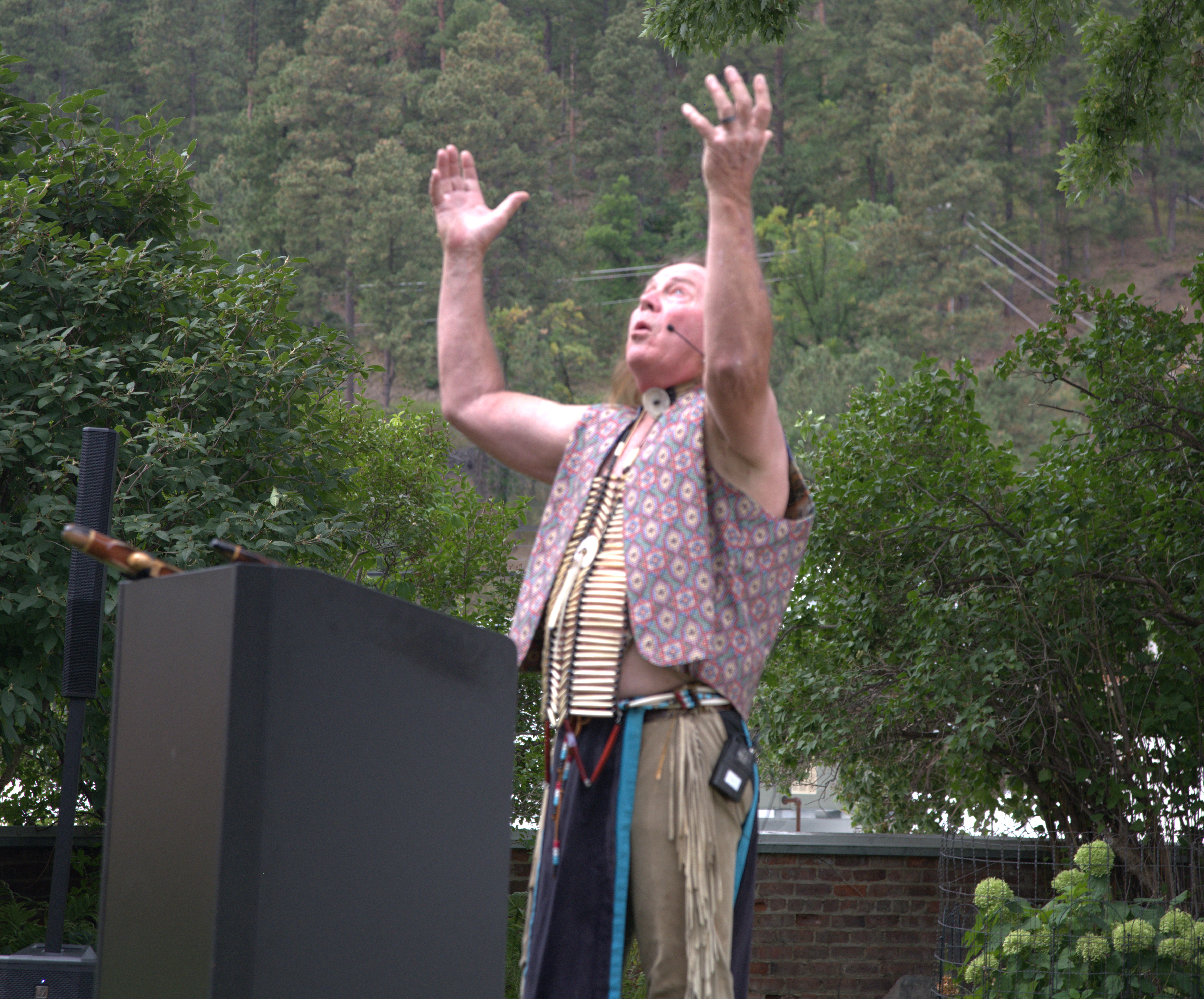
Местный лакота-педагог Дж.Дж. Кент на публичном мероприятии опроверг популярные заблуждения о священном предмете, объяснив его истинное духовное значение и запрет на рекреационное использование. Эксперт рассказал собравшимся о легенде о белом буйволе и семи священных обрядах, составляющих основу лакотской веры.
Перевод ИИ
Текст статьи доступен на языке оригинала.
Нажмите кнопку «Перевести статью» выше, чтобы сгенерировать перевод с помощью ИИ.
Оригинальный контент
DEADWOOD — The so-called "peace pipe" is one of the most iconic Native American symbols to an average American. However, much of what we claim to know of it, including its title, are demonstrability false.
At Deadwood History Inc.'s History on the Lawn event on Friday, Aug. 28, local Lakota educator and musician JJ Kent unraveled this cultural myth. He presented the true history of the sacred pipe and other aspects of Lakota spirituality to a sizable crowd gathered outside the Historic Adams House.
ADVERTISEMENT
Kent is the adopted son of Joyce Bell, a full-blooded Lakota woman from of the Oglala, born and raised on South Dakota's Pine Ridge Reservation. From an early age, Kent was immersed in Lakota history, culture and spiritual traditions by respected Lakota elders like Floyd “Looks For Buffalo” Hand, James Dubray, Joe Brown Eyes and more.
Kent said their teachings and wisdom inspired his dedication to sharing the truth of Lakota traditions and working to foster a greater cultural understanding for non-Native Americans. Another motivator was seeing the depictions of Native Americans in Hollywood movies.
"As I grew up, ...I'd see a Western movie, the way a lot of the Natives were portrayed, a lot of the things that were said in those films about our people. I'm like, wait a minute, that's not right. That's not how I was taught," Kent said. "I just kind of felt that it was my personal mission to try and help straighten out some of those myths and misconceptions about our people and our culture, and particularly the spiritual aspects of it."
When Kent asked the crowd if any of them had heard the term "peace pipe," nearly every hand went up. He described how this term has no basis in Native tradition and never has. Instead, the term is a misnomer from American settlers and soldiers who observed the pipe being smoked at treaty signings, incorrectly associating it with talks of peace. In fact, the Chanunpa, or sacred pipe, is a holy instrument of prayer.
"It is probably the most sacred, iconic symbol of our whole spirituality," Kent said. "The pipe serves as a tangible link between the physical world where we live now and the spirit world, which we consider the home of God."
In the pipe, the Lakota people place a mixture known as Ċanśaśa, a combination of tobacco and pieces of red willow bark. Kent explained how the two pieces of the pipe each hold a special meaning. The bowl represents Mother Earth and the female half of the circle of life, while the stem represents all living things and the male half of the circle.
For ceremonial use, the bowl is placed in the left hand, which the Lakota saw as the one closest to the heart, with the stem first pointed away from the user. Prayers are then said as the bowl is filled, and once completed, the pipe is turned and lit to release the prayers to the sky.
ADVERTISEMENT
"What does smoke do? Rise up to heaven. And it gives us that visual representation of our prayers being carried on that smoke up to the Great Spirit," Kent said. "That is the sole purpose of the sacred pipe. Anything else you've seen in Hollywood movies is purely fiction."
Kent added how depictions of Native Americans "getting high" from the sacred pipe by filling it with marijuana or hallucinogenic substances isn't merely untrue, it's also incredibly offensive.
"To use it for recreational purposes like that would be a desecration," he said.
For the Lakota, the origins of the sacred pipe is among the most important stories in their history, as it connects to the very foundation of their spiritual practices.
Long, long ago, Kent said, there was a great famine. The buffalo were scarce, the people were starving and plagued by war, suffering and death, he told.
“The people were crying out and lifting their voices up to the Great Spirit for relief,” Kent said.
One day, the chief sends two young men to go out and search for the buffalo, leading them to travel far from the camp. At first, there was nothing to be seen from horizon to horizon, yet when they reached the vantage point of a nearby hill, they saw something otherworldly.
ADVERTISEMENT
Surrounded by white light, Kent described, an immaculate white buffalo calf approached the two men. Suddenly, she transformed into a beautiful woman in a white buckskin dress and carrying a bundle on her back.
Taken by her beauty, one of the men began having impure thoughts about the woman and was swiftly punished, yet the other correctly recognized her as “wakan,” Lakota for sacred or holy. The woman told him to return to his people and construct a tepee large enough for all to gather for “a great meeting to receive a great gift.” This gift was the Chanunpa, which had seven circles inscribed on the side of the bowl, representing the Seven Sacred Rites.
"All of that teaching has been handed down generation to generation just the way it's always been preserved,” Kent said.
The first rite says to walk quietly, or in other words, practice humility. The second is to have love and compassion for one another. The third is to walk out and be helpful to each other without waiting to be asked. The fourth is to have respect for all things in creation. The fifth is to walk with a good attitude, setting a proper example for future generations. The sixth is to practice forgiveness, and the seventh is to practice thanksgiving.
Kent said these teachings make up the backbone of Lakota spirituality, and that the continued use of the sacred pipe is a way of maintaining a personal relationship with the creator as well as honor their heritage.
“It's a way of life that we practice 24/7, not just one day a week or one day a month or anything like that. It's a personal walk with the creator with every breath that we take," Kent said.
Аналитика ИИ и парсинга
Технические детали обнаружения, сопоставления и связывания статьи
Поисковый запрос
«Дэдвуд лакота мирная трубка миф опроверг»
Запрос, сгенерированный ИИ для поиска статьи в веб-источниках
Связанные результаты поиска
МОСКВА, 28 авг - РИА Новости. Утверждение, что лактоза вредна для всех взрослых людей, является мифом, заявила ...
Однако современная медицина готова развеять этот пугающий миф. Как заявилв интервью RT врач-эндокринолог Виталий Андронов, наличие заболевания вовсе не требует полного отказа от привычного образа жизни.
Американские миссионеры XIX века, пытавшиеся перевести Библию на язык лакота, столкнулись с серьёзной трудностью: им хотелось использовать «Вакан Танка» как эквивалент христианского ...