Английский Наука и Образование
13.08.2026 Читать источник
Программа BRIDGES преобразует малопродуктивные земли Алабамы и Теннесси в центры регионального производства
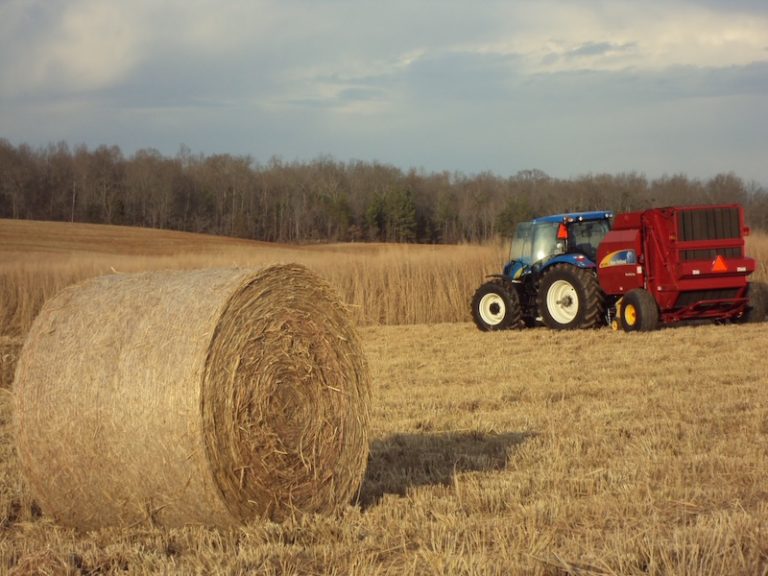
Научный проект BRIDGES, финансируемый Национальным научным фондом, намерен превратить неиспользуемые сельхозугодья в Алабаме и Теннесси в драйверы экономики и климатических решений. Программа уже получила первое финансирование и планирует привлечь до 160 миллионов долларов для ускорения перехода лабораторных разработок в коммерческое производство.
Перевод ИИ
Текст статьи доступен на языке оригинала.
Нажмите кнопку «Перевести статью» выше, чтобы сгенерировать перевод с помощью ИИ.
Оригинальный контент
All Episodes of Tennessee Valley Mornings
Aug 13, 2026
From Plants to Products – the BRIDGES program
Alex Hall talks with HudsonAlpha scientist Sam Jackson who is CEO of the BRIDGES program. BRIDGES is poised to change the game for rural communities in Alabama and Tennessee by converting underutilized farmland into a powerhouse for regional manufacturing, climate solutions, and economic renewal.
You can also join HudsonAlpha for Southern Solutions: Plant Science as an Economic Engine, a live evening event spotlighting the real-world impact and future roadmap of the BRIDGES Engine on August 18 at 530pm at the Mars Music Hall in downtown Huntsville. More information is here
Transcript (automatically generated)
[Alex Hall]
I’m Alex Hall, host of WLRH’s Curiosity Squad. A field of grass might not look much like the beginning of an automobile component, a building material, or a new form of packaging, but a major new National Science Foundation project, led by the Hudson Alpha Institute for Biotechnology, with 85 different partners, hopes to connect crops grown across Alabama and Tennessee with manufacturers looking for new, domestically produced materials. I caught up with the BRIDGES CEO, Sam Jackson, in his busy lab at Hudson Alpha to ask about the work.
[Sam Jackson]
They really wanted to see us accelerate the speed of which we move from laboratory innovation to commercial application of those innovations. And so BRIDGES, which stands for Bio-Based Rural Innovation for Domestic Growth and Economic Security, is one of the engines creating economic development from agriculturally-based, bio-based materials. Hudson Alpha has a long history of working with the genomics and the genetics of these perennial grasses.
They grow really well here in our area. We view the perennial grasses as a great opportunity for farmers to have a new source of revenue on the farm, a little bit of diversification, and opportunities to play in new markets. But where we really get our innovation is then taking those grasses and moving them downstream into product manufacturing.
And I oftentimes tell people to view a bale of switchgrass or miscanthus, two of the perennial grasses that we use, to view that bale of grass once it’s harvested, just in the same way we view a barrel of oil. A barrel of oil comes into a refinery. It’s cracked and separated out.
We do the same thing with these grasses. We bring them in, we process them, and we take them apart. Cellulose, hemicellulose, lignin, other chemical components of those plants.
And then we take those building block components and use them to create bio-based products that consumers use every day.
[Alex Hall]
This program sits under the National Science Foundation’s ENGINES initiative, designed to foster multi-sector collaboration that grows and sustains regional innovation.
[Sam Jackson]
It always comes to economics. Everyone wants to see farmers prosper. Everyone wants to see localized supply chains, domestic manufacturing.
But at the end of the day, it has to make economic sense to the manufacturer. And so what they’re seeing in their manufacturing process, what they’re seeing in their markets, really drives what we need to do from innovators to help them grow here in the Southeast. A great example of how these crops fit into an existing farm is really representative of most farms in our region.
Let’s say you had a farmer that was growing some corn and cotton, as well as some meat cattle. Well, virtually every farm in our region has 10, 25, or 50 acres of low productivity soils. Soils that, again, that’s where these grasses go.
They grow really well on those marginal soils. And what they tend to do is provide new revenue to that farm, gaining the ability of that farmer to continue to grow corn and cotton and beef cattle. So it’s providing them a new source of revenue, adding to the overall revenue of the farm, making it more economically sustainable long term.
And that’s one of our core goals, is to really provide that economic growth opportunity to the farmer so that they can stay in farming longer. We continue to lose farmland in Alabama. We continue to lose family farm operations.
We want to do what we can to tie them to new downstream markets to help prevent that loss over time.
[Alex Hall]
The program could bring up to $160 million to the area to facilitate the development.
[Sam Jackson]
So the Innovation Incentive Program, the award that we won was for up to 10 years and up to $160 million to build this innovation ecosystem here in the Tennessee Valley. Our initial award was for a two-year funding period of $15 million total. At the end of that window, if we’ve met our goals and our milestones and our deliverables, then we’ll be awarded a second tranche of funding.
I say as a taxpayer, it’s an excellent way for a federal agency to run a program. There are lots of checks and balances to ensure that we’re delivering on what we say we can do, and it helps keep our team on task and focused on the core aspects of an engine, which are speeding innovation from the lab to the commercial marketplace. We’ve earned the right to qualify for up to $160 million.
It’s really great to see that the agency sees our vision, sees what’s possible here in Alabama and Tennessee and has awarded it because it’s a statement to the quality of the science, the quality of the industry, and the quality of agriculture in the state.
[Alex Hall]
If you’re interested in finding out more about plant science and manufacturing and how this program could benefit local agriculture and innovation, Hudson Alpha is providing a free informational event on August 18th at 5.30 p.m. at the Mars Music Hall. Details on how to register can be found at WLRH.org under this story. For WLRH, I’m Alex Hall.
Ryan “R.L.” Terry
Morning Host & News Director
Marsha Arends
On-Air Host & Producer
Katy Ganaway
Program Director and Host of Arts Underground
Alex Hall
On-Air Host and Program Producer
Bob Nance
Producer
Аналитика ИИ и парсинга
Технические детали обнаружения, сопоставления и связывания статьи
Поисковый запрос
«BRIDGES программа Алабама Теннесси сельхозугодья»
Запрос, сгенерированный ИИ для поиска статьи в веб-источниках
Связанные результаты поиска
BRIDGES — международная консультационная программа. BRIDGES является продолжением американской программы «Фермер - Фермеру», которая с 1994 по 2008 годы финансировалась Американским Агентством ...