Английский Культура
25.08.2026 Читать источник
Клифф Скраггс: от лесопромышленника до куратора Линкольнского университета, изменившего облик Джефферсон-Сити
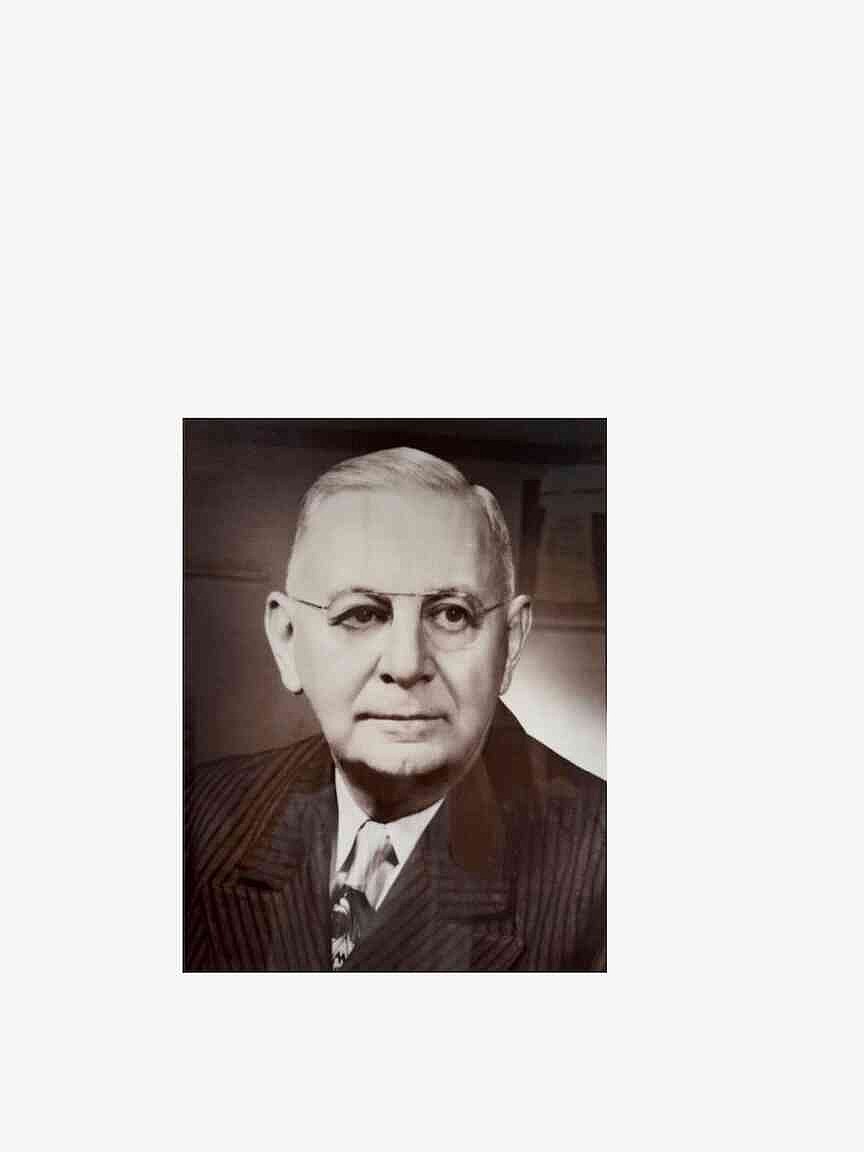
Основатель семейного лесопромышленного бизнеса Клифф Скраггс стал ключевой фигурой в общественной жизни Джефферсон-Сити, возглавив борьбу за отмену мостовых сборов и спасение местных банков во время Великой депрессии. Его многолетнее руководство Линкольнским университетом и защита интересов чернокожих преподавателей привели к тому, что в его честь был назван главный студенческий центр вуза.
Перевод ИИ
Текст статьи доступен на языке оригинала.
Нажмите кнопку «Перевести статью» выше, чтобы сгенерировать перевод с помощью ИИ.
Оригинальный контент
Few Jefferson City residents today recognize the name Cliff Scruggs, but a century ago nearly everyone in town knew it. The Scruggs name lives on through the family lumber business he founded, but Cliff's influence in the community reached far beyond that.
Clifford G. Scruggs was born in 1886 to William Martin and Josephine (Stone) Scruggs. The first Scruggs in Mid-Missouri lived just west of Jefferson City in Scruggs Station, named after two of its first settlers, John and Lewis Scruggs. However, at the time of his birth, Cliff's parents lived close to the corner of High and Monroe streets. Cliff's father worked for many years as a conductor on the Missouri Pacific Railroad's Bagnell branch line, which ran between Jefferson City and Bagnell, with a flag stop at Scruggs Station.
In 1904, three days after graduating from high school, Cliff began his lumber career as a sales manager for the Ott Lumber Company. During his 15 years there, he and Louis Ott also established a side business: a harness and saddlery shop. At the time, the shop and lumber yard were located in the 100 block of West High Street. The Jefferson City Tribune described him as "a young businessman of keen perception and a full knowledge of the business."
In 1915 Cliff married Margaret Nacy, a clerk at the Ott Lumber Company. They had three children – Viginia, Margaret and John.
The year 1919 was a turning point for a man with big visions. He made a leap from employee to owner, purchasing the Hope Lumber Yard while selling his interest in the harness shop. He named the new enterprise Cliff G. Scruggs Lumber Company. Three months later, he was joined in the venture by Henry Guhleman who had been an accountant with the C. M. Oberman Manufacturing Company. The business became Scruggs-Guhleman Lumber Company.
Located at the southeast corner of McCarty and Jefferson streets, the new company renovated and expanded the old Hope Lumber Yard grounds and added display windows. In 1923, a warehouse was added in the Mill Bottom and new merchandise offered beyond lumber including tile, roofing, bricks, plasterboard and other building materials. Their workforce grew from four employees in 1919 to 15 in 1935.
Scruggs and Guhleman were so successful they began expanding to out-lying communities setting up satellite lumber yards in Pulaski and Callaway counties, and four in Osage County.
The business was enough to keep anyone busy full-time, so it is little wonder Cliff's wide array of community accomplishments stands out. He served as president of the Chamber of Commerce and was actively involved with the Rotary, Knights of Columbus, Park Board, Board of Education, Building and Loan Association, St. Peter Church and the Community Chest, which supported local charities. During the Depression, as banks were failing, Cliff played a leading role in averting the collapse of Jefferson City banks. As president of the Capital City Bridge Company, he also led negotiations with the state to eliminate the toll on the Missouri River Bridge in 1952. He was a man of many connections and much influence, known for his diplomacy, tact, and affable disposition.
The civic service he was most proud of, and perhaps the one for which he is best remembered, was his work as a Lincoln University curator. He was appointed in 1925 and served in that capacity until his death in 1957. This was a period of great change for the university. In the early years, he attended to its financial affairs, even signing checks until an administrative staff was established. During his tenure, the school earned the nickname, "Harvard of the Midwest" for its recruitment of elite professors. New buildings were constructed, old ones were modernized, and the board navigated the university's transition to an integrated school in the 1950s.
During his years as a curator, Jim Crow laws prevented Black faculty members from receiving bank loans, even when they were otherwise qualified. Cliff interceded on behalf of many Lincoln University faculty seeking home loans. In this respect, he was not a typical community leader. For this and the many other ways he showed his commitment to Lincoln University, the student center was named in his honor: Scruggs University Center.
After his death in 1957, the LU Board of Curators passed a resolution that read: "Mr. Scruggs was a man of deep civic pride, giving generously of his time, not only to Lincoln's Board, but on numerous committees and groups. ... (He had an) ability to combine and coordinate the interests and aims of one group with that of another intensifying his value to each cause." They concluded that the university had lost "one of its strongest supporters and staunchest friends.... tireless and devoted" on its behalf.
In the 1960s, the Scruggs family bought out the Guhleman shares in the lumber company, and it has been Scruggs Lumber Company ever since. It has remained in the family through four generations: John, Cliff's son; Bob, John's son; and now Stephanie, Bob's daughter.
Jenny Smith is a retired chemist with the Highway Patrol Crime lab and currently serves on the Historic City of Jefferson's Board of Directors. She acknowledges the help of the Scruggs family in preparation of this story.
Аналитика ИИ и парсинга
Технические детали обнаружения, сопоставления и связывания статьи
Поисковый запрос
«Клифф Скраггс Линкольнский университет Джефферсон-Сити»
Запрос, сгенерированный ИИ для поиска статьи в веб-источниках
Связанные результаты поиска
Результаты поиска отсутствуют в БД
Парсер не сохранил результаты веб-поиска для этой статьи.