Английский Экономика
27.08.2026 Читать источник
Экономический потенциал Северной Дакоты: от аграрного гиганта к инновационному хабу
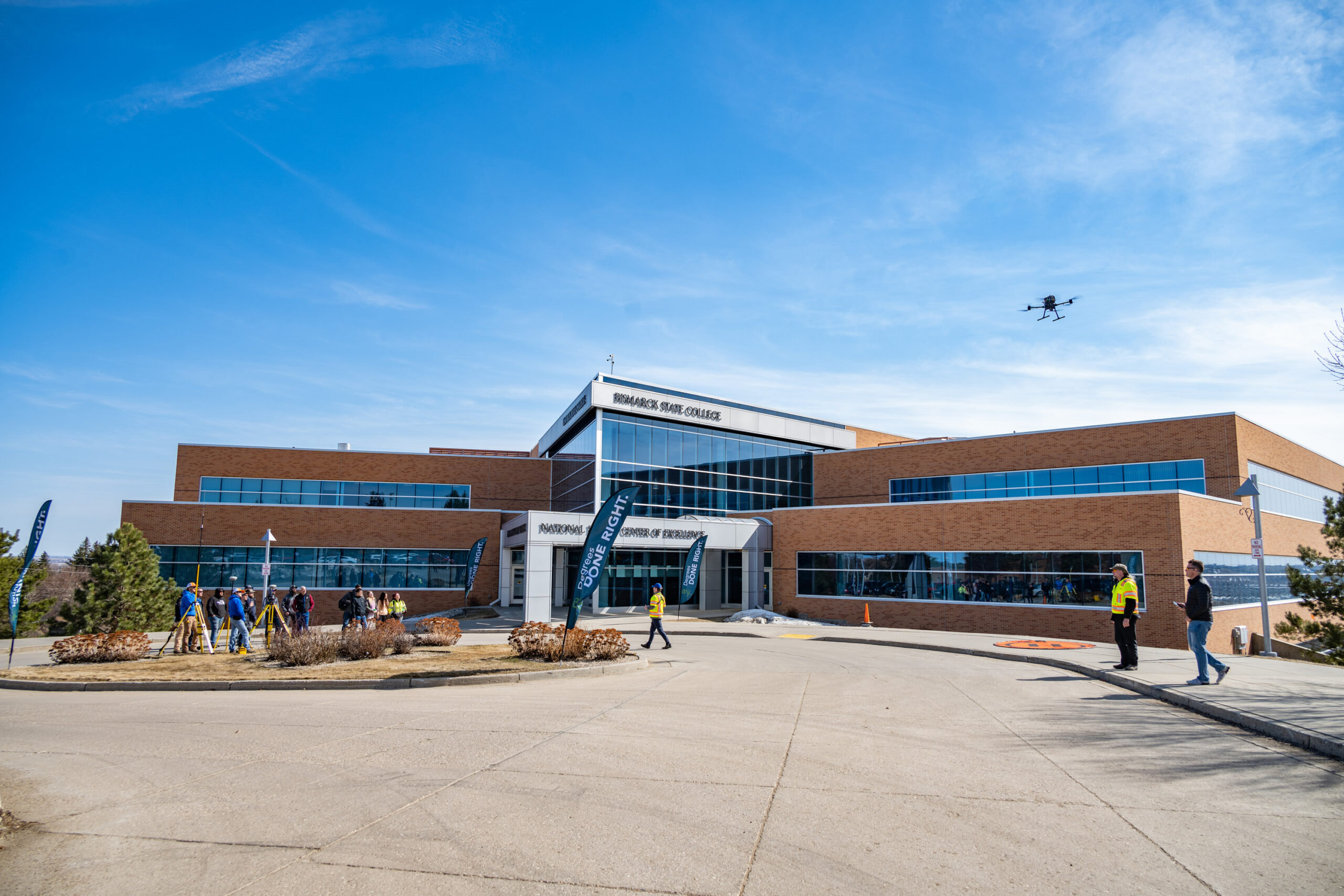
Северная Дакота, обладающая огромными запасами нефти и зерна, сталкивается с дефицитом стартапов и утечкой кадров, несмотря на новые государственные инвестиции. Регион пытается преодолеть разрыв между сырьевым богатством и коммерциализацией технологий, чтобы стать полноценным центром инноваций.
Перевод ИИ
Текст статьи доступен на языке оригинала.
Нажмите кнопку «Перевести статью» выше, чтобы сгенерировать перевод с помощью ИИ.
Оригинальный контент
When North and South Dakota joined the union in November 1889, President Benjamin Harrison reportedly had the two statehood proclamations shuffled and their titles covered before he signed, so no one could ever say which Dakota came first.
More than 130 years later, the order still isn’t official.
It’s a fitting origin for the northern member of that duo, a big, sparse state without a clear national identity. More Americans have seen a ghost than North Dakota. What a pity: Beyond even its natural beauty, plenty is working in the state.
The tension between what North Dakota grows, versus what it builds is the question Technical.ly is expanding to North Dakota to cover up close — our eighth market, and our first in the Great Plains.
What 800,000 people produce
Start with the scale mismatch. North Dakota covers roughly the same land area as Washington state with about one tenth the people — around 800k, the fourth-smallest population in the country.
From that base, though, the state is:
- The country’s third-largest crude oil producer, behind only Texas and New Mexico, and sixth in wind’s share of electricity generation. (Wind supplies roughly a third of in-state generation, though coal still supplies more than half.)
- Tops in the nation, or near it, in lots of big agricultural products, including rye, wheat, canola oil and honey, among others.
- Second or third in labor force participation. About 70% of adult residents work and unemployment hovers around 2.5% (vs. a national average above 4%).
Put that together and the state has one of the highest GDP per capita in the country, at around $75,000. That relative wealth is quietly put on display in big, expensive pickup trucks — the state buys one of the highest shares of new F-250s and F-350s, outranking other western US neighbors.
So North Dakota isn’t “wealthy per person” because of high wages in dense knowledge industries. It’s wealthy per person because an unusually large share of a small population works, and what they work on (oil, grain and power) has enormous dollar value per worker.
The insight: North Dakota is an extraordinarily efficient production economy. Efficiency and dynamism are not the same thing.
Two assets complicate the easy story of a rural commodity state.
Broadband
Because roughly 15 local telephone cooperatives bought up neglected incumbent networks in the 1990s and invested wisely, more than two-thirds of rural North Dakotans have fiber access — versus under 20% of rural Americans elsewhere. A rural North Dakotan is likelier to have gigabit service than the average American city dweller. It’s the precondition for rural innovation that most states still lack.
Airspace
Grand Forks hosts Grand Sky, the country’s first commercial drone park, anchored by Northrop Grumman and General Atomics. And Vantis, run by the Northern Plains UAS Test Site, lets companies legally fly autonomous aircraft over open country, at distance.
As of last year, the state has two universities boasting R1 status, the top distinction for research and development spending and graduating doctoral students. In 2024, both North Dakota State University and the University of North Dakota attracted close to $200 million each in R&D spending, putting them in the top 150 of close to 1,000 institutions tracked by the National Science Foundation.
Be it wheat, wind power or weather-hardened graduate students, North Dakota produces plenty. But those raw materials are not yet translating to widespread economic growth.
Where it falls down
The state’s economic gains are heavily concentrated, and in contrast, new business formation is bottom-tier.
Nationally two years ago, 1,500 business applications were filed for every 100,000 residents. In North Dakota it was barely 1,000, putting it 43rd out of 50 states plus DC. The state produced barely half the national average of high-propensity applications, the subset of new firm creations most likely to become employers.
The country’s entrepreneurship boom happened here too, but lagged behind.
A state with the nation’s second-highest labor force participation ranks in the bottom fifth at starting companies. Nearly everyone works. Comparatively few start.
Invention is thin. The Economic Innovation Group’s Index of State Dynamism measures unique inventors per 1,000 residents and a core startup rate excluding agriculture, mining and utilities. North Dakota scores poorly on both. A commodity economy gets no credit for its strengths.
Capital has grown, but from a very low base
The state ranks around 35th in venture capital relative to GDP, with perhaps three or four active funds and 15 to 20 angels writing checks. Anything above roughly $2 million typically requires Minneapolis, Chicago or Omaha. Fargo accounts for something like 80% of startup activity statewide. The new $250 million North Dakota Growth Fund, launched in 2021, is the state’s explicit attempt to fix this. Almost all its federal SSBCI dollars are directed toward equity investments, well-above national trends. Capital access has grown, but from one of the country’s lowest totals, to become a middling offer.
Talent leaks
Only about 40% of North Dakota public university graduates with a bachelor’s degree or higher remain in the state a year out. The state educates well and retains poorly. This has been a problem for decades, as state strategies focused on its natural resources.
Wealth is volatile
Real GDP per capita is roughly 7% below its 2014 peak. Mining, quarrying and oil and gas extraction remain the single largest contributor to state GDP. The sixth-highest GDP per capita is a real number attached to a commodity cycle, not a plateau.
North Dakota’s bright lights demand investments in an economic future.
The bet on the table
This is the gap the NSF AgTech Engine, which helps fund Technical.ly’s local coverage, is designed to close.
Led by NDSU, it won a $15 million initial award in 2024 with the potential for up to $160 million over 10 years — one of only nine engines selected in the first cohort from 188 proposals and the only one focused on agriculture. NSF has since committed an additional $45 million as the AgTech Engine enters its third year. Its work combines genomics, weather and soil-moisture modeling, nanoscale sensors and networked monitoring, with explicit commitments to bring tribal, rural and farming communities into designing what comes next. Five federally recognized tribes and a tribal service area sit at least partly within the state, alongside five tribal colleges.
North Dakota already has the inputs: crops it dominates globally, fiber to the field, airspace to fly, now two R1 universities and a workforce that shows up. What it lacks is the machinery that turns inputs into companies: formation, invention, capital and retention.
North Dakota does not need to be convinced it can produce. It needs to prove it can commercialize. This is exactly where pro-entrepreneurship “ecosystem building” strategies are needed, piecing together institutional strengths to people power and future making.
If rural innovation works anywhere in America, the raw materials say it should work here.
Thanks to politics and President Harrison 130 years ago, North Dakota doesn’t know precisely where it lands on the list of new states. Whether or not economic development leaders commit to the state’s economic future will be far more closely counted.
Аналитика ИИ и парсинга
Технические детали обнаружения, сопоставления и связывания статьи
Поисковый запрос
«Северная Дакота экономика стартапы инновации»
Запрос, сгенерированный ИИ для поиска статьи в веб-источниках
Связанные результаты поиска
Фарго - самый большой город Северной Дакоты Экономика штата Северная Дакота основана на сельском хозяйстве, добыче полезных ископаемых (в первую очередь нефти), и, в значительно меньшей степени, на промышленности и ...
Северная Дакота состоит из 53 округов и занимает площадь 183 272 км² (19-е место среди штатов), из них 97,6 % приходится на сушу. На востоке Северная Дакота граничит с Миннесотой (граница проходит по Ред-Ривер), на юге — с Южной ...