Английский Культура
01.09.2026 Читать источник
Комикс «Blade Runner: Tokyo Nexus» выйдет в ноябре 2026 года раньше сериала на Prime Video
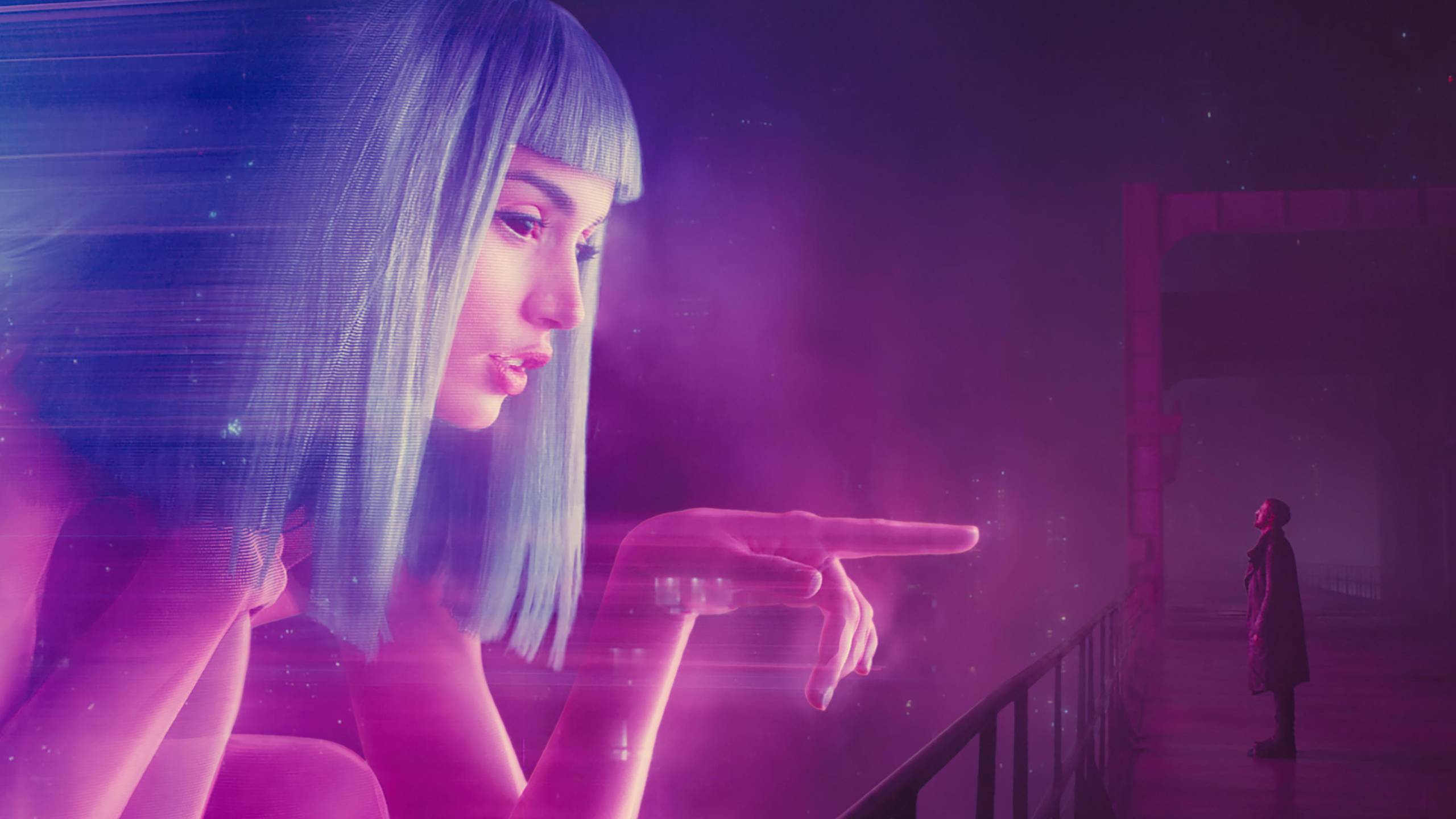
Четырехчастная мини-серия от Titan Comics под названием «Blade Runner: Tokyo Nexus – Die With Honor» поступит в продажу 4 ноября 2026 года. Этот релиз предшествует выходу ожидаемого телесериала «Blade Runner 2099», премьера которого запланирована на 25 ноября того же года.
Перевод ИИ
Текст статьи доступен на языке оригинала.
Нажмите кнопку «Перевести статью» выше, чтобы сгенерировать перевод с помощью ИИ.
Оригинальный контент
TJ Mills is an editor on ScreenRant's Comic team, where she combines her lifelong passion for DC with her analytical background as a former Intelligence Analyst. Since joining ScreenRant in 2023, she has specialized in covering major DC storylines, character evolutions, and industry developments.
Blade Runner is considered by many to be a masterpiece of the cyberpunk subgenre, blending sci-fi and neo-noir elements into one of the most visually stunning settings ever to grace the silver screen. With the franchise beloved by so many, it’s no surprise that the Blade Runner universe continues to expand with new releases. Now, fans have news of an upcoming four-part series that is set to arrive even before Prime Video’s highly anticipated live-action television series, Blade Runner 2099.
Blade Runner 2099 is just around the corner, with a release date set for November 25, 2026, on Prime Video. Yet, there’s another upcoming release that fans of the franchise should make note of: Blade Runner: Tokyo Nexus – Die With Honor. This four-part mini-series will be brought to life by Titan Comics and will present the next chapter in the comic publisher’s Tokyo Nexus line.
Spearheaded by the creative team of writer Nancy A. Collins, artist Mariano Taibo, and colorist Marco Lesko, the 32-page debut issue of Die With Honor launches on November 4, 2026, and will be available to buy for $4.99 at local comic shops and digitally. Readers should note that while Die With Honor can be read as a standalone mini-series, fans looking for the best reading experience should read Titan Comics’ Tokyo Nexus titles in their entirety, as Die With Honor will technically be the third and latest chapter in the series.
Blade Runner's Tokyo Nexus Line, Explained (& The Best Way to Binge It)
Main Cover by Dylan Teague for Blade Runner: Tokyo Nexus – Die With Honor #1 (2026)
When it comes to Titan Comics’ Tokyo Nexus titles, there are Blade Runner: Tokyo Nexus — Die in Peace (2024), Blade Runner: Tokyo Nexus — To Lose Is to Win (2026), and the upcoming Blade Runner: Tokyo Nexus — Die With Honor. While each has its own subtitle and starts with an issue #1, Titan Comics’ various Tokyo Nexus series are essentially three consecutive story arcs that continue to build off each other.
Those who dive into the entirety of the line will find that all three series primarily follow the only two survivors of a combat squad: ex-Marine Mead and Replicant combat model Stix, who initially return to Tokyo to search for the traitor who left them to die.
From this general premise, more characters and various storylines are introduced. For those interested in what Blade Runner: Tokyo Nexus — Die With Honor will specifically focus on, the official synopsis can be found below:
Alura shows the Kalanthia traitor, who is head of the Cheshire bootleg Replicant program, photos of Stix and Mead, realising they are still alive, he panics and demands she kill them. Alura refuses until Uldren makes good on his promise of delivering bootleg Replicants as promised. Later, she summons Stix and introduces him to the 'Borealis Team' — a three-Cheshire Replicant team who are all clones of the original Aurora Team who served with Stix on Kalanthia. He is ordered to lead them on a mission to hunt down and kill Madame Nomura.
Meanwhile, Mead, still believing that Stix is the killer of Sayo — Nomura's daughter, steals his Cheshire ID card and breaks into Cheshire HQ in search of evidence and witnesses the brutal mass assassination of the Yakuza sub-bosses by a second Cheshire Replicant kill team led by Lerna, who is linked to Alura via one of the two surviving Aurora Yokes.
So, if you’re one of the many dying from impatience as you wait for the release of Blade Runner 2099, then you can catch up on Tokyo Nexus now, with the next chapter kicking off in early November.
ScreenRant.com|VKVoigt-Kampff Terminal
Interactive Quiz
ScreenRant/Movies/Blade Runner/Trivia
Voigt-Kampff Analysis · Empathy CalibrationHow Well Do You Know Blade Runner?“All those moments will be lost in time, like tears in rain.”
🤖ReplicantsMore human than human
🌃Neo NoirRain-soaked streets
🏙DystopiaLos Angeles 2019
👁Tyrell CorpCommerce is our goal
🌞2049A new blade runner
QUESTION 1 / 8REPLICANTS
01
In Ridley Scott’s Blade Runner (1982), replicants are bioengineered beings created by a powerful corporation. What is the name of the company that manufactures them?
✓ Correct! The Tyrell Corporation, led by the genius Dr. Eldon Tyrell, creates the Nexus-6 replicants with the motto “More Human Than Human.” Their massive pyramidal headquarters dominate the Los Angeles skyline.
✗ Retired! The answer is the Tyrell Corporation. Weyland-Yutani is from Alien, Cyberdyne Systems from Terminator, and OCP from RoboCop. The Tyrell Corporation’s Dr. Eldon Tyrell created the Nexus-6 replicants, including the film’s antagonist Roy Batty.
QUESTION 2 / 8ICONIC SCENES
02
The “Tears in Rain” monologue is widely considered one of cinema’s greatest death scenes. Which actor delivered this improvised speech as the replicant Roy Batty?
✓ Correct! Rutger Hauer played Roy Batty and famously rewrote the monologue the night before filming, trimming it down and adding the immortal line “like tears in rain.” It remains one of the most poetic moments in science fiction cinema.
✗ Retired! The answer is Rutger Hauer. Harrison Ford played Deckard, Sean Young played Rachael, and Edward James Olmos played Gaff. Hauer’s Roy Batty delivered the haunting “Tears in Rain” speech on a rain-soaked rooftop as his four-year lifespan expired.
QUESTION 3 / 8TECHNOLOGY
03
Blade runners use a specialized test to determine whether a subject is human or replicant by measuring emotional responses and involuntary eye movements. What is this test called?
✓ Correct! The Voigt-Kampff test uses a bellows-like device to monitor pupil dilation and involuntary blush responses while asking emotionally provocative questions. The opening scene of the film features Leon Kowalski failing the test spectacularly.
✗ Retired! The answer is the Voigt-Kampff test. The Turing test is a real-world concept for testing AI intelligence. The Voigt-Kampff machine measures empathic responses through eye movement — replicants struggle to fake genuine emotional reactions to its disturbing scenarios.
QUESTION 4 / 8SOURCE MATERIAL
04
Blade Runner is loosely adapted from a novel by the legendary science fiction author Philip K. Dick. What is the title of this 1968 novel?
✓ Correct! Philip K. Dick’s “Do Androids Dream of Electric Sheep?” (1968) explores themes of empathy, identity, and what it means to be human. While the film departs significantly from the novel, both ask the same fundamental question about the nature of consciousness.
✗ Retired! The answer is “Do Androids Dream of Electric Sheep?” All four are Philip K. Dick novels, but only this one served as the basis for Blade Runner. The novel’s androids, mood organs, and electric animals were reimagined into the neon-noir dystopia we know today.
QUESTION 5 / 8CHARACTERS
05
Rachael is a unique replicant who believes she is human because she has been implanted with someone else’s memories. Whose memories does Tyrell give her?
✓ Correct! Tyrell implanted Rachael with the memories of his niece, giving her a fabricated past complete with childhood photographs and emotional recollections. This made her uniquely difficult to identify as a replicant — it took Deckard over 100 questions on the Voigt-Kampff test.
✗ Retired! The answer is Tyrell’s niece. Deckard discovers this during his investigation, noting that Rachael’s memories — including the spider outside her window — actually belonged to Tyrell’s niece. This revelation is what shatters Rachael’s understanding of her own identity.
QUESTION 6 / 8FILM HISTORY
06
Blade Runner is famous for existing in multiple cuts. The definitive version, released in 2007 and personally overseen by Ridley Scott, removed the studio-imposed voiceover and happy ending. What is this version called?
✓ Correct! The Final Cut (2007) is the only version where Ridley Scott had complete artistic control. It removed Harrison Ford’s narration, cut the happy ending, restored violence, and fixed continuity errors. At least seven different cuts of the film exist.
✗ Retired! The answer is The Final Cut. The Director’s Cut (1992) was actually assembled without Scott’s full involvement. The Final Cut (2007) is the only version Ridley Scott was completely satisfied with, and it’s now considered the definitive way to experience the film.
QUESTION 7 / 8BLADE RUNNER 2049
07
In Blade Runner 2049 (2017), Ryan Gosling plays a replicant blade runner known by his serial number KD6-3.7. What is the human name he adopts over the course of the film?
✓ Correct! Officer K adopts the name “Joe” after his holographic companion Joi tells him he looks like a “good Joe.” The name takes on deeper meaning as K grapples with the possibility that he might be something more than just a replicant following orders.
✗ Retired! The answer is Joe. His AI girlfriend Joi gives him the name, calling him “a good Joe.” Leon is a replicant from the original film, and Rick is Deckard’s first name. K’s journey from obedient machine to someone who chooses his own name is the emotional core of 2049.
QUESTION 8 / 8SOUNDTRACK
08
The original Blade Runner’s haunting synthesizer score — a groundbreaking blend of orchestral noir and electronic atmosphere — was composed by which legendary musician?
✓ Correct! Greek electronic composer Vangelis (Evangelos Odysseas Papathanassiou) created the iconic score, blending Yamaha CS-80 synthesizers with saxophone and orchestral elements. The soundtrack wasn’t officially released until 1994, over a decade after the film, due to rights disputes.
✗ Retired! The answer is Vangelis. John Carpenter scores his own films, Hans Zimmer composed for 2049’s sequel (with Benjamin Wallfisch), and Tangerine Dream scored other 1980s sci-fi films. Vangelis’ atmospheric score is inseparable from Blade Runner’s identity.
Аналитика ИИ и парсинга
Технические детали обнаружения, сопоставления и связывания статьи
Поисковый запрос
«Blade Runner Tokyo Nexus комикс Titan Comics 2026»
Запрос, сгенерированный ИИ для поиска статьи в веб-источниках
Связанные результаты поиска
Результаты поиска отсутствуют в БД
Парсер не сохранил результаты веб-поиска для этой статьи.