Английский Культура
04.09.2026 Читать источник
Водохранилище и руины мельницы 1839 года в Доун: история и последние работы по стабилизации
Исторический комплекс Доун-миллс, основанный в 1839 году, пережил пожары и частичные обрушения, что привело к значительному снижению высоты руин в 1981 году. В начале 2025 года начались новые работы по стабилизации объекта, продолжающиеся в настоящее время.
Перевод ИИ
Текст статьи доступен на языке оригинала.
Нажмите кнопку «Перевести статью» выше, чтобы сгенерировать перевод с помощью ИИ.
Оригинальный контент
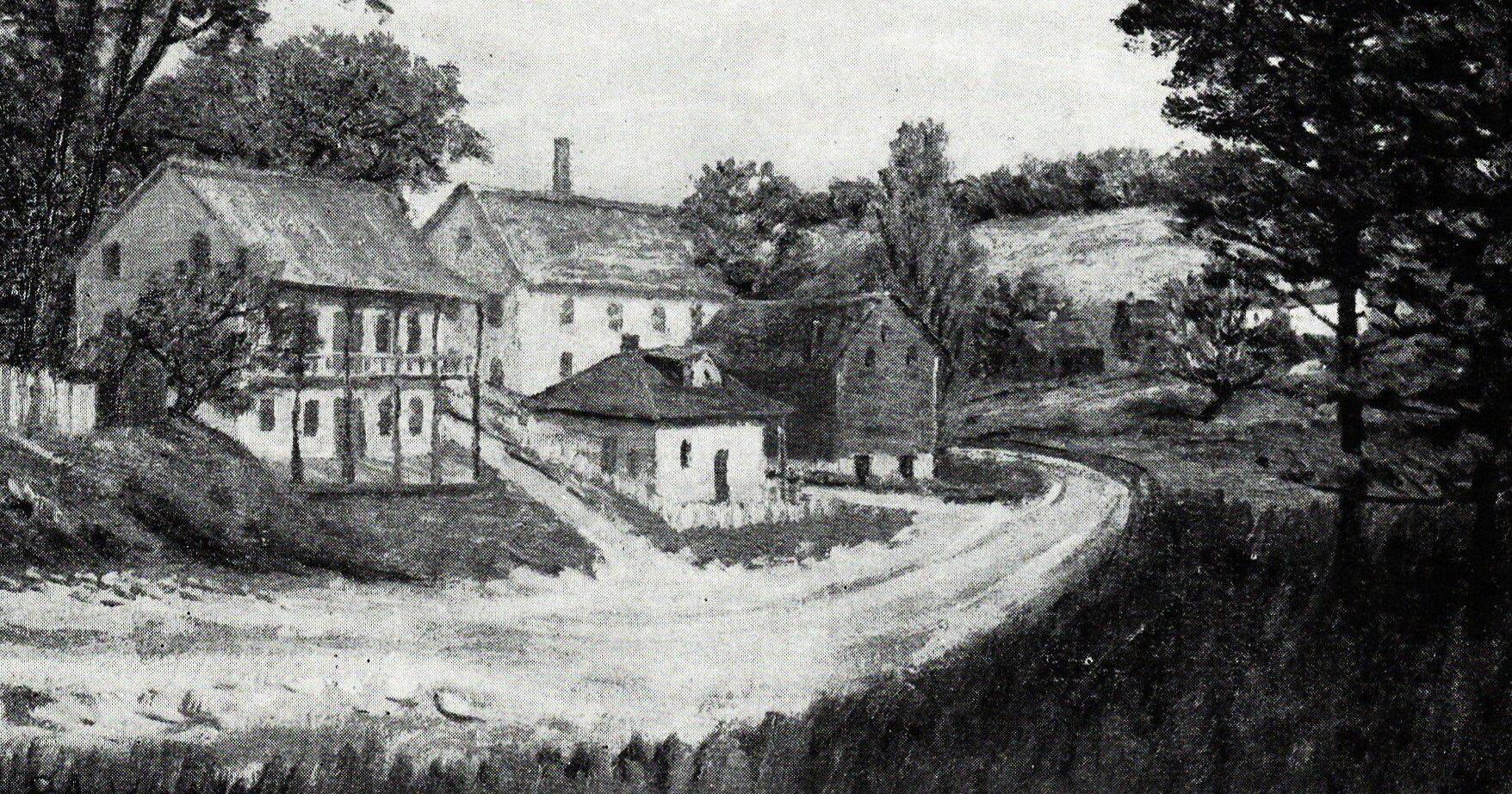
Published in the 1941 WHS volume, a mid-1890s sketch by Phoebe Watson shows Doon’s Red Lion Inn on Pinnacle Drive. In the foreshortened background stands Ferrie’s 1839 mill.
Waterloo Historical Society
Following a 1910 fire, the old mill still stood proudly for decades. Following a partial 1965 collapse, demolitions have reduced the walls drastically.
Waterloo Historical Society
By 1981 when Tom Clancy visited the ruins, the walls had been reduced to their current height. The datestone reads: DOON MILLS / 1839.
Tom Clancy
The Old Mill Road bridge over Schneider Creek was less than a year old when it backgrounded the 142-year-old ruins in 1981.
This week’s Flash from the Past looks to Doon’s history that dates back to the 1830s with Adam Ferrie establishing a thriving mill hub followed by subsequent transformations and preservation efforts through to the present day.
Editors’ note: We are sad to report that rych mills passed away unexpectedly earlier this week. This is his final column. The Record’s Luisa D’Amato looks back at rych’s contributions to local history in her latest column.
Countless Ontario communities began with a three-part recipe: watercourse, dam and mill. That’s also a common narrative in Waterloo Region: the later cities of Galt, Waterloo, Kitchener plus many towns and villages including St. Jacobs, Preston, Wellesley, Ayr, New Dundee, Bridgeport … and Doon. Once an unincorporated village in Waterloo Township, Doon has been part of Kitchener since 1968.
In Doon, one still finds a few ruins of an 1839 mill, the ageless stream that fed it and a road bridge where once stood the dam. Because Doon founder Adam Ferrie was also a town builder, numerous homes and other buildings remain from 1830-1850.
ARTICLE CONTINUES BELOW
There were two Adam Ferries in the early 1800s: father was the Hon. Adam Ferrie, bearing a title given for business and civic work in Montreal. The son concerns us. Adam Jr. ended up in 1832 Preston, but was unable to buy water power privileges there. Instead, with help from his father, he purchased 300 acres from John Biehn in 1834. Located two miles west of Preston, the property included an abandoned sawmill, house and weak dam along a creek emptying into the Grand River. With every intention of building a town, Adam named his new property Bonnie Doon to honour his birthplace, Loch Doon in Scotland. It is now locally called Lower Doon.
The list of eventual Ferrie structures once read grist mill, distillery, cooperage, sawmill, smithy, tavern, brick kiln and workers’ homes. His own house overlooked the dam and later became the art gallery of Homer Watson. Perhaps the most important structure was a sturdier dam. By thoroughly blocking what is now Schneider Creek, Adam’s resultant mill pond (later called Willow Lake) provided continual water power.
Limestone blocks were shipped up the Grand from Galt to help construct mill walls three feet thick and four storeys high. The resultant 1839 Doon Mills flour/grist mill was called the largest of its kind in Canada.
Adam died of tuberculosis in 1848, aged 36, and brother Robert continued the mill operation for a decade. Later owners carried on the flour milling but when Jacob Cluthe purchased the buildings, dam and lake in 1894 the mill had been idle. Cluthe converted part into a shoddy mill reclaiming wool. He also set up a cider mill, glue factory and scissors-manufacturing business. A fire in 1904 reduced Cluthe’s businesses and another in 1910 ended all work in the 70-year-old building. Over the next decades, the mill deteriorated until only the skeleton remained — a romantic reminder of Doon’s past.
The sturdy dam endured until August 1968 when a storm washed out part of Wilson Avenue (now Old Mill Road), which had carried traffic over the dam. Quickly, Willow Lake disappeared. The roadway was closed and the gap was not replaced with a regular road bridge across Schneider Creek until 1980.
One wall of the derelict mill collapsed in 1965 and the unstable ruins caught headlines in the late ‘70s and early ‘80s. The City of Kitchener and the Grand River Conservation Authority discussed removing the walls entirely or reducing the height. The latter took place in 1981 when GRCA bulldozers trimmed them from about 20 feet high to six feet. In early 2025, the latest in a number of stabilization projects began on the 1839 ruins, further reducing the height. That work continues and the site is fenced off.
Two miles northwest of Doon, there is a stub of a Kitchener street near Strasburg and Trillium. Being so remote from the village he created, Adam Ferrie Place seems scant civic tribute.
Your gift purchase was successful!Your purchase was successful, and you are now logged in. You will also start receiving the Waterloo Region Record's free morning newsletter soon.
Аналитика ИИ и парсинга
Технические детали обнаружения, сопоставления и связывания статьи
Поисковый запрос
«Водохранилище руины мельницы Доун стабилизация 2025»
Запрос, сгенерированный ИИ для поиска статьи в веб-источниках
Связанные результаты поиска
В ГПО «Минскстрой» рассказали подробности предстоящей реконструкции водяной мельницы и каплицы, от которых до наших дней сохранились лишь руины.
Где найти сокровище «Холмы у водяной мельницы» в The Blood of Dawnwalker. Руководства по прохождению и секреты игра на GameGuru.ru.