Английский Спорт
04.09.2026 Читать источник
Строительство трибуны на стадионе Вирджинского университета отложено из-за нехватки финансирования
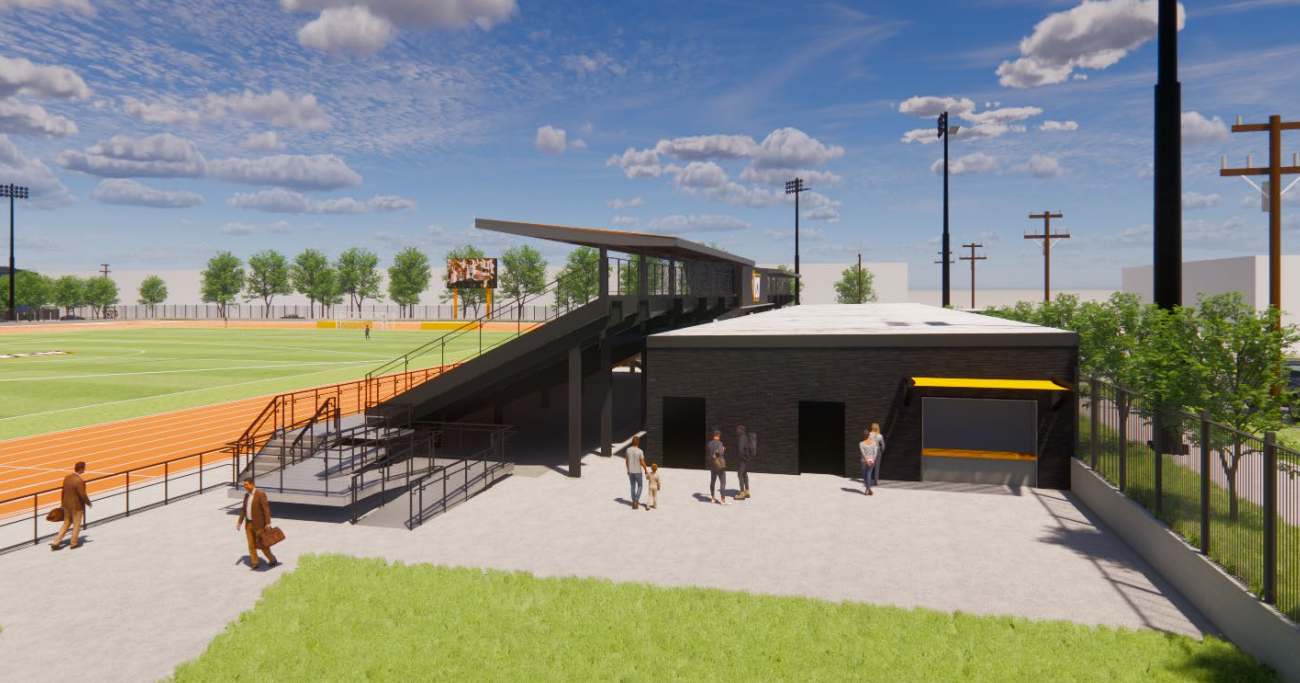
Вирджинский университет завершил возведение беговой дорожки и футбольного поля, но строительство трибуны на 1000 мест приостановлено до получения дополнительных средств. В связи с этим матчи сезона будут проходить на временных трибунах без взимания платы с зрителей.
Перевод ИИ
Текст статьи доступен на языке оригинала.
Нажмите кнопку «Перевести статью» выше, чтобы сгенерировать перевод с помощью ИИ.
Оригинальный контент
Virginia Commonwealth University's new outdoor track and soccer field have been built, but the stadium will have to wait. The university is delaying construction on a 1,000-seat grandstand until it has sufficient funding, according to university documents released this week.
The planned $38 million track and field facility on Hermitage Road in Richmond is intended to replace Sports Backers Stadium and be the first piece to VCU's 42-acre athletics village.
But in the nearly two years since VCU broke ground, the university has not finished construction on the first phase.
For close to a decade, VCU has planned to build an athletics village along Hermitage Road, across the street from the Diamond District. From 2020 to 2022, the university spent about $25 million buying land there, and the state allocated an additional $15 million for VCU to acquire the former Virginia Alcoholic Beverage Control Authority headquarters. The 42-acre village would have a track and field facility, practice fields, a soccer stadium, indoor and outdoor tennis courts and a multiuse indoor facility.
People are also reading…
The university assigned the track and field facility a budget of $38 million, and VCU got $25 million when it sold Sports Backers Stadium to the city's Economic Development Authority. In 2024, Ed McLaughlin, VCU's athletics director, said VCU would raise the remaining $13 million from private and corporate donors. McLaughlin said at the time that VCU had already raised most of that money.
The work completed so far has cost about $24 million and was funded by the sale of Sports Backers, said David Allen, an associate vice president for finance. VCU estimates it will now cost about $18 million more to finish construction of the stadium. The university does not have a specific timeline for when construction would resume, Allen said. VCU is working through a broader financial and capital plan for the remainder of the athletics village.
Initially, VCU planned to build a grandstand for 1,500 spectators, but as costs went up, it reduced capacity to 1,000 guests to stay within budget. The 9,000 square-foot stadium will include bleacher seating, locker rooms, restrooms, storage, concession stands and a press box.
In January, contractor Barton Malow finished construction on a 400-meter outdoor track, two pole vaults, two pits for long jumps and triple jumps, two areas for high jumps, circles for throwing events and a natural grass infield that can host soccer games until the new soccer facility is built. The contractor also built two practice soccer fields, one with natural grass and one with artificial turf.
Until the track and field grandstand is built, VCU will use movable bleachers, a temporary scoreboard and temporary sound system. Fans can bring their own chairs, and VCU will not charge for admission to soccer games played there this season. The women's soccer team played its first game at the new field Aug. 16, and the men's team will play its first home game next week.
According to VCU's capital plan, other phases of the athletics village have been delayed. Construction on the tennis facility has been pushed back two years to the 2028-2030 timeframe. The soccer stadium is still scheduled for 2028-2030, but the indoor field house has been postponed two years until 2030-2032.
Delaying construction on the tennis courts impacts other projects on VCU's Monroe Park campus. Once the tennis courts are built, VCU plans to demolish its existing courts on West Main Street and build a new student center there. Then VCU would tear down the current student commons and replace it with a green space being called "Iconic Green." Those two projects have been rescheduled for the 2030-2032 timeframe.
VCU also plans to build a new academic building in the heart of campus, called the Hyflex Interdisciplinary Innovation Classroom & Lab Building. The building would go up near South Linden Street, and after it's finished, VCU could demolish or renovate Oliver Hall and the T. Edward Temple Building to make room for the green space.
The academic building is still in the "pre-planning" phase, and while it is listed on the capital plan to begin construction in the next two years, its timeline depends on funding, VCU said. Generally, the state funds construction of academic buildings and awards the money in the biannual state budget.
Under the university's original plan, VCU intended to demolish the student center first and build the new academic building in its place, along Cherry Street.
Аналитика ИИ и парсинга
Технические детали обнаружения, сопоставления и связывания статьи
Поисковый запрос
«Вирджинский университет стадион трибуна финансирование отложено»
Запрос, сгенерированный ИИ для поиска статьи в веб-источниках
Связанные результаты поиска
Благодаря гранту Содружества Виргинии обучение в университет стало бесплатным для всех жителей Вирджинии в 1875 году.
Вирджинский политехнический институт и университет штата [1] (англ. Virginia Polytechnic Institute and State University) — публичный исследовательский университет в Блэксбурге, штат Виргиния, США.