Английский Правосудие
04.09.2026 Читать источник
Судья Уолтер Райс уходит на пенсию, но продолжает работать с бывшими заключенными, включая своего осужденного в 1982 году
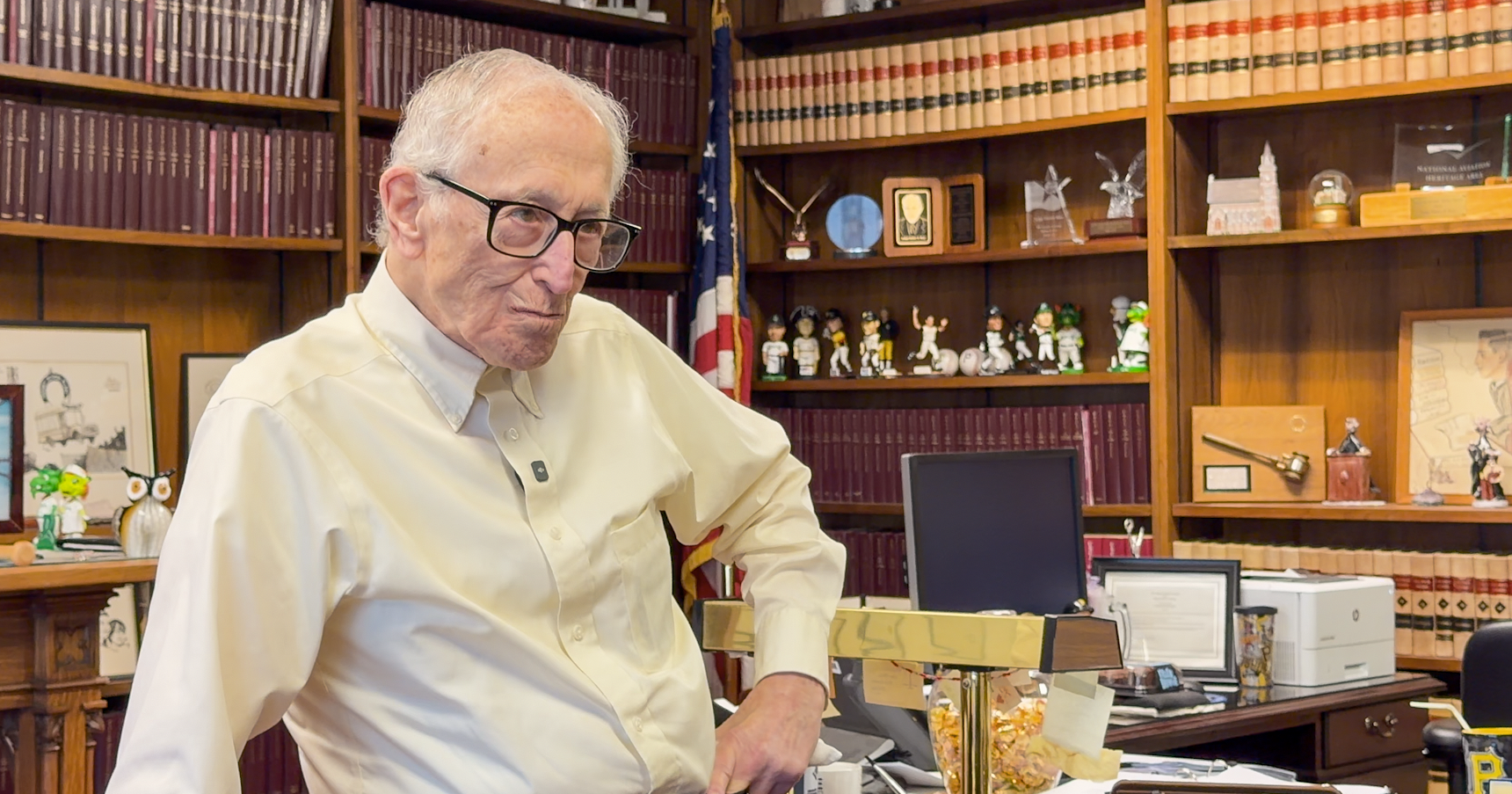
Судья федерального округа Уолтер Райс, который в 1982 году приговорил к тюремному заключению Стерлинга Титуса, теперь работает с ним в программе реинтеграции. Несмотря на выход на пенсию, Райс планирует посвятить себя инициативам по возвращению заключенных в общество.
Перевод ИИ
Текст статьи доступен на языке оригинала.
Нажмите кнопку «Перевести статью» выше, чтобы сгенерировать перевод с помощью ИИ.
Оригинальный контент
When Sterling Titus was sentenced to federal prison in 1982 by U.S. District Court Judge Walter H. Rice, he privately thought, “I hope I never see you again.”
Yet the former inmate’s life has been intertwined with the judge’s for more than 20 years, and seems destined to remain so even following Rice’s Aug. 28 retirement after 46 years on the federal bench.
In fact, Titus now works as program coordinator for the Montgomery County Office of Re-entry that Rice was instrumental in creating. In announcing his departure, Rice said he wanted to devote more time to prisoner re-entry initiatives and other forms of community service.
“I see so many people in court for the first time and second time and third time, and now I am seeing the grandchildren of people I interacted with when I first became a municipal court judge in 1969,” he explained.
Rice and his wife, Bonnie Beaman Rice, recently attended Titus’ 70th birthday party, which coincided with his 40th anniversary of being clean and sober from drug addiction.
“I have had more ups and downs than a roller coaster, but I believe this is what God has tasked me to do,” Titus said. “I had been a throwaway person in this society, stigmatized and ostracized. I never would have dreamed I would have the relationship I have now with law enforcement and the criminal justice system. And it’s all because the judge is so compassionate and insightful.”
Even at 89, Rice’s retirement plans might look like anyone else’s idea of a full-time job. Although stepping down from U.S. District Court, Rice isn’t completely retiring from the bench. He will be placed on inactive status, occasionally presiding over cases in re-entry court as well as naturalization ceremonies.
“That is the happiest thing we do,” Rice said. “No one leaves a naturalization ceremony unhappy. It does all of us good to see how proud and happy the new citizens are, and it gives those of us who were born here a deeper appreciation of what we have.”
Rice also will continue to serve as a strong presence and student mentor at the University of Dayton School of Law, and he hopes to become even more involved with the Dayton Dialogue on Race Relations.
“I do have a lot of frustrations surrounding our race relations work,” he said. “At times you see a tremendous amount of improvement, and other times it feels as if the calendar has turned back to 1950.”
That’s why he believes the DDRR’s work is so critical. “We have developed networks in this community, but we don’t know enough about each other,” he said. “We are still stereotyping people. We haven’t really learned to share the experiences that teach us why we think and perceive things the way that we do.”
The judge remains optimistic about the community’s ability to tackle its challenges.
“I am hopeful because we really are a wonderful community with wonderful people,” he said. “We are large enough to have big city problems, but small enough to get our arms around it. We have tremendous human capital and good leadership. We have so many people who honestly want to do the right thing, but we need to see more collaboration and cooperation.
“The city and county could work well together and accomplish tremendous things, but that’s an infrequent state of affairs.”
Rice is thankful that Dayton’s business leadership is far more diverse than when he first moved to town. “I am a little frustrated with the demise of the business community as a significant factor in this community,” he confessed. “It was a white male structure, unfortunately, but the business community would often get together when there was a problem and work to solve it.
“Today we don’t have the Meads and the NCRs and the General Motors we once had. We have a highly civic-minded leadership, but they don’t exercise the same influence they once did.”
Catalyst for county’s re-entry program
The Montgomery County Office of Re-entry is an example of what can happen when a community comes together, according to former Montgomery County Commissioner Debbie Lieberman. She describes Rice as one of the leading experts on re-entry initiatives for former inmates, now commonly referred to in the legal community as returning citizens.
“What he has taught me about second chances is really incredible,” she said. “He sees the dignity and potential in all people. No one will ever be able to take his place.”
Shortly after Lieberman joined the county commission in 2005, Rice approached her about collaborating on an effort to reduce the region’s high recidivism rate. They organized a two-year task force engaging many segments of the community, including police, ministers, judges and returning citizens. The resulting “blueprint for re-entry” inspired the commissioners to create the Montgomery County Office of Re-entry. Lieberman and Rice co-chair the Re-entry Council that oversees the department.
Serving on the task force from 2006 to 2008 proved profoundly meaningful for Titus.
“I had been struggling with what is my core purpose,” he recalled. “I knew it was helping people. But I questioned why was I allowed to survive my addiction and come out relatively unscathed. Judge Rice understood there was fundamentally no re-entry program without the support and input and understanding of returning citizens. This county would not have a re-entry program were it not for Judge Rice and Commissioner Lieberman.”
Rice can be stern when necessary, and he believes that punishment can be an important tool in service of justice. But a successful return to society can be equally important to ensure public safety.
“I can count on the fingers of on hand the people I have met who are truly bad people,” he said. “There are a lot of decent people who have done bad things. If they can be helped and returned to society, that is the best way to improve the safety of the community.”
Rice was raised by “wonderful parents” who instilled in him the values of their Jewish faith. His years on the bench have taught him that not everyone is so lucky.
“I often think, ‘There but for the grace of God go I,’” he said. “When you have sentenced the number of people that I have, you realize how quickly your actions can change your life. I know that this can drive people crazy, but that’s why I try never to sentence anyone before I have gathered all the information I can gather.”
Among the Office of Re-entry’s most successful initiatives is the Career Alliance Academy, a four-week program that helps former inmates to adjust to life after prison, boasting a recidivism rate of only 10 percent. It is typically voluntary, although inmates are encouraged to register before returning home.
“The re-entry work is one of the most rewarding things that I did in my career as a commissioner,” Lieberman said. “The graduates are so proud at their graduations, and their families are so proud. And I can’t tell you how many people tell you, ‘I have turned my life around because of Judge Rice.’”
In the past, Rice’s docket made it impractical for him to attend the Career Alliance Academy graduation ceremonies other than by means of a pre-recorded video. “I’m so excited he will be able to attend our graduation ceremonies,” Lieberman said. “And it’s amazing to me that he wants re-entry work to be the focus of his retirement.”
Lifelong love affair with the law
Growing up in Pittsburgh, Rice became an ardent lifelong fan of the Pirates. He fell in love with the law at an early age as well. When only in fourth grade he spent an afternoon in a courtroom and became intrigued with the idea of a career as a lawyer.
After earning his law degree from the Columbia University School of Law in 1962, he moved to the area with his first wife, Sarann Friedman Rice, a Dayton native. He began his law career as a Montgomery County assistant county prosecutor in 1964 and left that position in 1966 for a private law firm.
In 1969, he returned to the prosecutor’s office as its first assistant prosecuting attorney. “Gradually I became intrigued with the idea of becoming a judge,” Rice recalled. “I thought to myself, ‘Wouldn’t it be great to listen to both sides instead of serving as an adviser to one or the other?’ The concept of 12 people hearing conflicting testimony and coming up with an answer — that seemed like a system I wanted to be a part of, in spite of all its warts and blemishes.”
His wish came true in 1969 when he was elected judge of the Dayton Municipal Court. He was appointed to the Court of Common Pleas in 1971 and re-elected twice before being tapped for the federal bench by President Jimmy Carter in 1980.
When his wife introduces him before speaking engagements, she often jokes, “It seemed the man couldn’t hold a job. I guess he has proven me wrong.”
He is such a revered figure in the legal community, in fact, that in 2019 Dayton’s courthouse was rechristened the Walter H. Rice Federal Building and U.S. Courthouse – a move spearheaded by U.S. Rep. Mike Turner and supported by former Ohio senators Sherrod Brown and Rob Portman.
Such strong bipartisan support doesn’t surprise fellow Southern District Court Judge Edmund A. Sargus, Jr., who called Rice’s 46-year tenure on the federal bench “a real landmark.” He noted that Rice is undoubtedly the longest-serving federal judge in the district’s history and that only 10 current federal judges in the United States have served for as many years.
Even more significant, Sargus said, is the way that Rice has served as an invaluable resource for his fellow district throughout the years: “Whenever a new judge has a perplexing question, Judge Rice can give insights the rest of us haven’t had. His judgment is finely honed; he has a great sense of why things are done a certain way. We will miss him as an active judge, because he has been a mentor to all of us, He is a very wise man, and there is not a judge on this court who doesn’t have the highest regard for him.”
Rice has presided over many major cases, Sargus noted, ruling on civil rights issues and anti-trust law, as well as criminal and drug-trafficking cases: “What he has achieved first and foremost is the way that he cares about every case, whether they were huge cases, or cases that only affected one person.
“I don’t think anybody came before him who didn’t think they were the most important thing before his attention.”
Rice served as chief judge for the U.S. District Court for the Southern District of Ohio from Oct. 13, 1996, to Oct.12, 2003. He has served as federal senior district judge since then after being replaced by Judge Michael Barrett, who was nominated by President George W. Bush. Rice will not be replaced as senior district judge as those positions are not replaced.
Mentoring law school students
Rice’s portrait hangs in the courtroom of the University of Dayton School of Law, symbolizing his strong presence on campus ever serving on the committee that recommended reopening the law school in 1974. He taught the trial practice class for many years, and spoke at the law school’s graduation in 2025 to mark the 50th anniversary of its reopening. Every November he judges the final round of the Walter Rice Intramural Moot Court Competition. After the 2025 contest he explained, “I enjoy seeing future members of profession. It makes me realize our profession is in good hands.”
Dayton attorney Jennifer Johnston said that Rice became her mentor when she joined the leadership honors program at UD’s law school.
“As a professor he was very available to students, and he instilled the importance of public service and leadership,” Johnston said. “He was a bright role model who taught us that everyone has unique life experiences and that we should welcome the most unfamiliar faces to your table. It’s a lesson that has made me a better person and a better lawyer, and I am sitting next to people I wouldn’t have 10 years ago.”
Rice’s commitment to the law school is very much in keeping with his character and philosophy, Johnston said: “He knows that being a good judge or lawyer is more than showing up to your office or courtroom; it is showing up for the people in your community. He is such a public figure and a federal judge, yet he knows that change occurs when we do small things, those little acts of kindness and service around him, no matter who they are.”
As a second-career aspiring attorney, Johnston was the beneficiary of many such acts of kindness from Rice and his wife, who informally adopted her when she moved to Dayton from her native Springfield. “They welcomed me to their table, and to the Dayton legal community,” she recalled. “Bonnie was my law school mom. If you had a bad day, she let you know it was going to be OK.”
Johnston has remained friends with the couple since graduating from law school in 2021. After running her own civil litigation practice for five years, Johnston is joining the firm of StachlerHarmon.
She hopes the civic-minded couple will take some time for themselves. “They always just go all the time,” Johnston marveled. “It exhausts me, and I’m 37.”
‘An amazing journey’ for judge’s family
Beaman Rice says that she and her husband supported each other throughout their legal careers, often turning to each other for advice. He treated her work as a magistrate for the Vandalia Municipal Court with the utmost respect.
Walter often told me that the toughest cases are in municipal court,” she said. “He always has believed there are no insignificant cases. One thing I love about Walt is that every case has legal issues, but there’s also a human story behind it, and that makes him so effective as a judge.
Now that they are both retired, Beaman Rice is plotting to create a “bucket list” jar and pull out a slip of paper every day. One day soon, she hopes, it will say, “Adopt a cat.”
She also hopes that travel is in their future, particularly to visit their four children and six grandchildren.
“I am so excited that we will get to see our kids more,” she said. “We have four incredible, accomplished children who have good hearts and make us proud every day, and our grandchildren are the same way.”
Rice has three children from a previous marriage, including his oldest, Michael, 64, who recently retired as superintendent of Michigan state schools. Michael jokes with his father about retiring at the same time “not more than once a day,” Rice quips. Daughter Hilary Wagenfeld is an educator who works with special needs children in Minneapolis, while son Harry is an executive director of a trade association in Michigan. Courtney Rice, his daughter with Bonnie, serves as communications director for the Democratic Congressional Campaign Committee.
“Courtney went everywhere with us, and it was a great training ground for her,” Beaman Rice observed. “She learned poise, and she learned how to talk to people. We learn our values and work ethic from our parents. Our kids are all so conscientious in their careers and so intent on helping people.”
In spite of his grueling schedule, Rice remained an involved father, coaching Little League games and never missing a game when Courtney was a cheerleader.
“Walter’s career and his life have been an amazing journey, and we have had a front-row seat,” Beaman Rice said. “I don’t see it as a family sacrifice. It has been such a plus. But I am looking forward to more quiet moments together.”
Rice is looking forward to a future in which “every day is Saturday morning, when you can wake up and go back to bed.”
Just don’t expect him to linger there very long. In retirement Rice may have more leisure time, but he is likely to spend his days the way he always has.
“I would like to be remembered as someone who did his best to improve his little corner of the world,” he said.
Аналитика ИИ и парсинга
Технические детали обнаружения, сопоставления и связывания статьи
Поисковый запрос
«судья Уолтер Райс пенсия заключенные»
Запрос, сгенерированный ИИ для поиска статьи в веб-источниках
Связанные результаты поиска
В решении, опубликованном на прошлой неделе, судья Уолтер Спейдер-младший подтвердил, что скрытый текст не повлиял на исход дела, в котором мужчина обвинял медицинское учреждение в ...
Верховный Суд отдельно подчёркивает: итоговое решение по делу принимает исключительно судья, ИИ выполняет вспомогательную аналитическую функцию.
Мировой судья Свежий номер Русский English Мировой судья Искать также в текстах статей О журнале Свежий номер Архив