Английский Финансы
06.09.2026 Читать источник
История банковского кризиса в Браунвилле: от «диких кошек» до пустого города
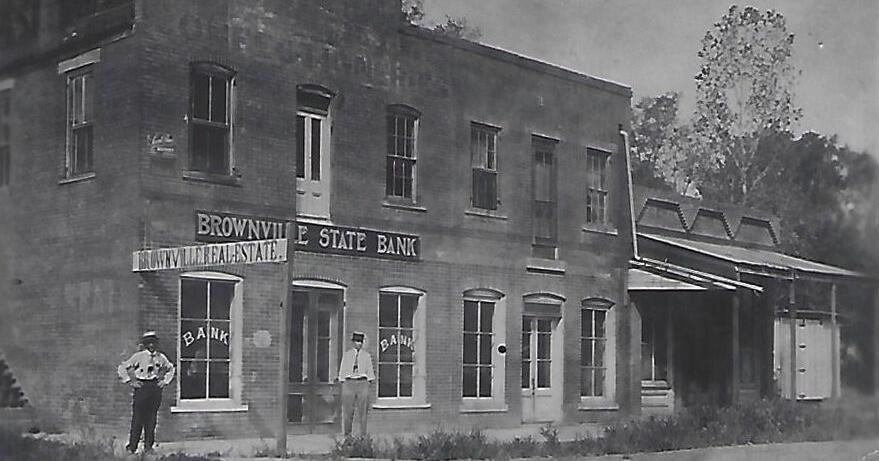
В Браунвилле, штат Небраска, в середине XIX века процветание банковского сектора резко оборвалось из-за краха «диких кошек» и Великой депрессии 1857 года. Сегодня бывший центр округа с населением более тысячи человек превратился в тихий поселок с 142 жителями и без банковских учреждений.
Перевод ИИ
Текст статьи доступен на языке оригинала.
Нажмите кнопку «Перевести статью» выше, чтобы сгенерировать перевод с помощью ИИ.
Оригинальный контент
Jim McKee: You could bank on Brownville
In the summer of 1854, with the creation of the Nebraska Territory, Richard Brown, originally from Tennessee but at that point living in Missouri, crossed the Missouri River into Nebraska. The area, first known as Forney and later Nemaha County, looked like the perfect place for him to establish a town. Settlers began to cross from Missouri and Iowa, many hoping to obtain land, quickly sell it to newcomers and move on. Because farming and trade required fast means of capital transfer, some sort of banking became necessary. Also, because the U.S. did not issue currency until the Civil War, trade was limited to barter, U.S. coinage and the use of foreign currency. All legitimate banks had to be chartered by the state and because the land along the river was inaccessible to regulation and inspection, banks were often considered “wildcats.” Additionally, banks were allowed to print their own currency with little oversight.
There was strong opposition from men including J. Sterling Morton, whose “minority report was so full of sarcasm, ridicule and vituperation that it was refused a place in the journal.” The 1855 Territorial Legislature considered five new banks including the Nemaha Valley Bank of Brownville whose board included Richard Brown, but was mostly formed from men in Galesburg, Illinois. The bank’s charter was killed in the lower legislative house but revived on a motion to reconsider, then approved in January of 1856. That November the bank opened at 2nd and Main streets in a two-story brick building in November and featured a safe, which had arrived in October and required eight yoke of oxen to pull it from the dock to the new building. Almost at once the bank printed and circulated $1, $2, $3, $5 and $10 notes.
As there was no legal prevention, the Brownville Hotel Co. also printed $6,000 in notes in $1, $2 and $5 denominations. All but $49 of their notes were redeemed after the hotel’s construction was completed. The Nemaha Valley Bank, however, was not as successful. Ownership of the bank changed twice in 1857 during a national recession. By February 1858 the bank’s notes were trading at a 50% discount and within months the Nemaha Valley Bank had failed leaving behind 12,000 “kittens” or unredeemed wildcat bank notes. The bank’s president was out of the state at the time of the failure and, though expected back, he “in fact never came back at all.” After legal delays, some of the bank’s supposed assets actually “belonged to other folks” with the sherfif’s sale yielding $63 for the safe, a table and stove.
Listen now and subscribe: Apple Podcasts | Spotify | RSS Feed | SoundStack | All Of Our Podcasts
Another Brownville bank, Lushbaugh & Carson, was chartered in January of 1857 by John L. Carson, advertising itself as also being land agents “dealing in coin, uncurrent money, land and warrants.” Surviving the 1857 panic, its name changed to the Carson Bank in 1860. Franklin Johnson, the bank’s vice president was well known as having built Nemaha County’s first courthouse in Brownville in 1856 and thus, like John Carson, was well respected.
It then became the First National Bank of Brownville in 1871, the fifth national bank chartered in Nebraska. During its existence the bank issued $217,450 in banknotes of which about $1,250 are still outstanding and are legally redeemable as legitimate U.S. banknotes. The bank then moved to South Auburn becoming the Carson National Bank in 1885 “by reason of a railroad at its rear,” though exactly what this meant is unclear. Carson himself moved to Lincoln in 1897 becoming an officer of the First National Bank of Lincoln and a regent of the University of Nebraska.
The State Bank of Nebraska built a two-story brick building, pictured above, in Brownville, in 1870, which it occupied until about 1880 when it closed having paid all its depositors in full.
Thus, having gone from being the county seat of Nemaha County with a peak population of 1,309, twice being the site of the Nebraska State Fair and having several banks, to its present population of 142 with no banks.
Historian Jim McKee, who still writes with a fountain pen, invites comments or questions. Write to him in care of the Journal Star or at [email protected].
Get local news delivered to your inbox!
Аналитика ИИ и парсинга
Технические детали обнаружения, сопоставления и связывания статьи
Поисковый запрос
«Браунвилл Небраска банковский кризис дикие кошки»
Запрос, сгенерированный ИИ для поиска статьи в веб-источниках
Связанные результаты поиска
Вели́кая депре́ссия (англ. Great Depression) — мировой экономический кризис, начавшийся 24 октября 1929 года с биржевого краха в США и продолжавшийся до 1939 года [2][3] (наиболее остро с 1929 по 1933 год) [4]. 1930-е годы в целом считаются ...
20 век: Вызовы и перемены С началом 20 века Браунвилл столкнулся с новыми вызовами. Великая депрессия 1930-х годов оказала значительное влияние на экономику города. Многие бизнесы закрылись, а уровень безработицы резко ...