Английский Культура
06.07.2026 Читать источник
В Элк-Ривер на праздновании юбилея кладбища оживили истории пионеров и сохранили семейные воспоминания
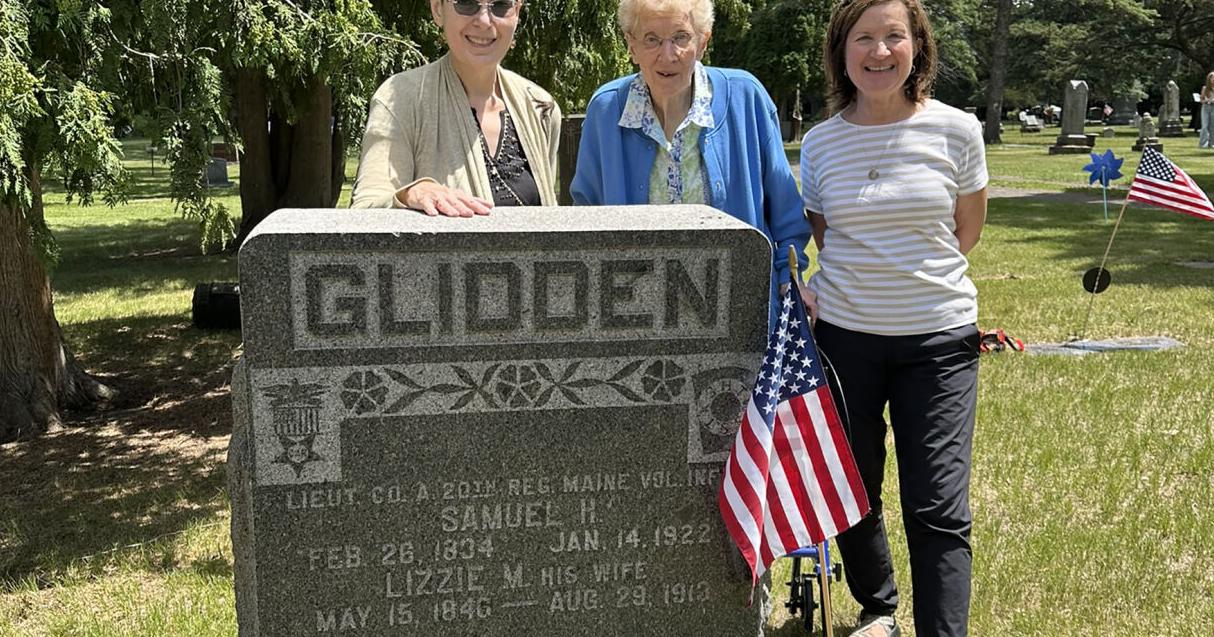
Во время мероприятия участники в костюмах рассказывали истории о местных жителях, а потомки семьи Глидден связали прошлое с настоящим, изучая корни предков. Организаторы подчеркивают важность таких событий для сохранения памяти о людях, чьи могилы могут быть забыты из-за изменения традиций захоронений.
Перевод ИИ
Текст статьи доступен на языке оригинала.
Нажмите кнопку «Перевести статью» выше, чтобы сгенерировать перевод с помощью ИИ.
Оригинальный контент
A cedar tree once marked two tiny graves before a stone bearing the words “Our Babies” was added years later.
After losing two infants in the early 1920s, Robert and Edda Glidden planted the cedar seedling in Vernon Cemetery as a living marker for their children. More than a century later, the tree still stands.
For descendants gathered during the cemetery’s anniversary celebration Saturday, June 20 stories like that transformed weathered headstones into family memories and connected a new generation to Elk River’s past.
The event featured costumed volunteers portraying people buried in the historic cemetery while sharing stories about the pioneers, business owners and community leaders who helped shape Elk River.
But for members of the Glidden family, the memories were deeply personal.
As a child, one descendant recalled riding a bicycle to the cemetery from her grandparents’ home just two blocks away. While visiting family graves, she would count the passing train cars — sometimes 100 to 150 cars long — as they rolled through town.
“That’s how I learned to count,” she said.
Today, those same visits have inspired a deeper appreciation for family history and prompted research into ancestors in Maine, where Civil War veteran Samuel Glidden was born before his remains were eventually returned to Vernon Cemetery so family members could rest together.
More than 150 years after Vernon Cemetery was established, several hundred area residents gathered on June 20 to celebrate its anniversary through historical reenactments, tours and conversations that some organizers hope will become an annual tradition.
While visitors brought their own memories to Vernon Cemetery, volunteers spent months researching the people they portrayed.
Vernon Cemetery board member Mary Jane Rohlf portrayed her mother, Eloise Forsythe Oscarson, who helped as a nurse at the Elk River Clinic. During the event, visitors shared memories of receiving care there and recalled the clinic’s role in the community.
To prepare, Rohlf interviewed older family members about her family’s railroad connections and spoke with Dale Brown about the Brown Birthing Home operated by his grandparents. She also relied on local history books, including History of Elk River and The Growth of Sherburne County, 1875-1975.
“I was amazed at how much people enjoyed learning about Elk River’s rich history,” Rohlf said.
Rohlf said the event demonstrated the value of preserving local stories that might otherwise be lost with time.
Among those sharing family history were Bob and Bertie Nickerson, whose own roots are closely tied to the cemetery itself.
The Star News chronicled last month how J.Q.A. Nickerson named Vernon Cemetery after his 2-year-old son, Vernon, who drowned in the Elk River in 1872. The child became the first burial in the cemetery that now bears his name.
Bob Nickerson portrayed J.Q.A., one of Elk River’s most prominent early civic leaders and founders, while Bertie portrayed Mary Barnard Nickerson, her real great-grandmother-in-law.
A new headstone for Vernon Nickerson was added just in time for the celebration to replace the other one that had worn out over the course of time.
Visitors were especially interested in J.Q.A.’s Nickerson’s journey west and how he ultimately settled in Elk River rather than continuing on to California during the Gold Rush.
“I think they were interested in the beginning of J.Q.A.’s trip west ending up in Elk River instead of the gold fields in California,” Bob Nickerson said.
To prepare for the role, Nickerson relied on years of research from the Minnesota Historical Society, family stories and historical materials he has collected over decades.
“The visitors came and really listened,” he said. “Some asked questions and many shared what they knew.”
Bertie Nickerson said some visitors were discovering Vernon Cemetery for the first time, while others shared memories of visiting the grounds as children.
One especially memorable encounter came when Roberta Glidden Hawkins, now in her 90s, shared stories about her father, who worked for the Nickerson family decades ago. Hawkins learned things she didn’t know.
“I am a lover of history, and to see and hear the questions asked and stories told was so enjoyable,” Bertie Nickerson said.
Many visitors expressed hope that the event would become an annual tradition.
John Babcock, vice president of the Vernon Cemetery Association, portrayed Charles M. Babcock, Minnesota’s first highway commissioner and a descendant of one of Elk River’s longtime business families.
Many visitors were surprised to learn Charles Babcock helped establish Minnesota’s first gas tax and promoted road improvements with the goal of “pulling Minnesota out of the mud.”
Others were interested in his connections to the W.L. Babcock and Sons store, the Bank of Elk River and the family’s role in the community’s development.
Babcock said one of the most encouraging parts of the day was seeing interest from people of all ages.
“I was struck by the fact that old and young had an interest in Elk River history, even if they had no relationship with those buried in Vernon,” he said.
He recalled one visitor joking that despite living in Elk River for 46 years, he and his wife still sometimes feel like newcomers.
“He said this with a smile,” Babcock said.
For Babcock, the event showed that community history belongs not only to descendants of pioneer families, but also to residents who simply want to better understand the place they now call home.
“What interested people at Vernon was how the people we portrayed helped build a community for the collective good,” he said.
Debbie Hutton portrayed Cynthia Lorette Crandell Sheldon, whose family home became known as the Halfway House for travelers making the journey between St. Anthony Falls and St. Cloud.
Hutton said visitors seemed to connect with the fact that the stories represented real people who helped build the community.
“In Cynthia’s story, people seemed especially interested in the Halfway House,” Hutton said. “It gave people a picture of what travel and hospitality looked like in the early days of Elk River.”
To prepare for the event, Hutton studied Cynthia Sheldon’s obituary and family records, searching for details that would help bring her story to life.
She said she practiced speaking in the first person so visitors would feel as though they were hearing directly from Cynthia herself.
“I think visitors really connected with the idea that these were not just names and dates on stones, but real people who helped build the community we live in today,” she said.
The same reaction was evident throughout the afternoon as visitors moved from one presentation to another, asking questions, sharing memories and discovering pieces of local history they had never known.
Among the visitors was retired Sherburne County Sheriff’s Office investigator Gary Poslusny, who spent decades piecing together facts and solving cases.
Now retired, Poslusny brought that same curiosity to Vernon Cemetery.
“I didn’t know what to expect,” said Poslusny, who began his law enforcement career with the Big Lake Police Department before joining the sheriff’s office in 1974.
As he moved among the presentations, Poslusny said he was struck by how convincingly the volunteers brought history to life.
“It’s like talking to a ghost. It’s so realistic, it’s unbelievable,” he said.
He said the volunteers’ depth of knowledge impressed him.
“They seem very knowledgeable about the subjects of their family members,” he said.
For Nancy Jacobson and Kitty Johnson, the event reinforced the importance of remembering those who came before.
Jacobson, whose family helped care for Big Lake Cemetery for years, marveled at the experience.
“This is so extraordinary,” she said.
Johnson perhaps summed up the spirit of the day most simply.
“Everyone should be acknowledged,” she said.
Both women spoke about the importance of preserving cemeteries and the histories they contain, even as the volunteers and caretakers who have long maintained them grow older.
James Neppl, community outreach coordinator for Williams Dingmann Family Funeral Homes, said programs like the one at Vernon Cemetery have become increasingly popular.
Williams Dingmann operates nine locations in Minnesota, including funeral homes in Big Lake and Princeton. Neppl said similar historical programs are held in Stearns County, where different cemeteries are highlighted each year.
“They’re really fascinating,” Neppl said. “You might learn about the town’s first mayor, a professional ballplayer or some other colorful figure from local history.”
He said such programs help preserve stories that might otherwise disappear.
“They’re very important to keep that history alive,” he said.
That mission has become even more important as burial traditions evolve.
“The trend with younger people is they’re not so much into burial anymore, and so we’d lose the history,” Neppl said. “How do we keep the history when someone’s urn is on the mantle?”
For Neppl, events like the one at Vernon Cemetery provide one answer.
By sharing stories and encouraging families to explore their roots, communities can ensure that memories survive long after the people who lived them are gone.
For the Glidden family, that work of preserving memories continues.
Visits to Vernon Cemetery inspired one descendant to research her family’s history through Ancestry and even travel to Maine to visit cemeteries connected to earlier generations.
Growing up, she regularly accompanied family members to Vernon Cemetery on Memorial Day. Living just two blocks away, her grandparents made the cemetery a familiar part of childhood.
Those experiences, she said, fostered a lifelong appreciation for history.
“It’s kind of a continuous process,” she said.
And more than a century after Robert and Edda Glidden planted a cedar seedling to remember two children lost too soon, the tree still stands — a living reminder that some stories continue to grow.
Аналитика ИИ и парсинга
Технические детали обнаружения, сопоставления и связывания статьи
Поисковый запрос
«Вирджиния Глидден и Едда Глидден саженец ситового дерева кладбище Вернон Эльк Ривер история семьи»
Запрос, сгенерированный ИИ для поиска статьи в веб-источниках
Связанные результаты поиска
Результаты поиска отсутствуют в БД
Парсер не сохранил результаты веб-поиска для этой статьи.