Английский Экология
02.09.2026 Читать источник
Ползучий мятлик луговой включен в список карантинных растений Миннесоты
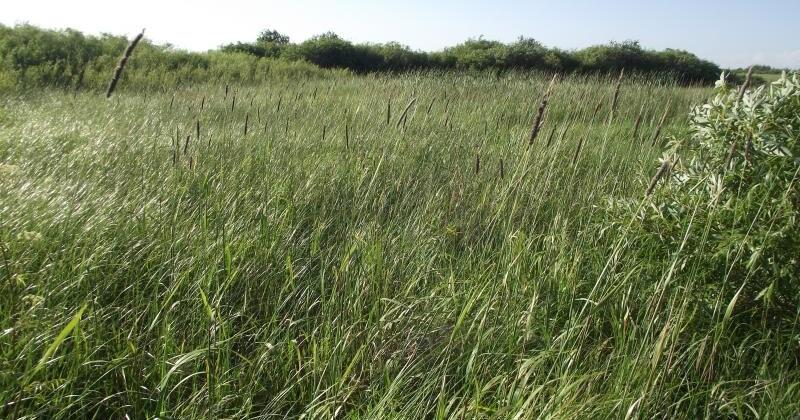
В 2026 году агрессивная трава ползучий мятлик луговой была добавлена в список вредных сорняков штата Миннесота из-за угрозы распространения. Новые правила запрещают импорт, продажу и перевозку этого растения без специального разрешения.
Перевод ИИ
Текст статьи доступен на языке оригинала.
Нажмите кнопку «Перевести статью» выше, чтобы сгенерировать перевод с помощью ИИ.
Оригинальный контент
An invasive grass species crept on to the noxious weed list in 2026 and it’s quite a creep… well, it’s creeping meadow foxtail (Alopecurus arundinaceus). With an expansive native range across Eurasia, creeping meadow foxtail was introduced to North America in the late 1800s or early 1900s. It was imported as a forage grass for pastures because it was fast growing and provided food for livestock. It was also used in erosion control and soil stabilization plantings due to its aggressive underground stem growth and water tolerance. Unfortunately, like many imported species prized for their aggressive growth and tolerance of unfavorable conditions, it has become a problem. Many states in the western United States now consider creeping meadow foxtail as an invasive species.
Creeping meadow foxtail often escapes its intended planting for pastures, ditches, and roadsides and invades prairies, wetlands, meadows, floodplains, stream banks, and other waterways. Its aggressive growth can create dense monocultures that outcompete native plant species and can also impair water movement along waterways.
Creeping meadow foxtail can spread by seed and by rhizomes. Rhizomes spread underground and can make an existing patch larger. Pieces of rhizomes can also break off from a plant and start new patches elsewhere when transported. Seeds and rhizomes can be transported by dirty equipment, vehicles, and water, while seeds can also be transported by wind.
Identifying creeping meadow foxtail from other grass species is tricky. The leaves are 0.2 to 0.3 inches wide and 2.5 to 16 inches long. Leaves grow at the base of the plant and are arranged alternately, with the longest leaves near the bottom and getting shorter along the stem. Feeling the leaves reveals a smooth top side and a rough bottom side. Leaves also have a small ligule (thin, papery membrane) where they attach to the stem. When the grass is flowering, 1.5 to 4-inch-long spikes of small florets emerge. These florets change from green to purple to black as they mature. Using phone apps like iNaturalist and local experts with the University of Minnesota Extension can help identify this grass.
The flower head is green and cylindrical. It’s covered in white and yellow reproductive parts
Currently, creeping meadow foxtail is mainly in the western half of the United States, including North Dakota, South Dakota, and in western Minnesota.
It has been added as a Restricted species to the Noxious Weed List to help prevent its harmful effects from spreading and impacting Minnesota. The regulation prohibits importation, transportation, propagation, or sale of this plant, except as allowed by permit under Section 18.82 of the Noxious Weed Law.
Аналитика ИИ и парсинга
Технические детали обнаружения, сопоставления и связывания статьи
Поисковый запрос
«ползучий мятлик Миннесота карантинные растения»
Запрос, сгенерированный ИИ для поиска статьи в веб-источниках
Связанные результаты поиска
Результаты поиска отсутствуют в БД
Парсер не сохранил результаты веб-поиска для этой статьи.