Английский Культура
01.09.2026 Читать источник
Исследовательская работа о забытом пионере Исааке Словере переосмысливает историю культурного обмена на юго-западе США
Потомок Исаака Словера, историк Тим Грин, представил новую книгу, раскрывающую роль этого тихого горного человека как ключевого посредника между американскими, мексиканскими и коренными культурами в XIX веке. Публикация детально описывает его жизнь в Таосе, где он строил торговые связи и семью, оставаясь в тени таких известных фигур, как Кит Карсон.
Перевод ИИ
Текст статьи доступен на языке оригинала.
Нажмите кнопку «Перевести статью» выше, чтобы сгенерировать перевод с помощью ИИ.
Оригинальный контент
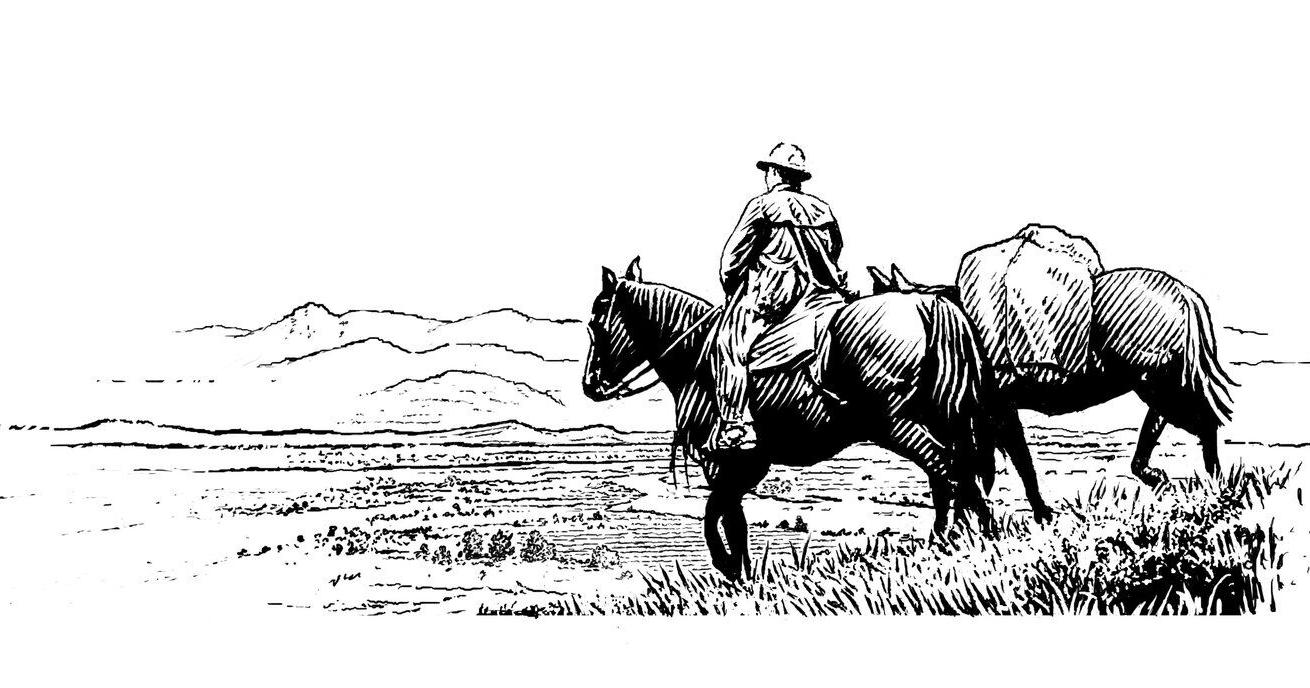
This image accompanies “Wayfaring Stranger With the Glenn-Fowler Expedition on the Great Plains (1821–1822),” Chapter 4 of “The Edge Rover: The Life and Times of Mountain Man Isaac Slover.” All chapter heading illustrations are by John Wilson of Austin, Texas.
This image accompanies “Taos Heydays The Fortunes of the Fur Trade (1824–1826),” Chapter 7 of “The Edge Rover: The Life and Times of Mountain Man Isaac Slover.” All chapter heading illustrations are by John Wilson of Austin, Texas.
This image accompanies “A Quest Forlorn The Disastrous Pattie Expedition (1827–1828),” Chapter 8 of “The Edge Rover: The Life and Times of Mountain Man Isaac Slover.” All chapter heading illustrations are by John Wilson of Austin, Texas.
Partially buried, sunken gravestone found in Agua Mansa Cemetery in Colton, California, that was uncovered. Isaac Slover was an early pioneer in the San Bernardino Valley. Slover Mountain was named after him.
This image accompanies “Wayfaring Stranger With the Glenn-Fowler Expedition on the Great Plains (1821–1822),” Chapter 4 of “The Edge Rover: The Life and Times of Mountain Man Isaac Slover.” All chapter heading illustrations are by John Wilson of Austin, Texas.
Courtesy image
This image accompanies “Taos Heydays The Fortunes of the Fur Trade (1824–1826),” Chapter 7 of “The Edge Rover: The Life and Times of Mountain Man Isaac Slover.” All chapter heading illustrations are by John Wilson of Austin, Texas.
Courtesy image
This image accompanies “A Quest Forlorn The Disastrous Pattie Expedition (1827–1828),” Chapter 8 of “The Edge Rover: The Life and Times of Mountain Man Isaac Slover.” All chapter heading illustrations are by John Wilson of Austin, Texas.
Courtesy photo
Partially buried, sunken gravestone found in Agua Mansa Cemetery in Colton, California, that was uncovered. Isaac Slover was an early pioneer in the San Bernardino Valley. Slover Mountain was named after him.
Courtesy image
This map from “The Edge Rover: The Life and Times of Mountain Man Isaac Slover” shows Slover’s progress across the U.S. over the course of his life.
In the early decades of the 19th century, before railroads snaked across the landscape and before the American flag flew over the Southwest, the mountains and canyons of Northern New Mexico beckoned to trappers. These mountain men helped open the region — physically, economically and culturally — through their pursuit of one thing: the beaver. Among them, one figure stands out for both his perseverance and his little-known but far-reaching impact: Isaac Slover.
Born in 1777 near Fort Pitt, Pennsylvania, Slover's early life foreshadowed a lifetime of frontier wanderings. His father, a former captive of the Miami and Shawnee tribes, raised Slover with a deep awareness of the tensions between Native and settler worlds. After his wife died in 1816, Slover, by then a father of seven, took five of his children and headed west into Arkansas Territory, eventually settling near present-day Salina, Oklahoma. The area, embroiled in Osage-Cherokee conflict, soon became untenable for white settlers like Slover, and the federal government pushed him off the land.
That loss set Slover on the trail with the 1821 Glenn-Fowler Expedition — one of the first American trapping parties permitted into Mexican New Mexico following the country’s independence from Spain. While American trappers often found themselves in jail under Spanish rule, Mexico’s more relaxed policies opened the door for Americans like Slover, who arrived in Taos in early 1822.
For trappers, Taos was more than just a base of operations. It was a multiethnic frontier community that served as the unofficial capital of the mountain man’s world. Spanish, French, American, Genízaro and Indigenous pueblo peoples lived, traded and married in a vibrant, if uneasy, cultural melting pot. The annual Taos Trade Fair became the economic highlight of the region, where trappers exchanged beaver pelts for supplies and indulged in “Taos Lightning,” the local whiskey.
Tim Green, author of “The Edge Rover: The Life and Times of Mountain Man Isaac Slover,” describes Taos during this time as “a magnet for young, aspiring trappers and traders,” but also a cultural battleground where foreigners (or extranjeros) often clashed with local norms. Green, Slover’s direct descendant, paints his ancestor as a quiet but central player in this frontier drama.
“He is both witness to and denizen of multiple frontiers,” Green writes. “Just following his trail ... is an exploration of the American West.”
Trapping, trading and family
Slover’s trapping career took him across what is now New Mexico, Colorado, Utah, Arizona, and California. Along the way, he partnered with key figures like William Wolfskill, Ewing Young, and James Ohio Pattie. In the rugged canyons of the Gila and the Colorado River, he trapped beaver and hunted game, often under threat from Apache and Comanche warriors or Mexican authorities levying taxes on fur exports.
But it was in Taos where Slover laid down deeper roots. In 1823, he married María Barbara Aragon, a Genízara woman who had likely been born a Paiute captive and raised by a Taoseño family. Their marriage was emblematic of the complex cultural interweaving of the region—European-American trappers marrying Native or mixed-race women who served as cultural intermediaries, interpreters, and business partners. Maria, known affectionately as "Barbarita," helped Slover navigate Taos society.
The fall of the fur trade and a new frontier
The beaver population in the Southwest began to decline in the 1830s, a victim of over-trapping and changing fashion trends as silk hats replaced beaver felt. But for men like Slover, the end of the fur trade didn’t mean the end of adventure. By 1843, Slover had relocated with his family to California via the Old Spanish Trail, leading a party that included Pope and others who would later become prominent settlers in Napa and San Bernardino.
Slover's final chapter came in San Bernardino, where he continued to hunt and trap. In 1854, he died from injuries sustained in a grizzly bear attack. Today, Slover Mountain in Southern California bears his name — a quiet monument to a man who helped shape the American Southwest.
Slover’s legacy and rediscovery
Though largely forgotten in mainstream histories, Slover’s legacy has been rekindled thanks to Green, whose scholarly and personal deep dive into Slover’s life offers new insight into the mountain men of the Southwest. Green’s work not only humanizes his ancestor but also challenges readers to reconsider how American, Mexican, Indigenous, and Genízaro cultures intersected in places like Taos during a time of great flux.
Slover wasn’t a showboating explorer like Kit Carson. He was, in Green’s words, “a hidden gem” of frontier history — quiet, hardworking, culturally adaptable and fiercely independent. Men like Slover, Pope and Young were more than just rugged adventurers. They were economic pioneers, cultural intermediaries, and often, accidental historians. Their journals, marriages and trade routes chart the unwritten history of a region in transition, where the beaver trade temporarily bridged worlds that war and empire would soon divide. In rediscovering Slover and his fellow mountain men, we uncover not just the bones of a forgotten trade, but the sinew of the multicultural Southwest as it once was — and as it, in many ways, remains.
Sources:
Tim Green, "The Edge Rover: The Life and Times of Mountain Man Isaac Slover," Texas Tech University Press, 2024
Аналитика ИИ и парсинга
Технические детали обнаружения, сопоставления и связывания статьи
Поисковый запрос
«Исаак Словер Тим Грин книга Таос»
Запрос, сгенерированный ИИ для поиска статьи в веб-источниках
Связанные результаты поиска
Тест-драйв Volkswagen Taos (Фольцваген Таос) от Пётр "спец по технической части"20.08.2026. 20.08.2026. 0.
Ето ТОВА е книга. В любовните романи на Джейн Ан Кренц, Катрин Каултър и пр. всичко става много лесно — главният герой отвлича героиня, оказва ѝ психологически натиск, преписва с нея и тя се предава.