Английский Культура
09.09.2026 Читать источник
История здания на углу State и Burnside в Каро: от почтового отделения до современной аптечной системы
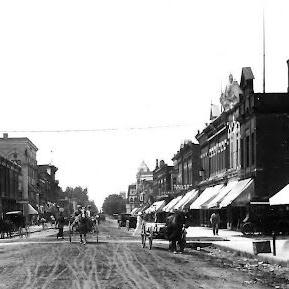
Здание на северо-восточном углу State и Burnside в городе Каро за более чем 150 лет меняло владельцев и назначение, превратившись из деревянной лавки в современный офис фармацевтической компании. Этот уголок города стал свидетелем эволюции от раннего поселения до крупного технологического бизнеса, сохраняя свою значимость для сообщества.
Перевод ИИ
Текст статьи доступен на языке оригинала.
Нажмите кнопку «Перевести статью» выше, чтобы сгенерировать перевод с помощью ИИ.
Оригинальный контент
Column: The Old Putman Building
A Corner Worth Remembering
On the northeast corner of State and Burnside in Caro, 319 N. State Street, where SRS Pharmacy Systems now hums, with servers and code, there once stood only bare ground. Lot 7, Block 18, was sold in 1866 by Caro's founder Peter Bush — who had himself bought it from the Shermans, just as Centreville, now Caro, was being plat — for little more than pocket change. What has risen there since is a story of grocers and attorneys, fire and fortune, brick and bytes — the whole of downtown Caro's evolution written into a single, stubborn corner.
The Craw Store
Bush sold to Farley Craw, the corner's first occupant and postmaster, who raised a rough wooden frame building here soon after his 1866 purchase. Modest as it was, the structure quickly became the beating heart of the young settlement — post office, general store, and smoke-filled meeting hall where the Tuscola County Board of Supervisors first charted the region's course.
The land later passed to investor Thomas McWhorter as downtown Caro modernized around him. In October 1881, McWhorter sold the full lot to merchant Frank O. Watrous for the then-staggering sum of $2,400 — proof of just how built up the block had become.
Frank Watrous and a Busy Corner
By 1884, Watrous had built his own brick hardware store on the southwest third of the lot — likely the shiny brick building still visible today — and spent more than half a century besides as a beloved Sunday school teacher at the Presbyterian Church. The 1884 Sanborn fire map shows his hardware store at the corner's apex, flanked by a gents' furnishings shop, a dry goods store, and the Blue Goose Saloon. By 1890, dry goods, boots and shoes, and a grocery filled the middle building beneath a lively Music Hall — the very space that would later become the Putman Block, where commerce, community, legal matters, and politics all mingled freely.
In 1898, Chester and Jennie Cross took over the grocery on the northeast two-thirds of the lot — a business Chester had tended, in one form or another, since 1869. Ten years later, ready to retire after nearly four decades behind the counter, Cross sold his stock to Robert J. Putman.
The Quinn Years
Meanwhile, ownership of that same northeast fraction passed from Ida Quinn to Henry Parker and finally to Timothy Quinn — a name Tuscola County would remember well. Born in Ontario in 1856 and raised in Marquette, Quinn earned his law degree at Albany, entered the Michigan bar in 1877, and came to Caro to practice as Quinn & Black. He went on to become a respected prosecutor, a state judge, and one of the founding judges of the Michigan Court of Appeals — a distinguished résumé for a man who, for a time, simply owned the old Farley Building.
Fire, and an Opportunity Born of It
Robert Putman, having purchased Cross's grocery stock in 1908, found his fortunes tied to that same block — and in March 1913, disaster nearly ended the story before it truly began. A gasoline coffee urn exploded in a restaurant behind the hardware store, and fire tore through the block, damaging the hardware store and gutting the restaurant and Putman's Grocery alike. Firefighters battled the blaze for four hours, saving the neighboring furniture store only as its owners hauled out pianos and stock by hand. The Music Hall above, and Putman's only partly insured grocery, were a total loss.
Where Timothy Quinn saw ruin, Robert Putman saw opportunity. By April 1913, he had purchased the Quinn property outright for $3,050 and was already breaking ground for new brick construction. He planned twin storefronts — one for his own grocery, the other leased to Gunsell & Maier Furniture, which would occupy the entire upper floor above a basement and ground level. The new building was raised to match the style of the hardware store beside it — brick answering brick across the same stretch of sidewalk.
Family tradition holds that Putman's brothers Claude and Lloyd, both skilled stone masons, helped raise the new building — heirs to a family long tied to stone and brick, descended from William Putman, who had labored on Ontario's Welland Canal. The family name runs deeper still: the earliest known American ancestor, Johannes Pootman, son of a Dutch Latin schoolmaster, arrived in New Netherland around 1661, his surname later rendered Putman or Putnam — a name likely tied to the old occupation of pitman, one who worked surface mines, quarries, and wells. The Putmans made their home in Tuscola County's Wells Township.
By August 1913, the Putman Building stood complete, its opening marked by a musical program from Gunsell & Maier said to be well worth the hearing — a fitting christening for a building, and a corner, so recently laid in ashes.
From Grocers to Grantmakers
In time, the building passed to William
and Ruth Janks, who filled it with a bustling variety and women's apparel store and wove themselves deeply into Caro's civic life. Their legacy endures still: the William & Ruth Janks Fund, administered through the Tuscola County Community Foundation, awards grants supporting youth programming, civic improvement, and community accessibility across the county.
From Pharmacy to Pharmacy Technology
Around 1983, Doug and Judy Ettema purchased the building, and by 1985 had relocated Caro Pharmacy into its spacious quarters to serve a growing base of hometown patients — this columnist among their pharmacists at the former location. The Ettemas added an extra brick front to the building while preserving its crest, which still reads today, "1913 — R. J. Putman." That pharmacy, quite by accident, planted the seed of the building's next transformation.
In the late 1980s, local entrepreneur Jim Tussey rented the upstairs flat and there founded SRS Pharmacy Systems — writing pharmacy management code upstairs, then carrying it down the very same stairs to test it live against Caro Pharmacy's systems below. By the late 1990s, as the Ettemas stepped back from retail pharmacy, Tussey purchased the building outright, making it the corporate home of his growing technology company.
A Corner That Keeps Adapting
Today, the northeast two-thirds of Lot 7, Block 18 — 319 N. State Street — still stands in service, as it always has, to the community that grew up around it.
From two founding families of Caro, the Shermans and the Bushes; to the Craws, whose head was postmaster and whose store played host to county government; to the Watrous family; to the Quinns, whose father was Caro's most noted judge; to the Putmans, whose head chaired a major local political party; to the Caro Pharmacy, owned by the Ettemas, one of whom served as president of the Michigan Pharmacists Association; and now to SRS Pharmacy Systems and Jim Tussey, whose business reaches the nation — this property has never stopped reinventing itself, passing from owner to owner, trade to trade, idea to idea. Yet through every reinvention, it has remained exactly what it was at the start: a place that did its best and passed time's test. It serves, in its own way, for the betterment of Tuscola County — and, in its own small corner, for the country beyond it.
If you know of a renowned building in your town worth a column of its own, please email me.
Аналитика ИИ и парсинга
Технические детали обнаружения, сопоставления и связывания статьи
Поисковый запрос
«здание Каро State Burnside почтовое отделение аптека»
Запрос, сгенерированный ИИ для поиска статьи в веб-источниках
Связанные результаты поиска
Цены и наличие лекарств в аптеках Живика в Екатеринбурге. Заказать лекарства недорого с доставкой на дом, на работу, в больницу. Подробные инструкции к лекарственным препаратам. Скидки и бонусы при заказе с ...
Адрес: просп. Небесной Сотни,6 (на фасаде аптеки FARMACIA/аптека от склада) Населенный пункт: город Одесса, Одесский район, Одесская область GPS координаты: 46.409779, 30.710459 Ограничения веса: 20 кг