Английский Правосудие
09.09.2026 Читать источник
Заключенный Луизианы подал иск против казни азотом, утверждая, что метод неконституционен
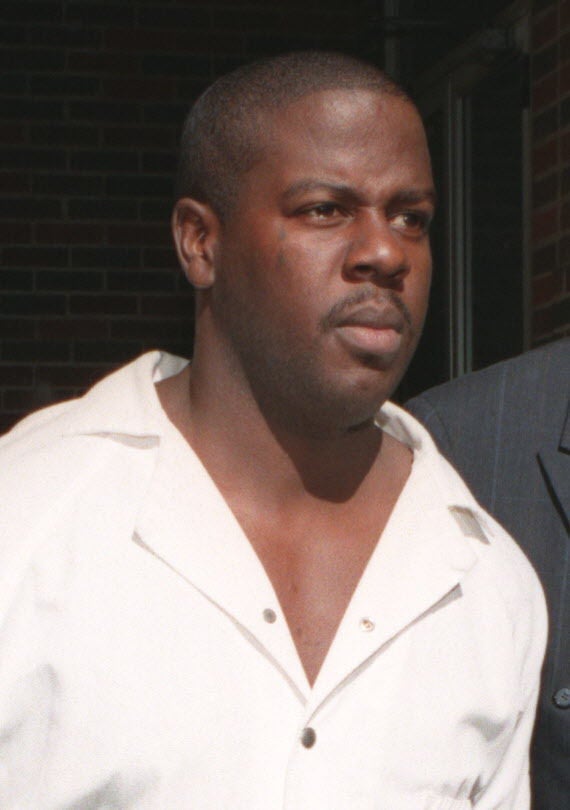
Тодд Уессингер, осужденный на смертную казнь в Луизиане, подал в суд иск, запрещающий использование азота для его казни из-за риска нечеловеческих страданий. Его адвокаты указывают на прецедент с запретом этого метода в Алабаме и наличие альтернативы в виде пентобарбитала, который штат также допускает к применению.
Перевод ИИ
Текст статьи доступен на языке оригинала.
Нажмите кнопку «Перевести статью» выше, чтобы сгенерировать перевод с помощью ИИ.
Оригинальный контент
Louisiana death row inmate nearing execution sues state over nitrogen gassing method
Todd Wessinger, the Louisiana death row inmate who appears closest to an execution date, has filed a lawsuit in Baton Rouge to prevent the state from killing him with nitrogen gas, arguing it’s unconstitutionally cruel.
The lawsuit comes after a federal appeals court ruling last month that reinstated Wessinger’s death sentence for killing two co-workers at a Calendar’s restaurant in Baton Rouge, after a lower court found his attorneys failed him at his 1997 trial.
Wessinger’s lawsuit, filed last Friday in federal Middle District of Louisiana, cites a ruling in June by the Atlanta-based Eleventh Circuit Court of Appeals, barring the use of nitrogen gas in Alabama to kill double murderer Jeffery Lee.
That decision effectively placed executions using nitrogen gas on hold in Alabama, which served as the model for Louisiana’s protocol.
Alabama was the first to try nitrogen gas, using it for seven executions before the court freeze. Louisiana is the only other state to try it.
They were among several states that turned to nitrogen gas after struggling to acquire drugs for a lethal cocktail. Oklahoma was the first to authorize its use. Mississippi, Alabama, Louisiana and Arkansas followed.
Louisiana lawmakers approved nitrogen gas as a death penalty method in 2024, along with the re-legalizing the electric chair alongside lethal drugs. The state ended a 15-year hiatus in executions in March 2025 and used nitrogen gas for the first time on Jessie Hoffman, who was 18 when he kidnapped, raped and fatally shot Mary “Molly” Elliott in 1996 in St. Tammany Parish.
Republican Attorney General Liz Murrill has sought to pick up the pace since then, though courts have refused to endorse any other Louisiana death warrants. Murrill in June praised the appeals court decision that set Wessinger a step closer. She said Wednesday that she hadn’t yet read Wessinger’s lawsuit.
“I assume it is yet another attempt to delay justice in this case and I expect it to fail,” Murrill said.
Wessinger’s attorneys with the New Orleans-based Roderick and Solange MacArthur Justice Center point to the appeals court ruling in the Alabama case, as well as chilling accounts from all eight executions by nitrogen gas so far in Alabama and Louisiana.
“Their record exposes nitrogen hypoxia as exactly what the Eighth Amendment forbids: the unnecessary and wanton infliction of terror, pain, and suffering,” the lawsuit states.
The suit claims an intolerable risk of “prolonged conscious suffocation” involving excruciating “air hunger” as the method deprives the condemned of oxygen.
The attorneys allege that all five men who were given autopsies after being executed by nitrogen gas — including Hoffman — showed signs of “flash pulmonary edema,” in which fluid rapidly fills the lungs.
The last execution using nitrogen gas was last October in Alabama, when condemned inmate Anthony Boyd appeared to take longer to die than any others using the method. The Associated Press reported Boyd shaking and heaving for more than 15 minutes before the curtain closed.
Wessinger’s attorneys argue that Louisiana’s protocol, which mirrors Alabama’s, fails to safeguard or mitigate the risks of unconstitutional agony.
The U.S. Supreme Court has found a state’s method of execution is unconstitutional where a substantial risk of severe pain is demonstrated and an available alternative would significantly reduce it.
Wessinger’s attorneys argue that Louisiana has a viable alternative now: a single drug, pentobarbital, that is commonly used in veterinary euthanasia.
Louisiana’s own execution protocol allows for it, said Jim Craig, director of the Roderick & Solange MacArthur Justice Center. That’s part of what makes his argument different from Hoffman’s, said Craig. Hoffman had also argued in federal court that he should not be put to death via nitrogen gas, though his execution ultimately went forward.
“The Court in Mr. Hoffman’s case did not compare the risk of execution by nitrogen gas to a lethal dose of compounded pentobarbital, because it wasn’t asked to do that,” Craig said.
The number of executions using nitrogen gas has also doubled, from four to eight, since Hoffman failed to convince the courts before he was killed while strapped to a table with an industrial mask over his face.
Those executions added to mounting evidence of cruelty, Craig said.
Hoffman's body shook, his fingers twitched, and he appeared to pull at the arms of a table bolted to the floor of the execution chamber inside the sprawling Louisiana State Penitentiary at Angola. When the mask was removed several minutes later, Hoffman’s head was tilted back, his face frozen in a grimace.
The U.S. Supreme Court declined to spell out its rationale for pausing Alabama’s execution of Lee by nitrogen gas, leaving uncertain the possible impact on Louisiana, which falls under the Fifth Circuit Court of Appeals.
At the time, Murrill downplayed the potential impact on Louisiana’s use of nitrogen gas, while advocates for people on death row expressed hope it would turn a legal tide against the new method.
In Louisiana, the choice of approved methods for an execution is left to the state corrections secretary.
According to Friday’s lawsuit, state Corrections Secretary Gary Westcott confirmed in a deposition that the state is not looking to build an electric chair, and that he “would never choose electrocution as long as (he) is secretary.”
A spokesperson for the Louisiana Department of Public Safety and Corrections declined to comment Wednesday, referring questions to Murrill’s office.
Wessinger’s lawsuit was assigned to U.S. District Judge John deGravelles, the same judge who vacated his death sentence before the appeals court reinstated it. He was nominated to the federal bench by former President Barack Obama.
Аналитика ИИ и парсинга
Технические детали обнаружения, сопоставления и связывания статьи
Поисковый запрос
«Луизиана казнь азотом иск Уессингер»
Запрос, сгенерированный ИИ для поиска статьи в веб-источниках
Связанные результаты поиска
Суд в США по иску жителей штата Миссисипи решил, что конституция не гарантирует гражданам доступ к чистой воде, следует из решения, имеющегося в распоряжении РИА Новости.