Английский Медицина
06.09.2026 Читать источник
Жительница Куперас-Кув обнаруживает скрытую нейрологическую патологию, навсегда изменившую её жизнь
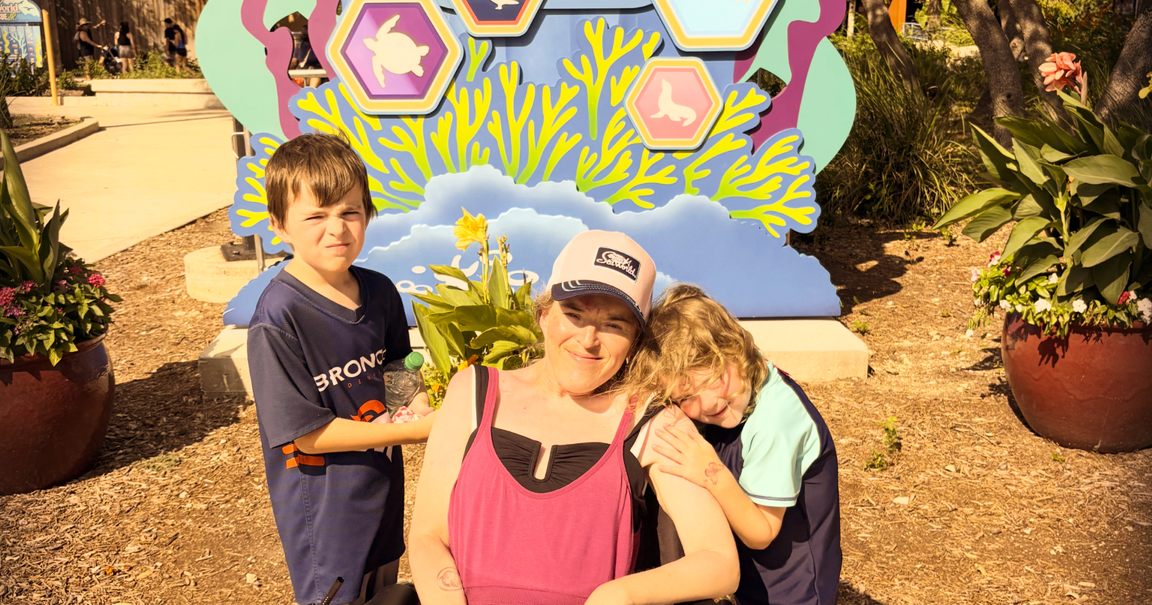
Даниэль Тайлер, ранее жившая полной жизнью, после 28 лет столкнулась с последствиями мальформации Чиари, приведшими к параличу и потере профессии. Несмотря на тяжелые ограничения, она призывает общество внимательнее относиться к невидимым симптомам и не терять надежды на будущее.
Перевод ИИ
Текст статьи доступен на языке оригинала.
Нажмите кнопку «Перевести статью» выше, чтобы сгенерировать перевод с помощью ИИ.
Оригинальный контент
What is Chiari malformation? Cove resident shares her story during awareness month
Editor’s Note: Read more local health features every Sunday in the Killeen Daily Herald’s Health section.
Some conditions leave no visible trace. Chiari malformation is one of them — a neurological condition that can quietly reshape a person’s entire life while the rest of the world remains largely unaware it exists.
Copperas Cove resident Danielle Tyler was a teacher, a wife and a mother. She loved her career, her family and her independence. Then, at 28, everything changed.
“I was actually symptom-free until I was 28,” she said. “Then I started experiencing strange nerve pain. At first, I thought maybe I had a pinched nerve.”
An MRI revealed the cause: Chiari malformation.
Chiari malformation is a structural condition in which part of the brain extends downward into the area where the brain meets the spinal cord. Depending on the individual, it can interfere with the normal flow of spinal fluid and affect the brain and spinal cord in a variety of ways. According to the American Syringomyelia and Chiari Alliance Project, Chiari malformation affects approximately 1 in 1,000 people. However, the condition is believed to be underdiagnosed because many people have no symptoms at all and may never know they have it.
Tyler said that variability is one of the most important things people should understand about the condition.
“Some people have Chiari and have no symptoms at all,” she said. “Others can have significant neurological symptoms that dramatically affect their lives. That’s part of what makes Chiari so complicated.”
Symptoms, when they do occur, can range far beyond headaches. The National Institute of Neurological Disorders and Stroke notes that Chiari malformation can affect balance, coordination, strength, sensation and swallowing, among other neurological functions.
Tyler said that is a reality many people fail to grasp.
“It isn’t just a headache,” she said. “And someone can look completely healthy from the outside while dealing with something that is very real on the inside.”
For those who do receive a diagnosis, the path to getting there is often long and frustrating.
“I was fortunate that my diagnosis came relatively quickly,” she said. “Many people with Chiari spend years going from doctor to doctor trying to find an explanation for their symptoms.”
In the years that followed her diagnosis, Tyler underwent more than eight surgeries.
“It’s been a long and complicated journey, with periods where I’ve made progress and gotten function back, and other times when I’ve had significant setbacks,” she said. “Every surgery has come with its own challenges and a lot of uncertainty. But there have also been moments of hope.”
Today, she lives with paralysis — a reality that has reshaped nearly every aspect of her daily life. One of the things she misses most is the spontaneity she once took for granted with her children.
“I used to be able to just jump in the car and say, ‘Let’s go do something,’” she said. “Now, even something simple takes planning. I have to think about accessibility, transportation, whether I’ll have enough help, how long I’ll be able to be out, and what my body is going to allow me to do that day.”
Losing her teaching career added another layer of grief to an already difficult journey.
“Losing teaching was really difficult for me,” Tyler said. “I loved being a teacher, and I loved my students. It was a big part of who I was, so losing that career felt like losing a part of myself.”
Yet, she is finding her way forward.
“I’m still figuring out what my new normal looks like, and honestly, there’s something exciting about that too,” she said.
After years of navigating surgeries, setbacks and a life fundamentally altered by her condition, Tyler said she felt the time had come to speak – and September’s designation as Chiari Malformation Awareness Month felt like the right moment to do it.
“I would tell them not to panic and not to assume their story is going to look like mine,” she said. “Chiari affects everyone differently.”
She also offered advice born from hard experience.
“Educate yourself,” she said. “Advocate for yourself. Find doctors who understand your condition. Ask questions, and if something doesn’t feel right, keep speaking up.”
For Tyler, living with a progressive condition has not erased her sense of possibility.
“I don’t think having a progressive disease means you have to stop looking forward to things,” she said. “There are still things I want to do, memories I want to make with my kids, and a future I’m excited about.”
Part of what she most wants people to understand is how deceptive the condition can appear from the outside.
“I can have a conversation with someone, smile and seem completely normal while my body is struggling in ways they can’t see,” she added. “And I wish people understood how important it is to listen when someone says something is wrong. Sometimes the person who knows your body best is the person living in it.”
Those interested in learning more about Chiari malformation can visit the Chiari and Syringomyelia Foundation at csfinfo.org or the American Syringomyelia and Chiari Alliance Project at asap.org. Those who would like to support Tyler directly can visit her GoFundMe page at gofundme.com/f/support-danielles-journey-to-independence-and-healing.
Аналитика ИИ и парсинга
Технические детали обнаружения, сопоставления и связывания статьи
Поисковый запрос
«Куперас-Кув Даниэль Тайлер мальформация Чиари паралич»
Запрос, сгенерированный ИИ для поиска статьи в веб-источниках
Связанные результаты поиска
Детский церебральный паралич (ДЦП) — заболевание, связанное с нервно-мышечной недостаточностью, спровоцированное нарушением развития головного мозга.
Жених 33-летней Валерии Чекалиной, известной как Лерчек, Луис Сквиччиарини показал их подросшего сына Даниэля. Аргентинский тренер по танго появился с малышом на руках и трогательно обратился к нему. «Скажи, Даниэль: "Всем привет!" Плохая погода, но у меня прекрасное настроение. Красиво! Ну что, пошли?» — разговаривал Луис с сыном.