Английский Спорт
26.08.2026 Читать источник
Джэф Гармайр побил рекорд Appalachian Trail, вернувшись на тропу, которая когда-то спасла ему жизнь
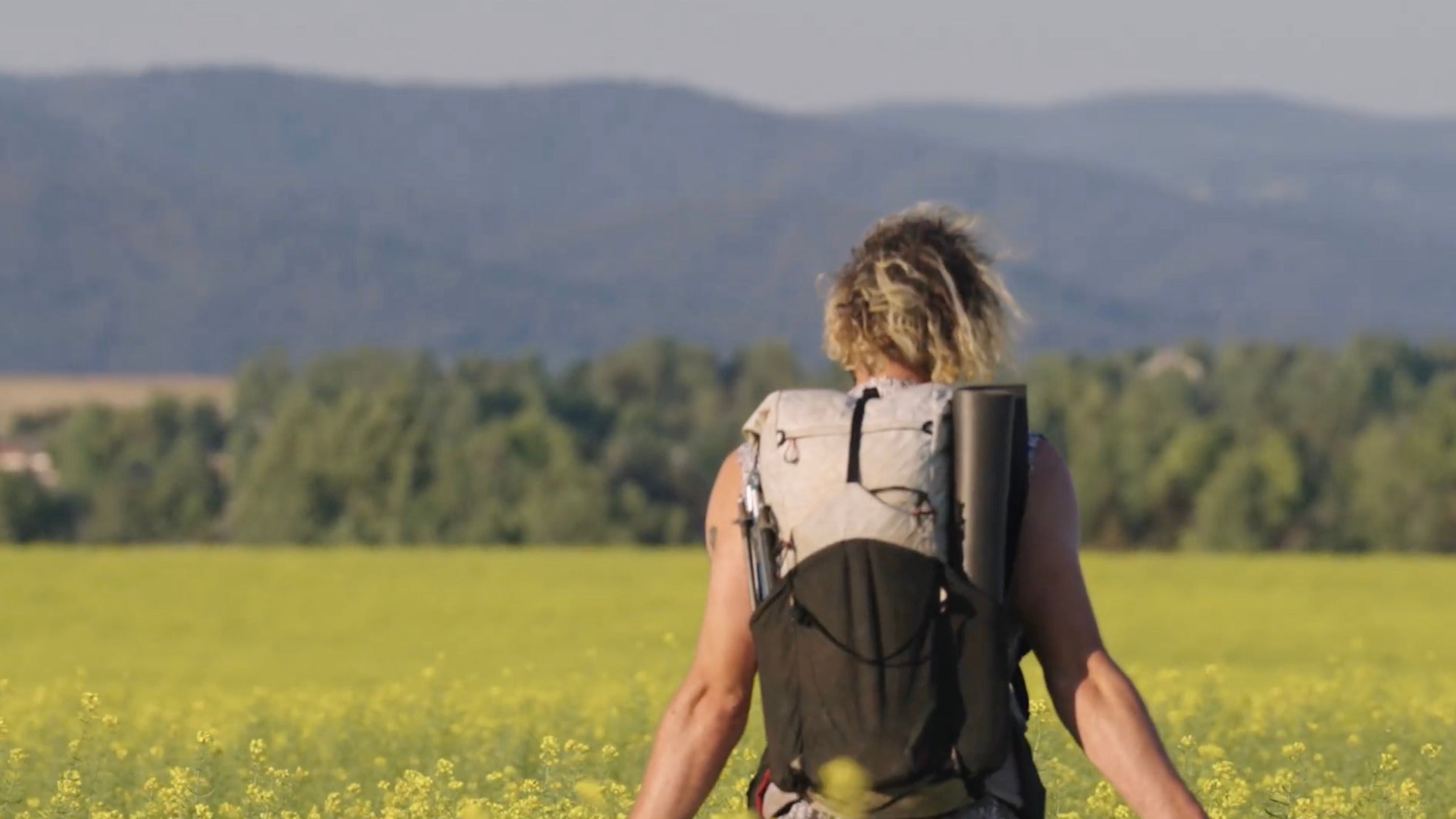
Бегун Джэф Гармайр установил новый рекорд скорости прохождения Appalachian Trail, превзойдя предыдущее достижение на четыре часа. В новом документальном фильме он рассказывает, как этот марафон стал для него способом справиться с глубочайшим кризисом и найти путь к жизни.
Перевод ИИ
Текст статьи доступен на языке оригинала.
Нажмите кнопку «Перевести статью» выше, чтобы сгенерировать перевод с помощью ИИ.
Оригинальный контент
Jeff Garmire (Photo: Courtesy of Jeff Garmire)
Jeff “Legend” Garmire is no stranger to moving fast. Since his first thru-hike at age 20, the runner (and sometimes Backpacker contributor) has notched fastest known times on more than 20 different routes around the U.S. and abroad, including the John Muir, Wonderland, and Colorado Trails.
But his latest, a 45-day, 8-hour, and 37-minute thru-hike of the Appalachian Trail in 2025 that broke the trail’s 8-year-old self-supported record by just 4 hours, felt different. Not only was it his longest effort, it marked a return to a trail that had, quite literally, saved him.
“The last time I did this trail was the closest I’ve ever been to wanting to take my own life,” Garmire recounts to the camera in Rewritten, a new documentary about the hike debuting on YouTube on August 28.
The film, which was directed and co-produced by his fiancee Allison Powell, combines on-trail footage and interviews to tell the story of the month-and-a-half-long trek, which saw Garmire logging 50-plus mile days on as little as an hour of sleep. We sat down with him to talk about improvising resupplies, recovery, and the emotional punch of speeding up a thru-hike.
Backpacker: This documentary starts in a, I don’t know if I want to say heavy, but a very serious place. You talk quite a bit about the role the AT played in pulling you out of a pretty serious depression. Do you want to speak a bit to that and why you felt it was important to share with audiences?
Jeff: The AT was the first place that I went to after just feeling that, I guess, classic Millennial thing of like, ‘I’m stuck in a job I’m going to hate, the world is closing in.’ I quit that career and went and thru-hiked for 8 months [on the Calendar Year Triple Crown] and that really turned everything around in my life.
I was doing contract CFO work in Denver [and I] hated that, hated my life. I thought that that was going to be it forever, and it wasn’t a life I wanted to live. I decided that if suicide is popping around in my head, I could also make any other decision before that. So, it was like, I have enjoyed thru-hiking before, so let’s just go thru-hike. If I don’t have enough money, it doesn’t really matter, because the alternative is even worse.
The AT was this big turning point. There’s so much more freedom beyond just paying bills and being depressed in your life. It definitely took a lot of work over the next 10 years to create a life that makes enough money to survive, but it certainly saved my life.
Backpacker: You live in Montana, but you went to the Appalachians to train. Why was that important, and how did it go?
Jeff: I was going up against some of the best athletes in the sport. I needed to have no doubt that I tried everything possible to go after this. So, I decided to spend two weeks out there training in the hardest section of the trail in the White Mountains.
The goal was to nail my food strategy, my gear, practice with everything, just do a full trial run where I wasn’t under the gun. It went pretty good, but of course things came up. I had to change a few gear things, a few food things. The most important thing was for me to be confident, because it was as much mentally—probably more—of an endeavor than physically. I probably could have done that in Montana, but just being on the trail really alleviated some of those concerns my ability to move through that hardest section.
Backpacker: This was a self-supported attempt, so you couldn’t accept outside help. From watching the documentary, it seems like a lot of things went wrong for you along the way. Do you want to talk about those and how you dealt with them?
Jeff: I mean, I think everyone that does a 45-day FKT, some things go wrong. I got to my resupply box right after the White Mountains, opened it up for a new pair of shoes, and I’d mailed myself two left shoes. I’ve done that before, so it’s just my personality, I guess, to be great at doing things but less good at planning perfectly.
I had two new shoes that I couldn’t wear, and I had to keep walking in shoes with holes in them. And the funny part about that is, I had five pairs of shoes waiting along the trail in resupply boxes, and if two of one had two lefts, another other had two rights somewhere down the trail. I immediately had to order four new pairs of shoes to all those locations; I’d already put so much into this, I couldn’t let an $800 expense stop me.
I think the crown jewel was probably in Shenandoah. I learned this after the fact, but a mouse got into some of the resupply boxes and they threw them out, and mine was one of those. So I got there and I had no food, no charger in my box, no spare pair of socks, and I had to just make it 33 or so miles to a little gas station to resupply and just ate like 200 candy bars for 140 miles. My GI system was pretty wrecked from that. Then, 200 miles from the end when I’m going on an hour of sleep a night, I left my charger bag with all my cords behind at a shelter in the Smokies.
On a lot of FKTs, I think maybe I set myself up for things going wrong, but that means I have a lot of experience finding solutions to them, too. So I’m pretty good at not freaking out and letting it ruin things too much.
Backpacker: You mentioned the one hour of sleep part, which is something you’ve written about for Backpacker before. Any thru-hike is tough on you, but a hike like this has to be absolutely brutal on your body. What kind of shape were you in at the end, and what kind of recovery did you have to go through afterward?
Jeff: I was in really bad shape at the end. My body didn’t know how to sleep a full night. I would wake up every three-ish hours, maybe like one REM cycle, and have to eat, stay up for 30 or 40 minutes, and then try to go to sleep again. It messed up everything about my circadian rhythm.
Physically, like there were issues like fatigue and toe and feet things for months, I would say probably until June of this year, so a good seven months where they were pretty noticeable. I pretty much have permanent Christmas toes from what I’ve put my body through—that’s where after a thru-hike you don’t feel your toes till Christmas. I just don’t have a lot of feeling in my toes anymore.
Backpacker: I think a lot of people assume that you’re missing the point of the experience when you hike a long trail this fast. Most of us will only ever be able to guess about that, but you’re one of the few who’s actually done it both ways: as a normal hike and as this really intense speed effort. Do you want to speak to the difference between those two kinds of experience.
Jeff: I think in a standard, traditional thru-hike—and my first one when I was 20 was a very quintessential thru-hike—you ride this level plane where there’s adversity, highs and lows, but they’re more muted. You have this beauty that’s incredible, you have these feelings of self-fulfillment and self-empowerment along the way. It’s hard, and things hurt. But on an FKT, the highs and lows are so much bigger.
When you get to the top of a peak—I sat on the top of McAfee Knob alone—you just hit this high. You’re this raw version of yourself. You’ve eliminated sleep, your brain can only work on primitive level of ‘eat, sleep, move,’ but then this overpowering joy hits you. It’s an extreme version of every feeling out there.
As you see that coincide—the mental fortitude to keep going, and the physical ability and stamina—it just lends itself to these moments. Especially in Virginia, I think that’s where I was breaking down. I probably have 10 of [those moments] a day. A sunrise, or birds chirping in the morning, you might cry because it means the sun’s coming up and things get easier. [You have all] these moments of gratitude over the tiniest things.
Backpacker: You beat the previous record set by [Joe] Stringbean [McConaughy] by just about four hours. At this point, your self-supported FKT is less than five days from the supported one [Tara Dower’s 2024 time of 40 days, 18 hours, and 6 minutes]. It used to be that people setting these records were just really fast, efficient hikers. Now, you’re ultra-runners who are logging 50-plus miles a day. What do you think the future of FKTs on long trails like the AT looks like from this point on?
Jeff: I think it’s going to be even tighter, but as technology, nutrition, and professionalization come into everything, there is going to still be more room for these. I think that there’s still going to be that emphasis on people who’ve had the experience either as thru-hikers or someone who’s been outside before. These longer [FKTs], especially self-supported ones, you have to be so comfortable mentally being alone for that long, and there’s so few ways in life to get that experience.
The hard thing with a lot of these, too, is that environmental aspects keep coming into play, whether it’s hurricanes or fires. So I think that that’s going to be a part of the future of these things: Better athletes going after them, but more and more luck involved.
Backpacker: Looking back on that kid you were when you were quitting your job and going for the Triple Crown, what do you think that version of yourself would say if he saw you now?
Jeff: I think he’d be really proud that when I was at the lowest point, I knew the way I could find some happiness or find some space for my mind to figure out what to do with my life. I went to this place, the outdoors. Just sticking to that is the biggest thing that version of me would be proud of. I think he’d be like, ‘It’s cool you got the record, but it’s also cool you’re still doing this.’
If you or someone you know is struggling or in crisis, help is available. Call, text or chat with the Suicide and Crisis Lifeline at 988.
Аналитика ИИ и парсинга
Технические детали обнаружения, сопоставления и связывания статьи
Поисковый запрос
«Джэф Гармайр рекорд Appalachian Trail»
Запрос, сгенерированный ИИ для поиска статьи в веб-источниках
Связанные результаты поиска
Результаты поиска отсутствуют в БД
Парсер не сохранил результаты веб-поиска для этой статьи.