Английский Экология
08.09.2026 Читать источник
Дикие киви признаны опасным вредителем в Бэй-оф-Пленти: уничтожено более 12 тысяч лоз
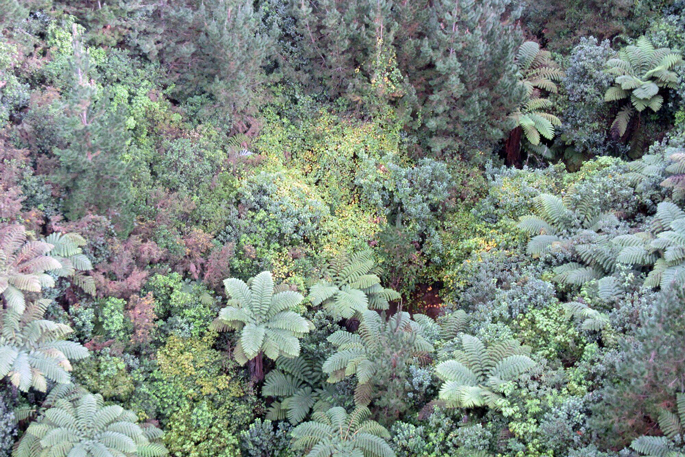
Дикие киви классифицированы как агрессивный вид, угрожающий экосистемам и коммерческому производству, поэтому региональный совет и отраслевая организация уничтожили более 12 тысяч лоз в этом году. Владелец земли обязан контролировать распространение растения, а общественность призвана сообщать о новых очагах заражения.
Перевод ИИ
Текст статьи доступен на языке оригинала.
Нажмите кнопку «Перевести статью» выше, чтобы сгенерировать перевод с помощью ИИ.
Оригинальный контент
Wild kiwifruit poses threat to Bay of Plenty bush
While commercial kiwifruit is a boon for the economy – particularly in the Bay of Plenty – the wild variety is a serious plant pest.
“Wild kiwifruit are a serious threat to the environment,” Chris McKay, Bay of Plenty Regional Council biosecurity officer responsible for the wild kiwifruit programme, said.
“These fast-growing climbers can form dense, heavy mats that overwhelm and strangle trees, eventually causing them to collapse or die.
“They can also smother forestry plantations and native bush, disrupting natural ecosystems.
“Their ability to thrive across a wide range of temperatures and habitats makes them particularly difficult to control. They can also be hosts for pests that impact the industry.”
Wild kiwifruit is classified as a “progressive containment species” by the regional council within the Bay of Plenty Regional Pest Management Plan (RPMP), which aims to prevent them from spreading, reduce the distribution or eradicate them within parts of the region over time.
Bay of Plenty Regional Council biosecurity officer Chris McKay.
While landowners or occupiers are responsible for the control of progressive containment species on their property under the RPMP, in 2020, industry body Kiwifruit Vine Health (KVH) and Bay of Plenty Regional Council developed a joint management plan for wild kiwifruit over 10 years.
As part of the agreement, the regional council and KVH work collaboratively to support landowners by engaging contractors to control wild kiwifruit at a subsidised cost, to help them meet the requirements of the RPMP.
Joint programme
KVH co-ordinates the administration involved in the running of the programme as well as managing the control component, while also contributing annually towards control and surveillance costs.
Bay of Plenty Regional Council contributes $120,000 annually to support KVH in managing the control programme and currently spends an additional $60,000 per annum in surveillance and small-scale control work.
In the 2025-26 financial year, Bay of Plenty Regional Council completed more than 180 inspections of wild kiwifruit infestations, which are known to be on 1000 properties across the region.
While the pest plant cover is recorded as 358,687sq m, McKay said “the likelihood is that the true coverage is much higher, due to birds depositing seed in relatively inaccessible gullies, native bush, scrub land and pine plantations”.
“Continued surveillance and control efforts will be required on an ongoing basis to achieve the long-term goal of progressively containing wild kiwifruit.
“The public are asked to report any infestations and landowners are encouraged to control any vines on their property or seek out advice in the case of multiple plants being present.”
Biosecurity risk
KVH – the kiwifruit industry’s dedicated biosecurity organisation – works collaboratively with industry organisations, regional councils and landowners to manage wild kiwifruit populations in all growing regions (in both the North and South Islands) to reduce biosecurity risk.
Chief executive Leanne Stewart said the reason wild kiwifruit vines are a biosecurity risk to New Zealand’s kiwifruit industry is that they can act as a reservoir for pests and diseases, undermining eradication and control efforts on commercially productive vines.
Kiwifruit Vine Health chief executive Leanne Stewart. Photo / Jamie Troughton, Dscribe Media Services
“They are also a threat to our environment,” she said.
“Wild kiwifruit vines are vigorous climbers, and if left uncontrolled, can form dense heavy blankets of vines that strangle trees, causing them to die or collapse.”
Bay of Plenty problem
In the Bay of Plenty particularly, Stewart said a significant increase in the population of wild kiwifruit was recorded in the mid to late 1990s and a control programme in the region began in 2000.
Over time, KVH and the council have continued to work together, with landowners, to manage this pest plant and contribute costs, she said.
KVH has also partnered with Zespri and the Kiwifruit Breeding Centre.
“Through their significant contributions, the programme has been able to expand and control wild kiwifruit infestations previously left unchecked,” Stewart said.
“The programme has achieved significant success over the years through ongoing surveillance and control, with thousands of wild vines removed and infestations identified and managed.
“Over the last year alone (our 2025/26 reporting period), 12,506 individual vines on 91 properties were destroyed, including 10,430 individual vines in the Bay of Plenty on 78 properties – no small task for landowners and our contractors.
“However, wild kiwifruit has not been eradicated and continued vigilance remains important.
“Wild vines continue to emerge from seed spread by birds and human activity, which is why ongoing control, surveillance and public awareness are still required.”
Wild kiwifruit is a biosecurity threat in Bay of Plenty.
Growers are asked to remove unpicked fruit from vines and mulch as soon as possible.
Stewart said this prevents mass feeding by birds and allows the fruit to compost as quickly as possible.
“If anyone knows the location of any unrecorded wild kiwifruit infestations, we ask they contact their local regional council or unitary authority with details so the infestation can be assessed and programmed for control or visit www.kvh.org.nz for more information.”
Аналитика ИИ и парсинга
Технические детали обнаружения, сопоставления и связывания статьи
Поисковый запрос
«дикие киви вредитель Бэй-оф-Пленти уничтожение лоз»
Запрос, сгенерированный ИИ для поиска статьи в веб-источниках
Связанные результаты поиска
Результаты поиска отсутствуют в БД
Парсер не сохранил результаты веб-поиска для этой статьи.