Английский Общество
27.08.2026 Читать источник
Итальянская пословица «Хотел велосипед? Теперь крути педали» напоминает о личной ответственности
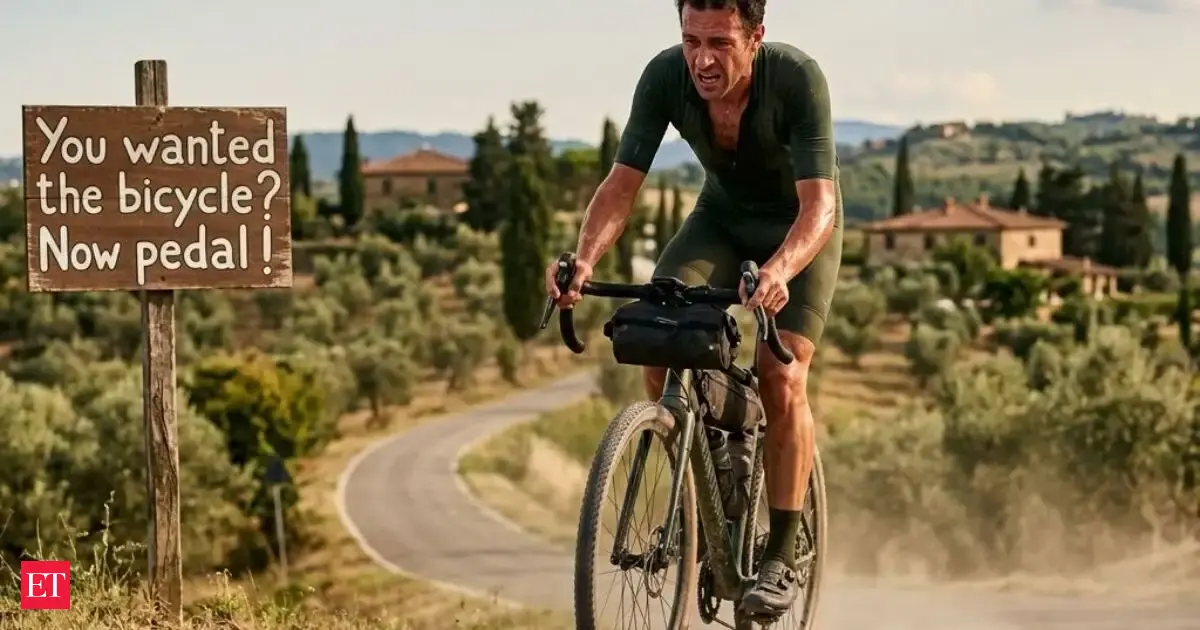
Пословица подчеркивает, что получение желаемого не освобождает от необходимости прилагать усилия для его поддержания. Она учит, что любые жизненные решения неизбежно влекут за собой обязательства и требуют последовательной работы.
Перевод ИИ
Текст статьи доступен на языке оригинала.
Нажмите кнопку «Перевести статью» выше, чтобы сгенерировать перевод с помощью ИИ.
Оригинальный контент
What “You wanted the bicycle?” says about getting what you choose
The proverb begins by pointing back to a person's own decision.
The bicycle represents something someone actively wanted or chose. Once that choice has been made, the person cannot reasonably expect everything that follows to happen without effort.
The question “You wanted the bicycle?” therefore serves as a reminder of personal responsibility. It shifts attention away from complaining about the situation and toward the fact that the person originally wanted it.
The saying recognises that wanting something and managing it are two different things.
Why “now pedal” is the real lesson
The second part of the proverb delivers its practical message.
Getting a bicycle is only the beginning. To actually use it, someone has to pedal. The effort is an unavoidable part of having the bicycle in the first place.
The metaphor applies to many choices in life. A person may want a new opportunity, responsibility or change, but achieving the desired outcome can require patience and sustained effort.
“Now pedal” is therefore a reminder that choices come with obligations. The reward cannot always be separated from the work required to maintain or enjoy it.
The life lesson behind “You wanted the bicycle? Now pedal!”
The proverb encourages people to take ownership of their decisions.
It is easy to focus on the attractive side of a choice while overlooking the responsibilities attached to it. Someone may want a promotion without considering the additional workload, or choose a demanding project before realising how much time it will require.
The saying suggests that the effort involved should be accepted as part of the original decision.
This does not mean that people cannot change their minds when circumstances genuinely change. Instead, it encourages realistic expectations about what a chosen path will require.
How “You wanted the bicycle? Now pedal!” applies to everyday life
The proverb can be applied to education, work, finances and personal goals.
A student who chooses a demanding course must also accept the studying and preparation it requires. A professional seeking greater responsibility may have to manage additional tasks. Someone starting a business or pursuing a personal project must be prepared to put in consistent effort after making that decision.
In each situation, the “bicycle” represents the opportunity or choice, while “pedalling” represents the work needed to move forward.
The metaphor makes the connection between choice and responsibility easy to understand.
Why “now pedal” remains relevant today
Modern life offers people countless opportunities to choose what they want, but every choice can bring its own demands.
A new job, qualification, financial commitment or personal goal may initially seem appealing because of the benefits it offers. Once the decision is made, however, the less attractive responsibilities can become impossible to ignore.
The proverb provides a humorous way of acknowledging this reality.
It reminds people that responsibility does not disappear simply because the difficult part of a decision was not anticipated at the beginning.
What “You wanted the bicycle?” teaches about expectations
The saying also highlights the importance of understanding what comes with a choice.
Before committing to something, people may benefit from considering not only what they hope to gain but also what they will have to contribute. Expectations become more realistic when the effort involved is considered from the beginning.
The bicycle metaphor captures this relationship neatly. Wanting the bicycle is one decision; learning to ride it and continuing to pedal are part of what follows.
The proverb therefore connects desire with responsibility rather than treating them as separate matters.
The timeless lesson of “You wanted the bicycle? Now pedal!”
“You wanted the bicycle? Now pedal!” turns an ordinary activity into a memorable lesson about choices and accountability.
The Italian proverb reminds people that getting what they want does not mean being free from the responsibilities attached to it. Choices often require effort, persistence and a willingness to deal with their consequences.
Ultimately, the saying offers a straightforward piece of wisdom: if you choose the bicycle, you also have to be willing to pedal.
Аналитика ИИ и парсинга
Технические детали обнаружения, сопоставления и связывания статьи
Поисковый запрос
«итальянская пословица ответственность усилия»
Запрос, сгенерированный ИИ для поиска статьи в веб-источниках
Связанные результаты поиска
Jul 15, 2021 · Популярная пословица, обозначающая, как важно экономить, а не тратить деньги. 10. Speranza mi da vita. (Надежда дает мне жизнь) Надежда - отличная мотивация. 11. Non ci piove. (На нас не идет дождь)
Mar 28, 2011 · И в завершение итальянская пословица о пословицах: «I proverbi sono come le farfalle, alcuni sono presi, altri volano via» - пословицы подобны бабочкам: одних поймали, а другие улетели. Источник: портал "Италия по-русски"