Английский Культура
25.08.2026 Читать источник
В музее Кольера открыли восстановленную «машину исцеления» фермера Эмери Бладдона
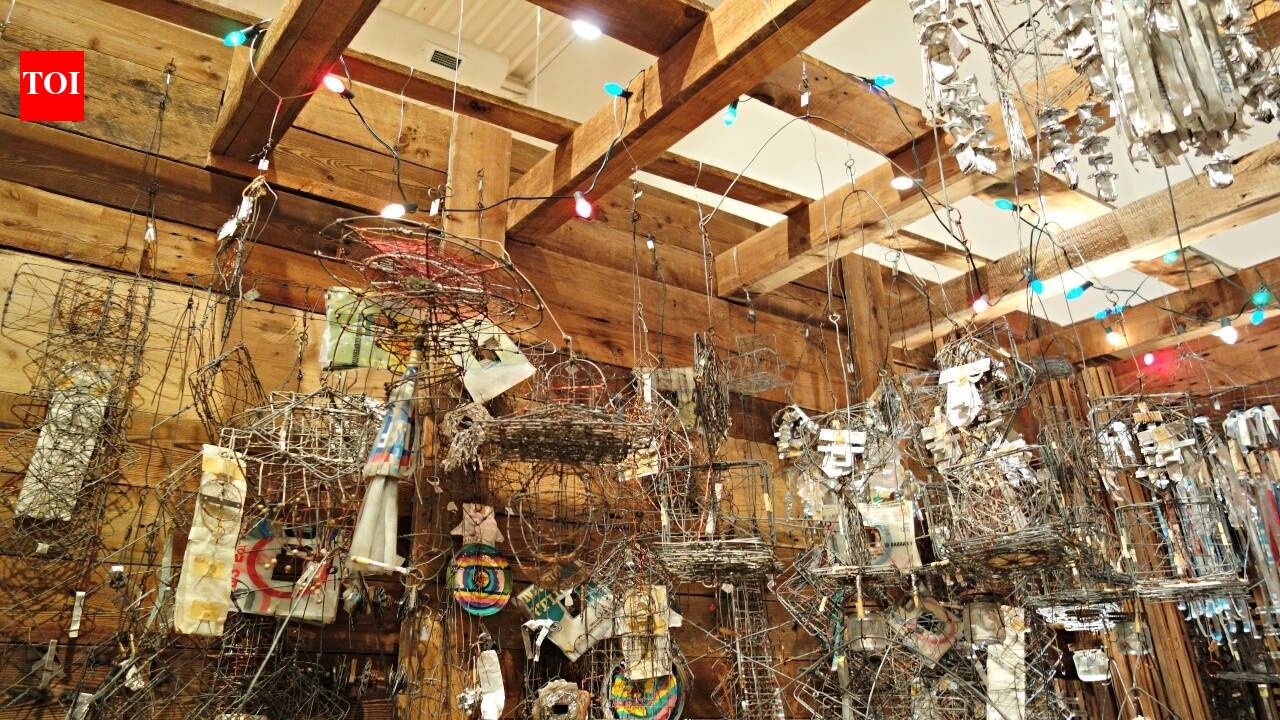
В 2007 году коллекция из более чем 400 работ, созданная в 1955 году для лечения болезней с помощью энергии, была передана в Art Preserve. Посетители могут пройти по воссозданному ангару, где фермер три десятилетия выстраивал скульптуры из проволоки и магнитов.
Перевод ИИ
Текст статьи доступен на языке оригинала.
Нажмите кнопку «Перевести статью» выше, чтобы сгенерировать перевод с помощью ИИ.
Оригинальный контент
In 1955, on a farm near Stapleton, Nebraska, Emery Blagdon began filling a large shed with delicate wire sculptures and geometric paintings made from salvaged materials. Blagdon believed the arrangement could channel natural energy and help alleviate pain or illness. Over the next three decades, the shed filled with hundreds of sculptures, paintings and found-material assemblages. After his death, much of the environment was rescued, catalogued and preserved by the John Michael Kohler Arts Center.
Blagdon grew up on the Garfield Table near Stapleton as the eldest of six children. He spent part of his youth working in sawmills and gold mines on the West Coast before returning to Nebraska in the 1920s. His mother later died of cancer, followed years afterward by his father. That loss shaped the subject of his later work. The
John Michael Kohler Arts Center
records that Blagdon was inspired by watching his parents suffer through terminal cancer and sought to build a space that could channel the curative properties of minerals, magnetic fields and electrical currents.
Inside the shed
Working alone with needle-nose pliers, Blagdon bent hay baling wire, foil, beads, magnets and salvaged paint into hanging sculptures he affectionately called his pretties. He believed these objects, arranged carefully, could draw energy up from the earthen floor of his shed and circulate it through the room, and that sitting inside this field of energy could ease pain and even ward off illness. He sourced some of his materials, including salts and other elements, from a young pharmacist in nearby North Platte named Dan Dryden, who befriended him in 1975 after Blagdon walked into his shop asking for supplies.
That friendship proved important to the work’s survival. Dryden kept visiting the shed after their first meeting and grew fascinated by what he saw there, describing Blagdon's eyes as piercing yet gentle. When Blagdon died of cancer in June 1986 at the age of 78, his farm and its contents went up for auction. His death did not end the meaning of the machine, but it showed the difference between Blagdon’s personal belief in its healing potential and the absence of medical evidence that it could treat cancer. Dryden and his friend Don Christensen bought the installation, saving it from being broken up or discarded.
A gallery view of Emery Blagdon’s “Healing Machine,” showcasing rows of intricate wire sculptures and suspended objects. Credits - Facebook/John Michael Kohler Arts Center
Dryden showed pieces from the collection nationally and internationally during those years, determined to find it a lasting home, even as the bulk of it remained in storage. That search ended in 2004, when the Kohler Foundation, a Wisconsin organisation devoted to preserving self-taught and visionary art environments, agreed to purchase the bulk of the collection. Conservators then spent years cleaning and stabilising fragile wire and foil components before the piece finally reached the public. In 2004, the Kohler Foundation, Inc. purchased more than 400 individual works from the collection. After three years of cleaning and conservation, the entire collection was gifted to the John Michael Kohler Arts Center in June 2007.
Today the piece is housed inside the Art Preserve, a satellite museum in Sheboygan built specifically to house large-scale artist environments that would otherwise have nowhere to go. Visitors walk through a reconstruction of Blagdon's original shed, surrounded by wire chandeliers and stacked, radiating paintings, many of them deliberately faced toward the floor. According to the
Smithsonian American Art Museum
, Blagdon adjusted and reorganised the components of his installation constantly, believing the arrangement itself was part of what made the space capable of alleviating pain and illness. There is no scientific evidence that the machine generated healing power, although Dryden said he detected faint, unexplained voltage around some of the pieces.
Blagdon tended his creations daily for thirty years, reportedly timing some adjustments to the phases of the moon. He attended school only through the eighth grade and never sought recognition, working the land as a subsistence farmer while his project grew quietly in the shed behind his house. His story has since reached a much wider audience through a PBS documentary and gallery exhibitions across the country.
Аналитика ИИ и парсинга
Технические детали обнаружения, сопоставления и связывания статьи
Поисковый запрос
«музей Кольера машина исцеления фермер Эмери Бладдон»
Запрос, сгенерированный ИИ для поиска статьи в веб-источниках
Связанные результаты поиска
Вместе с Energy Kids мы поём, танцуем и узнаём, как работает "Гудящая машина". Занимательный контент, который развивает слух, ритм и дарит море улыбок. Включайте и подпевайте!
Машина golf cart для Farming Simulator 2013 - Интересная машина, на которой вы сможете покататься, но не более того, так как цеплять к ней ни чего нельзя, а так же перевозить, нут разве что себя.