Английский Экология
13.08.2026 Читать источник
Парламентский комитет предложил создать национальную политику по использованию сосновых игл для борьбы с лесными пожарами в Гималаях
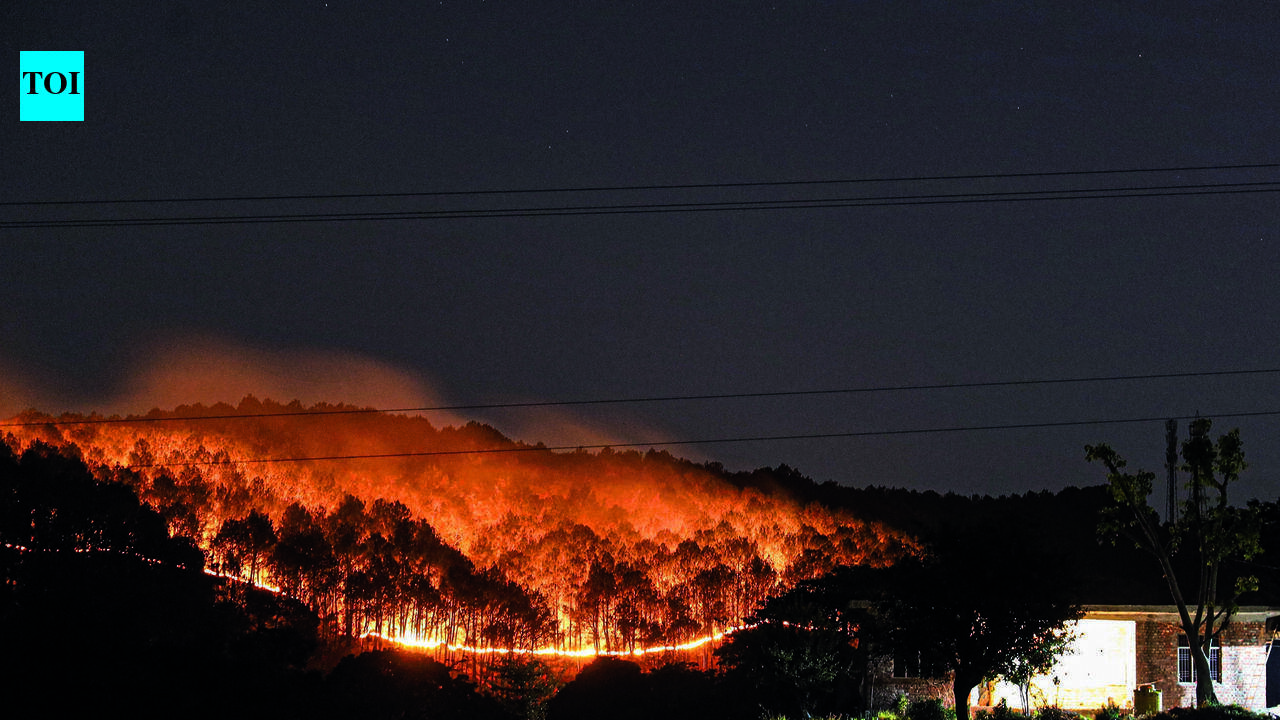
Комитет по науке и технологиям рекомендовал внедрить механизм коммерческого сбора сосновых игл для снижения пожарной опасности и создания рабочих мест в сельских районах. В докладе также выделены меры по региональной адаптации стратегий тушения, внедрению экологии в школьную программу и усилению мониторинга с помощью спутников.
Перевод ИИ
Текст статьи доступен на языке оригинала.
Нажмите кнопку «Перевести статью» выше, чтобы сгенерировать перевод с помощью ИИ.
Оригинальный контент
Shimla:
A parliamentary standing committee has recommended the formulation of a National Pine-Needle Utilisation Policy to help Himalayan states, including Himachal Pradesh and Uttarakhand, tackle forest fires while creating sustainable livelihood opportunities for rural communities. The committee said a dedicated policy and incentive mechanism for the commercial utilisation of Chir Pine needles could significantly reduce the accumulation of highly flammable dry biomass on forest floors.
The recommendations have been made in the report titled “Forest Fires in the Himalayan Region, its Adverse Effects and Mitigation Measures”, presented in the parliament on Aug 7 by the standing committee on science and technology, environment, forests and climate change, chaired by BJP Rajya Sabha member Medha Vishram Kulkarni.
According to the report, Chir Pine forests account for nearly 57% of forest fire incidents in the western Himalayas. Dry Chir Pine needles are rich in resin and highly combustible. When they accumulate in thick layers on the forest floor, even a small spark can rapidly develop into a wildfire.
The committee recommended that collection of pine needles be institutionalised as an annual pre-fire-season activity, supported by adequate budgets, procurement guarantees, subsidies where necessary and infrastructure for processing and value addition.
It also proposed a fixed minimum procurement price per unit weight of collected pine needles, with payments made directly to collectors through a transparent mechanism. The move, it said, could encourage sustained community participation while creating rural employment. The panel suggested a voluntary pilot certification scheme for biomass-processing units to encourage the development of a formal pine-needle utilisation industry.
Policy Loopholes
The panel also raised concerns over forest diversion. Himachal Pradesh and Uttarakhand together diverted more than 6,511 hectares of forest land for non-forestry purposes over the past five years. It recommended stricter scrutiny of proposals involving Oak, Deodar and mixed coniferous forests, along with mandatory compensatory plantation using the same or ecologically similar species at a higher area ratio. The report called for scientific studies and management plans for invasive tree species in Uttarakhand, Himachal Pradesh and Jammu and Kashmir, including measures for containment and eradication.
At the same time, the committee cautioned against adopting a uniform strategy across the Himalayan region. It noted that the Western Himalayas face a fire threat driven largely by extreme pre-monsoon heat, pine-needle fuel loads and human ignition, while the Eastern Himalayas experience a more complex combination of atmospheric dryness and cultivation-related burning practices. It therefore called for region-specific fire prevention and mitigation strategies.
The report recommended a dedicated scientific study to establish the empirical relationship between climate change and the frequency, intensity and seasonality of forest fires across the Indian Himalayan region. It also proposed establishing at least two regional response centres - one for the Western Himalayas and another for the Eastern Himalayas.
The committee further recommended a Himalayan Oak and Deodar Regeneration Mission, arguing that the present pace and composition of afforestation are inadequate to address the vulnerability of the Western Himalayan ecosystem. It stressed that large-scale replacement of Chir Pine with Chilgoza Pine would be scientifically inappropriate, although Chilgoza should be promoted in suitable dry-temperate habitats.
The report recommended that the ministry of environment, forest and climate change take up the matter with the ministry of education to introduce ecology as a mandatory subject at the school level.
Disaster Response
On disaster response, the committee recommended dedicated firefighting vehicle fleets for Himalayan states, better monitoring of actual National Disaster Response Force(NDRF) arrival times and a centralised database of fire casualties and compensation. It also proposed integrating FAST 3.0 fire alerts with cell-broadcast systems to deliver geo-targeted warnings to all people in fire-prone areas, including tourists and transient populations.
The committee urged the department of space to prioritise a geostationary satellite capable of round-the-clock forest-fire monitoring. It also recommended structured post-fire protocols for watershed and spring rejuvenation.
It has recommended commissioning a dedicated study to assess the extent to which unregulated tourism and associated activities contribute to forest fire incidence in the Himalayan region, and reconnect local communities with forests.
The panel also said forest-fire prevention should not depend excessively on CAMPA funds, which are primarily meant for compensatory afforestation. Instead, it recommended adequate financing of the renewed Forest Fire Prevention and Management(FFPM) scheme to strengthen long-term fire prevention and response capabilities across the Himalayan region.
Аналитика ИИ и парсинга
Технические детали обнаружения, сопоставления и связывания статьи
Поисковый запрос
«парламентский комитет сосновые иглы лесные пожары Гималаи»
Запрос, сгенерированный ИИ для поиска статьи в веб-источниках
Связанные результаты поиска
Результаты поиска отсутствуют в БД
Парсер не сохранил результаты веб-поиска для этой статьи.