Английский Наука и Образование
06.07.2026 Читать источник
Неандертальцы были всеядными: анализ костей и древних экскрементов опровергает миф о чистых хищниках
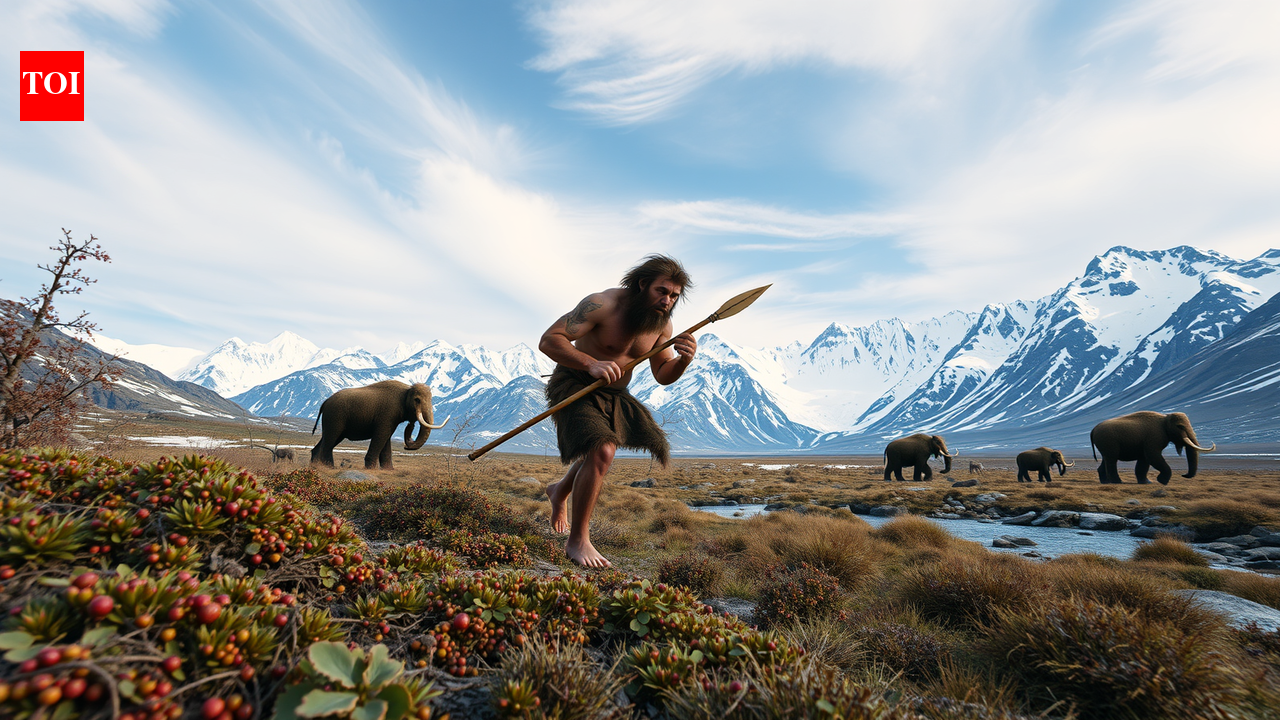
Научные исследования изотопов в костях и следов в древних экскрементах доказали, что неандертальцы потребляли значительное количество растений, таких как клубни и орехи, наряду с мясом. Эти данные свидетельствуют о том, что их рацион был гибким и всеядным, а не исключительно мясным, как считалось ранее.
Перевод ИИ
Текст статьи доступен на языке оригинала.
Нажмите кнопку «Перевести статью» выше, чтобы сгенерировать перевод с помощью ИИ.
Оригинальный контент
For decades, popular imagination has painted Neanderthals as pure carnivores, hulking hunters who survived almost entirely on the meat of mammoths, bison and other large Ice Age mammals. That picture is not wrong exactly, but it turns out to be incomplete. A steady stream of research using chemical isotopes preserved in bones and teeth, along with fossilised faeces recovered from ancient cave floors, has given scientists an increasingly detailed and surprisingly nuanced picture of what Neanderthals actually ate. The emerging consensus is that meat, particularly from large herbivores, made up the overwhelming bulk of their diet, but it was not the whole story, and the evidence for at least some plant consumption has become difficult to ignore.
Why bones and teeth hold the key to an ancient diet of Neanderthals
Since Neanderthals left no written records and stone tools alone cannot reveal exactly what was eaten, scientists have relied heavily on a technique called isotope analysis to reconstruct ancient diets. When an animal or person eats, chemical signatures from their food, specifically ratios of nitrogen and carbon isotopes, become locked into the collagen preserved in their bones and teeth for tens of thousands of years.
Because nitrogen isotope levels rise the higher up an organism sits in the food chain, someone eating mostly meat will show noticeably higher nitrogen ratios than someone eating mostly plants, giving researchers a chemical fingerprint of diet that survives long after the individual themselves is gone.
Why Neanderthals kept showing up as extreme carnivores
For years, this kind of isotope testing consistently placed Neanderthals at an unusually high trophic level, often appearing even more carnivorous than wolves or hyenas found at the very same sites. According to
a study published in the Proceedings of the National Academy of Sciences, researchers led by Klervia Jaouen used a more precise technique called compound-specific isotope analysis, examining individual amino acids within collagen samples from two Neanderthal individuals found at Les Cottes and Grotte du Renne in France, rather than relying on the older, cruder method of measuring bulk collagen alone. The results confirmed that one adult Neanderthal's unusually high nitrogen signature came from eating large herbivorous mammals rather than freshwater fish as some earlier interpretations had suggested, while a second sample belonged to a breastfeeding infant whose own elevated readings simply reflected that the infant's mother was also eating a heavily meat based diet.
The direct evidence found in fossilised faeces
While isotopes reveal broad dietary patterns, one especially striking piece of evidence came from something far more direct, fossilised Neanderthal excrement. According to
a study published in the journal PLOS ONE, researchers led by Ainara Sistiaga analysed five faecal samples recovered from the El Salt site in Alicante, Spain, dating back roughly fifty thousand years, making them the oldest confirmed human faecal remains ever identified. The samples clearly showed high levels of coprostanol, a compound formed specifically when gut bacteria break down cholesterol from meat, confirming a heavily animal based diet. Alongside this, however, the researchers also detected meaningful levels of plant derived sterols in the same samples, chemical evidence the study's authors said unambiguously recorded the ingestion of plant material as well.
What this actually adds up to
Taken together, this body of research points to a diet that was overwhelmingly meat based but genuinely omnivorous rather than exclusively carnivorous. Isotope studies consistently indicate that meat, particularly from large herbivorous mammals, formed the dominant share of what Neanderthals ate, likely comprising somewhere in the range of seventy to eighty percent of their overall diet in the populations studied so far. At the same time, the direct faecal evidence from El Salt makes clear that plant foods, most likely tubers, nuts or berries based on the type of sterols identified, were also a real and recurring part of what Neanderthals consumed, not simply an occasional, negligible addition to an otherwise all meat diet.
Why the plant heavy signal is so easy to miss
Part of the reason Neanderthal plant consumption stayed hidden from scientists for so long comes down to a genuine limitation in the isotope method itself. Plant foods naturally contain far less nitrogen than meat does, meaning that even a fairly substantial intake of plants leaves only a faint signature in bone collagen compared to the much stronger signal produced by meat. This creates a kind of built in bias in bulk isotope testing, one that can make a genuinely mixed, omnivorous diet look almost entirely carnivorous simply because meat's chemical signal so thoroughly overwhelms the much subtler signal left behind by plants.
A diet shaped by opportunity rather than strict preference
The most accurate picture emerging from this combined body of evidence is of a species that ate opportunistically, relying heavily on the reliable calories and protein offered by large game, while still incorporating whatever edible plants were seasonally available in a given environment. This lines up with other, independent lines of evidence, including plant microfossils found trapped in dental calculus and stone tool residues, all pointing in the same broad direction. Rather than the rigid, meat only caricature long associated with Neanderthals, the science increasingly suggests a more flexible, adaptable diet, not unlike the varied, resourceful way many hunter gatherer societies have fed themselves throughout human history, adjusting to whatever a given landscape and season had to offer. The caricature of the pure carnivore survived as long as it did partly because the method used to detect diet was biased toward finding exactly that. When the technique improved and the faecal evidence added a more direct line of sight into what was actually eaten, a more complicated and more human picture emerged, which is usually what happens when better tools are applied to old assumptions.
Аналитика ИИ и парсинга
Технические детали обнаружения, сопоставления и связывания статьи
Поисковый запрос
«неандертальцы рацион питание растения мясо изотопный анализ»
Запрос, сгенерированный ИИ для поиска статьи в веб-источниках
Связанные результаты поиска
Результаты поиска отсутствуют в БД
Парсер не сохранил результаты веб-поиска для этой статьи.