Английский Наука и Образование
06.07.2026 Читать источник
Ученые обнаружили уникальную противовирусную систему защиты у морских анемонов
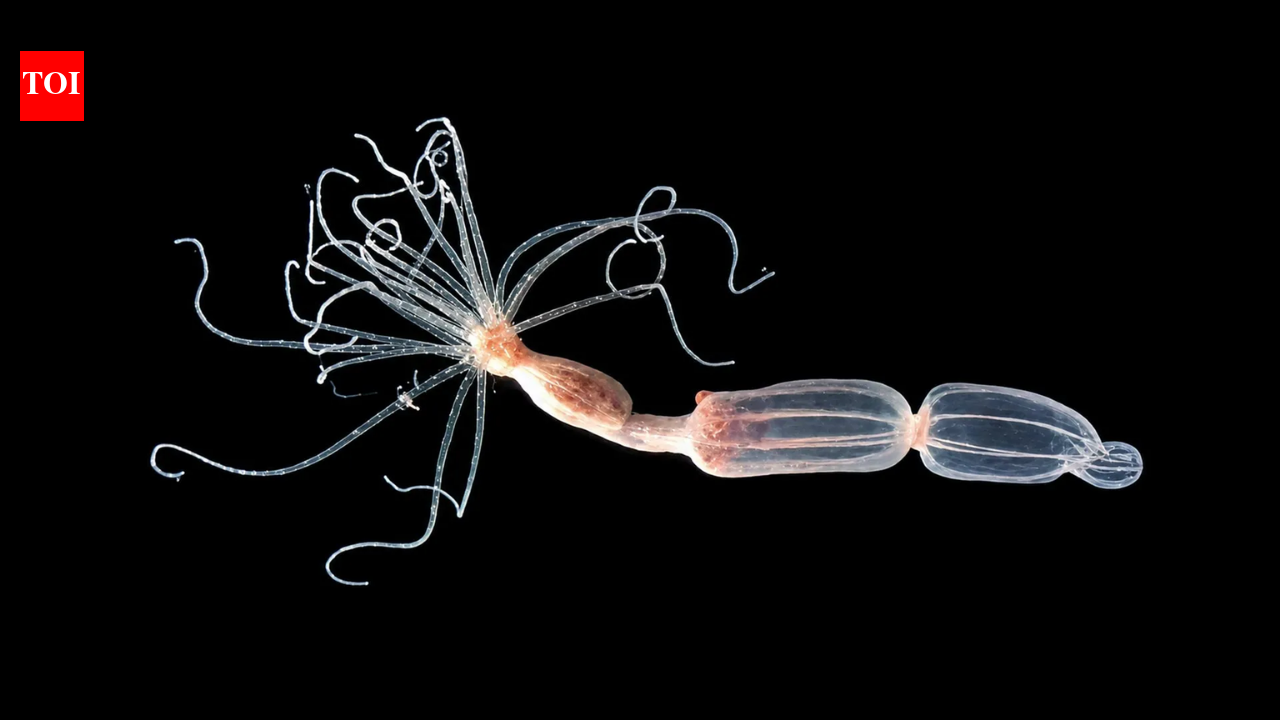
Исследователи выявили у морских анемонов совершенно иной механизм борьбы с вирусами, отличный от человеческого иммунитета. Это открытие, опубликованное в журнале Nature Ecology & Evolution, может в будущем помочь в разработке новых стратегий лечения вирусных инфекций.
Перевод ИИ
Текст статьи доступен на языке оригинала.
Нажмите кнопку «Перевести статью» выше, чтобы сгенерировать перевод с помощью ИИ.
Оригинальный контент
Researchers have uncovered an unexpected antiviral defense system in sea anemones that works nothing like the one humans rely on. The discovery suggests evolution came up with more than one solution to the problem of fighting off viral infections, challenging assumptions that had held for years.
What makes this defense system so different
Human antiviral immunity relies heavily on a well-studied set of molecular pathways, including interferons and various immune cell responses that have been the foundation of virology and immunology research for decades. Sea anemones, simple marine animals without anything resembling a human immune system, appear to have evolved a completely separate mechanism to accomplish the same basic goal: stopping viruses from hijacking their cells.
The findings of the study have been published in
Nature Ecology & Evolution.
That's genuinely surprising to researchers, because sea anemones sit so far removed from humans on the evolutionary tree that finding a functional antiviral system at all was notable, let alone one built on entirely different molecular machinery.
"Here, using the sea anemone Nematostella vectensis, we identify CARDIB, a previously uncharacterized gene located next to RLRb—a cnidarian homologue of the vertebrate RIG-I-like receptor family.
This conserved genomic linkage across Anthozoa reveals an ancient coupling between immune sensing and regulation. Despite sequence similarity to vertebrate MAVS, CARDIB performs an opposing function: it represses immune genes under basal conditions yet is essential for activation upon viral challenge," the researchers have explained.
Why researchers care about an anemone's immune system
It might seem like an obscure finding with no relevance to human health, but discoveries like this have a track record of eventually reshaping medicine in unexpected ways. Many foundational tools in molecular biology and medicine, from CRISPR to certain antibiotics, originated from studying how simple organisms solve basic biological problems, not from studying humans directly.
If sea anemones evolved a genuinely novel way to block viral replication, understanding that mechanism could eventually inspire new antiviral drug strategies that don't rely on the same pathways human viruses have evolved to evade. Viruses are notoriously good at adapting around human immune defenses over time, which is part of why new antiviral treatments are constantly needed.
Early-stage but conceptually significant
This research is squarely in the basic science category, meaning there's no direct medical application yet, and there may not be one for years, if ever. But the value of this kind of research isn't always immediate.
Evolution has had billions of years to experiment with different solutions to the same core problems facing every living organism, staying alive despite constant threats from pathogens. Finding that a creature as simple as a sea anemone landed on a completely different antiviral strategy than humans did is a reminder of how much biological diversity remains unexplored, and how much of it might eventually prove useful.
Аналитика ИИ и парсинга
Технические детали обнаружения, сопоставления и связывания статьи
Поисковый запрос
«открытие новой противовирусной системы защиты у морских анемон»
Запрос, сгенерированный ИИ для поиска статьи в веб-источниках
Связанные результаты поиска
Результаты поиска отсутствуют в БД
Парсер не сохранил результаты веб-поиска для этой статьи.